

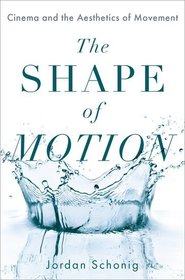
The Shape of Motion
Cinema and the Aesthetics of Movement
-
20% KEDVEZMÉNY?
- A kedvezmény csak az 'Értesítés a kedvenc témákról' hírlevelünk címzettjeinek rendeléseire érvényes.
- Kiadói listaár GBP 102.50
-
46 278 Ft (44 075 Ft + 5% áfa)
Az ár azért becsült, mert a rendelés pillanatában nem lehet pontosan tudni, hogy a beérkezéskor milyen lesz a forint árfolyama az adott termék eredeti devizájához képest. Ha a forint romlana, kissé többet, ha javulna, kissé kevesebbet kell majd fizetnie.
- Kedvezmény(ek) 20% (cc. 9 256 Ft off)
- Kedvezményes ár 37 023 Ft (35 260 Ft + 5% áfa)
- A kedvezmény érvényes eddig: 2026. június 30.
Iratkozzon fel most és részesüljön kedvezőbb árainkból!
Feliratkozom
46 278 Ft

Beszerezhetőség
Becsült beszerzési idő: A Prosperónál jelenleg nincsen raktáron, de a kiadónál igen. Beszerzés kb. 3-5 hét..
A Prosperónál jelenleg nincsen raktáron.
Why don't you give exact delivery time?
A beszerzés időigényét az eddigi tapasztalatokra alapozva adjuk meg. Azért becsült, mert a terméket külföldről hozzuk be, így a kiadó kiszolgálásának pillanatnyi gyorsaságától is függ. A megadottnál gyorsabb és lassabb szállítás is elképzelhető, de mindent megteszünk, hogy Ön a lehető leghamarabb jusson hozzá a termékhez.
A termék adatai:
- Kiadó OUP USA
- Megjelenés dátuma 2023. április 20.
- ISBN 9780190093884
- Kötéstípus Keménykötés
- Terjedelem264 oldal
- Méret 160x241x20 mm
- Súly 544 g
- Nyelv angol 297
Kategóriák
Rövid leírás:
The Shape of Motion: Cinema and the Aesthetics of Movement develops a method for analyzing movement on screen by identifying patterns or shapes of motion-called "motion forms"-across a wide range of examples from the history of cinema. By examining a single motion form, each chapter rethinks persistent assumptions in film studies about cinema as a medium.
TöbbHosszú leírás:
In The Shape of Motion: Cinema and the Aesthetics of Movement, author Jordan Schonig provides a new way of theorizing cinematic motion by examining cinema's "motion forms": structures, patterns, or shapes of movement unique to the moving image. From the wild and unpredictable motion of flickering leaves and swirling dust that captivated early spectators, to the pulsing abstractions that emerge from rapid lateral tracking shots, to the bleeding pixel-formations caused by the glitches of digital video compression, each motion form opens up the aesthetics of movement to film theoretical inquiry.
By pairing close analyses of onscreen movement in narrative and experimental films with concepts from Maurice Merleau-Ponty, Henri Bergson, and Immanuel Kant, Schonig rethinks longstanding assumptions within film studies, such as indexical accounts of photographic images and analogies between the camera and the human eye. Arguing against the intuition that cinema reproduces our natural perception of motion, The Shape of Motion shows how cinema's motion forms do not merely transpose the movements of the world in front of the camera, they transform them.
One of the best books this reviewer has encountered in the past few years. Essential.
Tartalomjegyzék:
Acknowledgments
Introduction Moving toward Form
The Problem of "Movement"
Perceiving Form
Imaged Motion
Describing Motion
Chapter 1 Contingent Motion
Kant's Beautiful Views
Early Cinema's Water-Effects Films
CGI's Fuzzy Objects
From the Novelty of Motion to Forms of Motion
Chapter 2 Habitual Gestures
Ways of Moving
Ways of Moving Differently
The Cultivation of Habit
Capturing the In-Between
Chapter 3 Durational Metamorphosis
Cinematic Slowness and Duration
Duration Made Visible
From Natural to Supernatural Metamorphosis: Silent Light
From Sleeping to Seeing
Chapter 4 Spatial Unfurling
From Moving to Unfurling
Lateral Camera Movement
Seeing Double
Aspects of the Moving Camera
Chapter 5 Trajective Locomotion
Approaching Trajectivity
A World of Trajectivities
Exploring Exceptions
The Ethics of the Moving Camera
Chapter 6 Bleeding Pixels
Movement-Sensitive Spectatorship
A Pedagogy of Motion Perception
Seeing Movement Move
Conclusion Movement as Excess

