

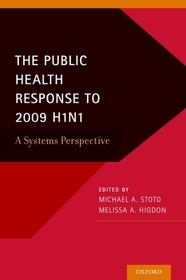
The Public Health Response to 2009 H1N1
A Systems Perspective
-
10% KEDVEZMÉNY?
- A kedvezmény csak az 'Értesítés a kedvenc témákról' hírlevelünk címzettjeinek rendeléseire érvényes.
- Kiadói listaár GBP 64.00
-
28 896 Ft (27 520 Ft + 5% áfa)
Az ár azért becsült, mert a rendelés pillanatában nem lehet pontosan tudni, hogy a beérkezéskor milyen lesz a forint árfolyama az adott termék eredeti devizájához képest. Ha a forint romlana, kissé többet, ha javulna, kissé kevesebbet kell majd fizetnie.
- Kedvezmény(ek) 10% (cc. 2 890 Ft off)
- Kedvezményes ár 26 006 Ft (24 768 Ft + 5% áfa)
Iratkozzon fel most és részesüljön kedvezőbb árainkból!
Feliratkozom
28 896 Ft

Beszerezhetőség
Megrendelésre a kiadó utánnyomja a könyvet. Rendelhető, de a szokásosnál kicsit lassabban érkezik meg.
Why don't you give exact delivery time?
A beszerzés időigényét az eddigi tapasztalatokra alapozva adjuk meg. Azért becsült, mert a terméket külföldről hozzuk be, így a kiadó kiszolgálásának pillanatnyi gyorsaságától is függ. A megadottnál gyorsabb és lassabb szállítás is elképzelhető, de mindent megteszünk, hogy Ön a lehető leghamarabb jusson hozzá a termékhez.
A termék adatai:
- Kiadó OUP USA
- Megjelenés dátuma 2015. március 5.
- ISBN 9780190209247
- Kötéstípus Puhakötés
- Terjedelem272 oldal
- Méret 155x234x20 mm
- Súly 357 g
- Nyelv angol 0
Kategóriák
Rövid leírás:
The Public Health Response to 2009 H1N1: A Systems Perspective draws lessons from the public health system's response to the influenza pandemic, offering a collection of chapters that are highly relevant to all public health emergencies. Not simply a historical case study, this analysis employs a systems perspective that encompasses both government health agencies and community-based entities such as care providers, schools, and media.
TöbbHosszú leírás:
The 2009 H1N1 pandemic tested the limits of the public health emergency preparedness systems in the US and abroad. The successes and failures from this pandemic remain relevant, particularly as pathogens like MER-CoV and Ebola continue to proliferate. As the world's population continues to travel farther and with more frequency than ever before, the lessons of 2009 stand as important touchstones for future public health infrastructures and interventions.
The Public Health Response to 2009 H1N1: A Systems Perspective draws lessons from the public health system's response to the influenza pandemic, offering a collection of chapters that are highly relevant to all public health emergencies. Not simply a historical case study, this analysis employs a systems perspective that encompasses both government health agencies and community-based entities such as care providers, schools, and media. The chapters demonstrate rigorous qualitative research approaches that can be used to analyze public health system responses to both pathogens and a wide variety of other public health emergencies.
With contributions from a broad panel of experts, the book will be useful for anyone seeking to learn from pH1N1 and to see public health systems in current, specific contexts. The Public Health Response to 2009 H1N1 draws important insights from this global event and will help improve public health emergency preparedness systems for future pandemics.
Tartalomjegyzék:
Chapter 1: Introduction
Michael A. Stoto
Chapter 2: Did Advances in Global Surveillance and Notification Systems
Make a Difference in the 2009 H1N1 Pandemic?
Michael A. Stoto and Ying Zhang
Chapter 3: The Effectiveness of U.S. Public Health Surveillance Systems for Situational Awareness during the 2009 H1N1 Pandemic
Michael A. Stoto
Chapter 4: Variability in School Closure Decisions in Response to 2009 H1N1
Tamar Klaiman, John D. Kraemer, and Michael A. Stoto
Chapter 5: Wearing Many Hats: Lessons About Emergency Preparedness and Routine Public Health from the H1N1 Response
Matthew W. Lewis, Edward W. Chan, Christopher Nelson, Andrew S. Hackbarth, Christine Vaughan, Alonzo Plough, and Brit K. Oiulfstad
Chapter 6: Variation in the local management of publicly purchased antiviral drugs during the 2009 H1N1 influenza pandemic
Jennifer Coleman Hunter, Daniela C. Rodriguez, Tomas J. Aragon
Chapter 7: The H1N1 Response from the Perspective of State and Territorial Immunization Program Managers: Managing the Vaccination Campaign
Allison T. Chamberlain, Melissa A. Higdon, Katherine Seib, and Ellen A. S. Whitney
Chapter 8: Implementing a national vaccination campaign at the state and local level:
Massachusetts case study
Michael A. Stoto and Melissa Higdon
Chapter 9: The Italian Response to the 2009 H1N1 Pandemic
Elena Savoia, Pierluigi Macini, and Maria Pia Fantini
Chapter 10: Local Health Department Vaccination Success During 2009 H1N1
Tamar Klaiman, Katherine O'Connell, and Michael A. Stoto
Chapter 11: Public Communication during 2009 H1N1 Pandemic
Elena Savoia, Leesa Lin, and K. Viswanath
Chapter 12: Obstacles to pH1N1 Vaccine Availability: the Complex Contracting Relationship between Vaccine Manufacturers, WHO, Donor and Beneficiary Governments
Sam Halabi
Chapter 13: Implications for Policy and Practice
Michael A. Stoto

