

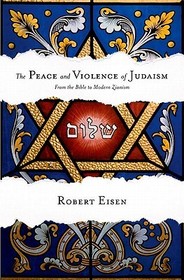
The Peace and Violence of Judaism
From the Bible to Modern Zionism
-
10% KEDVEZMÉNY?
- A kedvezmény csak az 'Értesítés a kedvenc témákról' hírlevelünk címzettjeinek rendeléseire érvényes.
- Kiadói listaár GBP 45.99
-
20 764 Ft (19 775 Ft + 5% áfa)
Az ár azért becsült, mert a rendelés pillanatában nem lehet pontosan tudni, hogy a beérkezéskor milyen lesz a forint árfolyama az adott termék eredeti devizájához képest. Ha a forint romlana, kissé többet, ha javulna, kissé kevesebbet kell majd fizetnie.
- Kedvezmény(ek) 10% (kb. 2 077 Ft)
- Kedvezményes ár 18 687 Ft (17 798 Ft + 5% áfa)
Iratkozzon fel most és részesüljön kedvezőbb árainkból!
Feliratkozom
20 764 Ft

Beszerezhetőség
Megrendelésre a kiadó utánnyomja a könyvet. Rendelhető, de a szokásosnál kicsit lassabban érkezik meg.
Why don't you give exact delivery time?
A beszerzés időigényét az eddigi tapasztalatokra alapozva adjuk meg. Azért becsült, mert a terméket külföldről hozzuk be, így a kiadó kiszolgálásának pillanatnyi gyorsaságától is függ. A megadottnál gyorsabb és lassabb szállítás is elképzelhető, de mindent megteszünk, hogy Ön a lehető leghamarabb jusson hozzá a termékhez.
A termék adatai:
- Kiadó OUP USA
- Megjelenés dátuma 2011. február 24.
- ISBN 9780199751471
- Kötéstípus Keménykötés
- Terjedelem280 oldal
- Méret 236x157x27 mm
- Súly 499 g
- Nyelv angol 0
Kategóriák
Rövid leírás:
Robert Eisen provides the first comprehensive analysis of Jewish views on peace and violence, demonstrating that Judaism has exhibited ambiguity on this theme throughout its history, and exploring why that ambiguity exists. This study will be of interest not only to students of Judaism but to students of all religious traditions.
TöbbHosszú leírás:
Robert Eisen provides the first comprehensive analysis of Jewish views on peace and violence, examining five major sources of Jewish thought - the Bible, rabbinic Judaism, medieval Jewish philosophy, Kabbalah, and modern Zionism. He demonstrates that throughout its history Judaism has consistently exhibited ambiguity regarding peace and violence. To make his case, Eisen presents two separate analyses for each of the areas he examines: one that argues for a peaceful reading of Judaism, and another that argues for a violent reading. The aim is to show that both readings are valid and authentic interpretations of Judaism. Eisen also explores why Judaism can be read both ways by examining the interpretive techniques that support each reading.
This study should be of interest not just to students of Judaism, but to students of all religious traditions: the ambiguity concerning violence in Judaism is true of many other religions as well. Eisen's study therefore provides a model for analyzing peace and violence in religion in general.
This innovative exploration of the potential for the promotion of both peace and violence within Judaism arising from its inherent ambiguities leads Eisen to a thought-provoking consideration of constructive ethics and his conclusion that pragmatic concerns might legitimately be considered alongside the textual evidence in accepting a reading that Judaism inspires and promotes peace rather than violence.
Tartalomjegyzék:
INTRODUCTION
THE BIBLE
RABBINIC JUDAISM
MEDIEVAL JEWISH PHILOSOHY
KABBALAH
MODERN ZIONISM
CONCLUSIONS
EPILOGUE: PERSONAL REFLECTIONS ON
WHERE WE GO FROM HERE
WORKS CITED

