

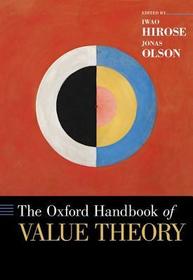
The Oxford Handbook of Value Theory
Sorozatcím: Oxford Handbooks;
-
10% KEDVEZMÉNY?
- A kedvezmény csak az 'Értesítés a kedvenc témákról' hírlevelünk címzettjeinek rendeléseire érvényes.
- Kiadói listaár GBP 162.50
-
73 368 Ft (69 875 Ft + 5% áfa)
Az ár azért becsült, mert a rendelés pillanatában nem lehet pontosan tudni, hogy a beérkezéskor milyen lesz a forint árfolyama az adott termék eredeti devizájához képest. Ha a forint romlana, kissé többet, ha javulna, kissé kevesebbet kell majd fizetnie.
- Kedvezmény(ek) 10% (cc. 7 337 Ft off)
- Kedvezményes ár 66 032 Ft (62 888 Ft + 5% áfa)
Iratkozzon fel most és részesüljön kedvezőbb árainkból!
Feliratkozom
73 368 Ft

Beszerezhetőség
Megrendelésre a kiadó utánnyomja a könyvet. Rendelhető, de a szokásosnál kicsit lassabban érkezik meg.
Why don't you give exact delivery time?
A beszerzés időigényét az eddigi tapasztalatokra alapozva adjuk meg. Azért becsült, mert a terméket külföldről hozzuk be, így a kiadó kiszolgálásának pillanatnyi gyorsaságától is függ. A megadottnál gyorsabb és lassabb szállítás is elképzelhető, de mindent megteszünk, hogy Ön a lehető leghamarabb jusson hozzá a termékhez.
A termék adatai:
- Kiadó OUP USA
- Megjelenés dátuma 2015. május 28.
- ISBN 9780199959303
- Kötéstípus Keménykötés
- Terjedelem456 oldal
- Méret 170x249x40 mm
- Súly 885 g
- Nyelv angol
- Illusztrációk 14 illustrations 0
Kategóriák
Rövid leírás:
Questions about value are important in many contexts. Value theory, or axiology, studies which things are good or bad, how good or bad they are, and, most fundamentally, what it is for a thing to be good or bad. This Handbook provides a comprehensive and state-of-art overview of the debate in value theory.
TöbbHosszú leírás:
Value theory, or axiology, looks at what things are good or bad, how good or bad they are, and, most fundamentally, what it is for a thing to be good or bad. Questions about value and about what is valuable are important to moral philosophers, since most moral theories hold that we ought to promote the good (even if this is not the only thing we ought to do). This Handbook focuses on value theory as it pertains to ethics, broadly construed, and provides a comprehensive overview of contemporary debates pertaining not only to philosophy but also to other disciplines-most notably, political theory and economics.
The Handbook's twenty-two newly commissioned chapters are divided into three parts. Part I: Foundations concerns fundamental and interrelated issues about the nature of value and distinctions between kinds of value. Part II: Structure concerns formal properties of value that bear on the possibilities of measuring and comparing value. Part III: Extensions, finally, considers specific topics, ranging from health to freedom, where questions of value figure prominently.
This handbook collects a nice assortment of papers on value theory, ranging from papers about highly abstract structural features of axiology to applied topics. It is, we think, a helpful addition to the literature. Many of the papers are excellent. Some provide useful summaries of debates...The volume will, we are sure, be useful for teaching the debates, especially at the graduate level...It is well worth reading for both seasoned axiologists and graduate students working in ethics, and it provides a terrific sampling of the state of the art.
Tartalomjegyzék:
Contributors
Introduction to Value Theory: Iwao Hirose and Jonas Olson
Part I: Foundations
1. Value and Normativity: Michael J. Zimmerman
2. Intrinsic and Extrinsic Value: Toni R?nnow-Rasmussen
3. Doubts about Intrinsic Value: Jonas Olson
4. Value and Desires: Graham Oddie
5. Value and Emotions: Christine Tappolet
6. Neutral and Relative Value: Garrett Cullity
7. Value and Time: Krister Bykvist
8. Monism and Pluralism about Value: Chris Heathwood
9. Prudential Value: Valerie Tiberius
10. Kantian Axiology and the Dualism of Practical Reason: Ralf M. Bader
Part II: Structure
11. Value Incomparability and Incommensurability: Ruth Chang
12. Value Superiority: Gustaf Arrhenius and Wlodek Rabinowicz
13. General and Personal Good: Harsanyi's Contribution to the Theory of Value: John Broome
14. Theories of Value Aggregation: Utilitarianism, Egalitarianism , Prioritarianism: Nils Holtug
15. Organic Unities: Erik Carlson
16. Skepticism about Value Aggregation: Iwao Hirose
Part III: Extensions
17. Value and Cost-Benefit Analysis: Matthew D. Adler
18. The Value of Health: Daniel Hausman
19. Freedom and Its Value: Prasanta Pattanaik and Yongsheng Xu
20. Value in Nature: David Schmidtz
21. Population Axiology: M. A. Roberts
22. The Value of Existence: Gustaf Arrhnius and Wlodek Rabinowicz
Index

