

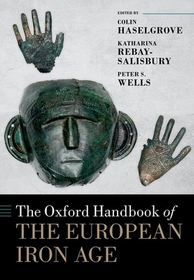
The Oxford Handbook of the European Iron Age
Sorozatcím: Oxford Handbooks;
-
10% KEDVEZMÉNY?
- A kedvezmény csak az 'Értesítés a kedvenc témákról' hírlevelünk címzettjeinek rendeléseire érvényes.
- Kiadói listaár GBP 190.00
-
90 772 Ft (86 450 Ft + 5% áfa)
Az ár azért becsült, mert a rendelés pillanatában nem lehet pontosan tudni, hogy a beérkezéskor milyen lesz a forint árfolyama az adott termék eredeti devizájához képest. Ha a forint romlana, kissé többet, ha javulna, kissé kevesebbet kell majd fizetnie.
- Kedvezmény(ek) 10% (cc. 9 077 Ft off)
- Kedvezményes ár 81 695 Ft (77 805 Ft + 5% áfa)
Iratkozzon fel most és részesüljön kedvezőbb árainkból!
Feliratkozom
90 772 Ft

Beszerezhetőség
Becsült beszerzési idő: Várható beérkezés: 2026. január vége.
A Prosperónál jelenleg nincsen raktáron.
Why don't you give exact delivery time?
A beszerzés időigényét az eddigi tapasztalatokra alapozva adjuk meg. Azért becsült, mert a terméket külföldről hozzuk be, így a kiadó kiszolgálásának pillanatnyi gyorsaságától is függ. A megadottnál gyorsabb és lassabb szállítás is elképzelhető, de mindent megteszünk, hogy Ön a lehető leghamarabb jusson hozzá a termékhez.
A termék adatai:
- Kiadó OUP Oxford
- Megjelenés dátuma 2023. október 3.
- ISBN 9780199696826
- Kötéstípus Keménykötés
- Terjedelem1424 oldal
- Méret 254x180x55 mm
- Súly 2290 g
- Nyelv angol 500
Kategóriák
Rövid leírás:
The Oxford Handbook of the European Iron Age presents to students, scholars, and interested general readers a broad overview of current understanding of the archaeology of Europe from 1000 BC through to the early historic periods.
TöbbHosszú leírás:
The Oxford Handbook of the European Iron Age presents a broad overview of current understanding of the archaeology of Europe from 1000 BC through to the early historic periods, exploiting the large quantities of new evidence yielded by the upsurge in archaeological research and excavation on this period over the last thirty years. Three introductory chapters situate the reader in the times and the environments of Iron Age Europe. Fourteen regional chapters provide accessible syntheses of developments in different parts of the continent, from Ireland and Spain in the west to the borders with Asia in the east, from Scandinavia in the north to the Mediterranean shores in the south. Twenty-six thematic chapters examine different aspects of Iron Age archaeology in greater depth, from lifeways, economy, and complexity to identity, ritual, and expression. Among the many topics explored are agricultural systems, settlements, landscape monuments, iron smelting and forging, production of textiles, politics, demography, gender, migration, funerary practices, social and religious rituals, coinage and literacy, and art and design.
TöbbTartalomjegyzék:
I: INTRODUCTION
Introduction: the Iron Age in Europe
Europe in the Iron Age: landscapes, regions, climate, and people
Chronology in Iron Age Europe: current approaches and challenges
II: REGIONAL SYNTHESES
The British Isles and the near Continent
Scandinavia and northern Germany
The eastern Baltic
Eastern central Europe: between the Elbe and the Dnieper
Central Europe
Southern France
The Iberian Peninsula
The northern Adriatic
The central Mediterranean and the Aegean
Northern Greece and the central
The Carpathian and Danubian area
The northern Black Sea and north Caucasus
Europe to Asia
Edges and interactions beyond Europe
III: THEMES IN IRON AGE ARCHAEOLOGY
Food, foodways, and subsistence
Animals and animal husbandry
Households and communities
Urbanization and oppida
Building landscapes and monuments
Iron and iron technology
Raw materials, technology, and innovation
Material worlds
Textiles and clothing
Trade and exchange
Coinage and coin use
Politics and power
Warriors, war, and weapons; or arms, the armed, and armed violence
Wealth, status, and occupation groups
Horses, wagons, and chariots
Demographic aspects of Iron Age societies
Gender and society
Regions, groups, and identity: an intellectual history
Writing, writers, and Iron Age Europe
Migration
Indigenous communities under Rome
Feasting and commensal rituals
Funerary practices
Ritual sites, offerings, and sacrifice
Formal religion
Art on the northern edge of the Mediterranean world

