

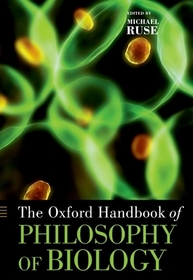
The Oxford Handbook of Philosophy of Biology
Sorozatcím: Oxford Handbooks;
-
10% KEDVEZMÉNY?
- A kedvezmény csak az 'Értesítés a kedvenc témákról' hírlevelünk címzettjeinek rendeléseire érvényes.
- Kiadói listaár GBP 55.00
-
24 832 Ft (23 650 Ft + 5% áfa)
Az ár azért becsült, mert a rendelés pillanatában nem lehet pontosan tudni, hogy a beérkezéskor milyen lesz a forint árfolyama az adott termék eredeti devizájához képest. Ha a forint romlana, kissé többet, ha javulna, kissé kevesebbet kell majd fizetnie.
- Kedvezmény(ek) 10% (cc. 2 483 Ft off)
- Kedvezményes ár 22 349 Ft (21 285 Ft + 5% áfa)
Iratkozzon fel most és részesüljön kedvezőbb árainkból!
Feliratkozom
24 832 Ft

Beszerezhetőség
Megrendelésre a kiadó utánnyomja a könyvet. Rendelhető, de a szokásosnál kicsit lassabban érkezik meg.
Why don't you give exact delivery time?
A beszerzés időigényét az eddigi tapasztalatokra alapozva adjuk meg. Azért becsült, mert a terméket külföldről hozzuk be, így a kiadó kiszolgálásának pillanatnyi gyorsaságától is függ. A megadottnál gyorsabb és lassabb szállítás is elképzelhető, de mindent megteszünk, hogy Ön a lehető leghamarabb jusson hozzá a termékhez.
A termék adatai:
- Kiadó OUP USA
- Megjelenés dátuma 2010. december 23.
- ISBN 9780199737260
- Kötéstípus Puhakötés
- Terjedelem656 oldal
- Méret 246x170x43 mm
- Súly 1057 g
- Nyelv angol
- Illusztrációk 13 b/w line 0
Kategóriák
Hosszú leírás:
The Oxford Handbook of Philosophy of Biology is an exciting collection of new essays written especially to give the reader an introduction to one of the most vibrant areas of scholarship today, and at the same time to move the subject forward dramatically. Written in a clear and rigorous style it will give the more experienced scholar much to think about and will also be of great value to the new student of the subject. The handbook covers the history of the topic, then moves into important analyses of contemporary evolutionary thinking, and continues with discussions of genetics and the moral and epistemological foundations of our understanding of heredity. The book goes on to cover ecology, behavior and morality, and does not neglect religion or feminist issues. Finally, it takes up matters to do with language and metaphor.
The authors range from the senior and experienced to new and exciting young scholars. The Oxford Handbook of Philosophy of Biology is a collection that will be of interest to philosophers of science, to philosophers generally, as well as biologists of all kinds. There is no better way to learn about this dynamic field than through the essays in this volume.
Every department member responsible for library orders should have this volume on their list. Everyone who works in this field-biologists, sociologists, dare one say philosophers?-should have their own copy. Already, right now, I am digging into a coupleof articles pertinent to my own research.

