

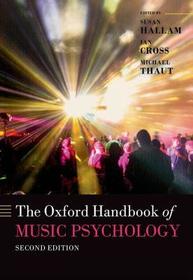
The Oxford Handbook of Music Psychology
-
10% KEDVEZMÉNY?
- A kedvezmény csak az 'Értesítés a kedvenc témákról' hírlevelünk címzettjeinek rendeléseire érvényes.
- Kiadói listaár GBP 95.00
-
42 892 Ft (40 850 Ft + 5% áfa)
Az ár azért becsült, mert a rendelés pillanatában nem lehet pontosan tudni, hogy a beérkezéskor milyen lesz a forint árfolyama az adott termék eredeti devizájához képest. Ha a forint romlana, kissé többet, ha javulna, kissé kevesebbet kell majd fizetnie.
- Kedvezmény(ek) 10% (kb. 4 289 Ft)
- Kedvezményes ár 38 603 Ft (36 765 Ft + 5% áfa)
Iratkozzon fel most és részesüljön kedvezőbb árainkból!
Feliratkozom
42 892 Ft

Beszerezhetőség
A kiadónál véglegesen elfogyott, nem rendelhető. Érdemes újra keresni a címmel, hátha van újabb kiadás.
Why don't you give exact delivery time?
A beszerzés időigényét az eddigi tapasztalatokra alapozva adjuk meg. Azért becsült, mert a terméket külföldről hozzuk be, így a kiadó kiszolgálásának pillanatnyi gyorsaságától is függ. A megadottnál gyorsabb és lassabb szállítás is elképzelhető, de mindent megteszünk, hogy Ön a lehető leghamarabb jusson hozzá a termékhez.
A termék adatai:
- Kiadás sorszáma 2
- Kiadó Oxford University Press
- Megjelenés dátuma 2016. január 14.
- ISBN 9780198722946
- Kötéstípus Keménykötés
- Terjedelem976 oldal
- Méret 249x186x60 mm
- Súly 1908 g
- Nyelv angol 0
Kategóriák
Rövid leírás:
The 2nd edition of the Oxford Handbook of Music Psychology updates the original landmark text, providing a comprehensive review of the latest developments in this fast growing area of research. With contributions from internationally recognised experts, it is an essential resource for students and researchers in psychology.
TöbbHosszú leírás:
The 2nd edition of the Oxford Handbook of Music Psychology updates the original landmark text and provides a comprehensive review of the latest developments in this fast growing area of research. Covering both experimental and theoretical perspectives, each of the 11 sections is edited by an internationally recognised authority in the area.
The first ten parts present chapters that focus on specific areas of music psychology: the origins and functions of music; music perception, responses to music; music and the brain; musical development; learning musical skills; musical performance; composition and improvisation; the role of music in everyday life; and music therapy. In each part authors critically review the literature, highlight current issues and explore possibilities for the future.
The final part examines how, in recent years, the study of music psychology has broadened to include a range of other disciplines. It considers the way that research has developed in relation to technological advances, and points the direction for further development in the field. With contributions from internationally recognised experts across 55 chapters, it is an essential resource for students and researchers in psychology and musicology.
The essential reference text for students and researchers in the psychology and neuroscience of music.
Tartalomjegyzék:
Part 1: The origins and functions of music
The nature of music and its evolution
Universals in music processing: Entrainment, acquiring expectations and learning
Music and meaning
The social and personal functions of music in cross-cultural perspective
Part 2: Music perception
The perception of pitch
Absolute pitch
Tonal cognition
The perception of musical timbre
Musical time
Tonality and contour in melodic processing
Memory for music
Part 3: Responses to music
Bodily Responses to Music
Emotional reactions to music
The relationship between musical structure and perceived expression
Aesthetics
The neuroaesthetics of music
Musical preferences
Part 4: Music and the Brain
The neurobiology of musical expectations from perception to emotion
Disorders of music cognition
Music and brain plasticity
The relationship between music and language
The neuroscience of rhythm
Part 5: Musical development
Prenatal development and the phylogeny and ontogeny of musical behaviour
Infant musicality
Music development from the early years onwards
Music training and nonmusical abilities
Part 6: Learning musical skills
Musical potential
Practicing
Individuality in the learning of musical skills
Motivation to learn
The role of the family in supporting learning
The role of the institution and teachers in supporting learning
Part 7: Musical performance
Planning and performance
Sight reading
Performing from memory
Bodily Mediated Coordination, Collaboration, and Communication in Music Performance
Emotion in music performance
Expression and communication of structure in music performance: measurements and models
Optimizing physical and psychological health in performing musicians
Part 8: Composition and improvisation
Making a mark: The psychology of composition
Musical Improvisation
Pathways to the Study of Music Composition by Preschool to Precollege Students
Part 9: The role of music in our everyday lives
Choosing to hear music: motivation, process, and effect
Music in performance arts: Film, theatre and dance
Peak experiences with music
Musical identities
The effects of music in community and education settings
Music and consumer behavior
Part 10: Music Therapy
Processes of music therapy: Clinical and Scientific Rationales and Models
Clinical Practice in music therapy
Research in music therapy
Music Therapy in Medical and Neurological Rehabilitation Settings
Part 11: Conceptual frameworks, research methods and future directions
Beyond Music Psychology
History and research
Where now?

