

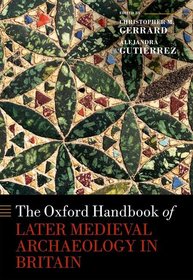
The Oxford Handbook of Later Medieval Archaeology in Britain
Sorozatcím: Oxford Handbooks;
-
10% KEDVEZMÉNY?
- A kedvezmény csak az 'Értesítés a kedvenc témákról' hírlevelünk címzettjeinek rendeléseire érvényes.
- Kiadói listaár GBP 157.50
-
71 111 Ft (67 725 Ft + 5% áfa)
Az ár azért becsült, mert a rendelés pillanatában nem lehet pontosan tudni, hogy a beérkezéskor milyen lesz a forint árfolyama az adott termék eredeti devizájához képest. Ha a forint romlana, kissé többet, ha javulna, kissé kevesebbet kell majd fizetnie.
- Kedvezmény(ek) 10% (cc. 7 111 Ft off)
- Kedvezményes ár 64 000 Ft (60 953 Ft + 5% áfa)
Iratkozzon fel most és részesüljön kedvezőbb árainkból!
Feliratkozom
71 111 Ft

Beszerezhetőség
Megrendelésre a kiadó utánnyomja a könyvet. Rendelhető, de a szokásosnál kicsit lassabban érkezik meg.
Why don't you give exact delivery time?
A beszerzés időigényét az eddigi tapasztalatokra alapozva adjuk meg. Azért becsült, mert a terméket külföldről hozzuk be, így a kiadó kiszolgálásának pillanatnyi gyorsaságától is függ. A megadottnál gyorsabb és lassabb szállítás is elképzelhető, de mindent megteszünk, hogy Ön a lehető leghamarabb jusson hozzá a termékhez.
A termék adatai:
- Kiadó OUP Oxford
- Megjelenés dátuma 2018. január 18.
- ISBN 9780198744719
- Kötéstípus Keménykötés
- Terjedelem1102 oldal
- Méret 249x179x60 mm
- Súly 2352 g
- Nyelv angol 0
Kategóriák
Rövid leírás:
This Handbook provides an overview of the archaeology of the later Middle Ages in Britain between AD 1066 and 1550. Chapters cover topics ranging from later medieval objects, human remains, archaeological science, standing buildings, and sites such as castles and monasteries, to the well-preserved relict landscapes which still survive.
TöbbHosszú leírás:
The Middle Ages are all around us in Britain. The Tower of London and the castles of Scotland and Wales are mainstays of cultural tourism and an inspiring cross-section of later medieval finds can now be seen on display in museums across England, Scotland, and Wales. Medieval institutions from Parliament and monarchy to universities are familiar to us and we come into contact with the later Middle Ages every day when we drive through a village or town, look up at the castle on the hill, visit a local church or wonder about the earthworks in the fields we see from the window of a train.
The Oxford Handbook of Later Medieval Archaeology in Britain provides an overview of the archaeology of the later Middle Ages in Britain between AD 1066 and 1550. 61 entries, divided into 10 thematic sections, cover topics ranging from later medieval objects, human remains, archaeological science, standing buildings, and sites such as castles and monasteries, to the well-preserved relict landscapes which still survive. This is a rich and exciting period of the past and most of what we have learnt about the material culture of our medieval past has been discovered in the past two generations. This volume provides comprehensive coverage of the latest research and describes the major projects and concepts that are changing our understanding of our medieval heritage.
The editors have done an exemplary job of knitting this volume together into a cohesive, readable and fluent landmark of scholarship for this field.
Tartalomjegyzék:
Part 1: Writing Later Medieval Archaeology
Overview: People and Projects
Methods In Medieval Archaeology
Embracing New Perspectives
The Written Evidence for the Later Middle Ages
Part 2: The Medieval Countryside
Overview: Geographies of Medieval Britain
Field Systems and the Arable Fields
The Animal in Late Medieval Britain
The Archaeobotany of Late Medieval Plant Remains: The Resource and the Research
Medieval Fishing and Fish Trade
The Medieval Wild
Coping with Disaster
Part 3: Rural Settlement and Buildings
Overview: The Form and Pattern of Medieval Settlement
Rural Living 1100-1540
Perceptions of Medieval Settlement
Peasant Buildings
The Medieval Manor House and the Moated Site
Agricultural Buildings
Part 4: Living in Towns and Ports
Overview: Living in Medieval Towns
Urban Housing
Medieval Shops
Town and Countryside
Urban infrastructure
Part 5: Power and Display
Overview: Castles and Elite Landscapes
Medieval Palaces and Royal Houses
Royal and Aristocratic Landscapes of Pleasure
Medieval Battlefield Archaeology
Symbols of Power
Part 6: Crafts, Industry, and Objects
Overview: Medieval Industry and Commerce
Quarrying and Extractive Industries
The Medieval Workshop
Water and Wind Power
Old Money, New Methods: Coins and Later Medieval Archaeology
Play And Playfulness In Late Medieval Britain: Theory, Concept, Practice
Part 7: The Archaeology of Religion and Belief
Overview: Church and Landscape C. 1100-1550
The Medieval Monastery and its Landscape
The Cathedral
The Medieval Parish Church: Architecture, Furnishings, and Fittings
Approaching Medieval Sacrality
Medieval Graffiti Inscriptions
An Archaeology of Pilgrimage
The Devotional Image in Late Medieval England
Part 8: An Archaeology of the Senses
Overview: The Medieval Senses
Cooking, Dining, and Drinking
Sound and Landscape
London Smellwalk Around 1450: Smelling Medieval Cities
Medieval Colour
Part 9: Growing Up and Growing Old
Overview: Archaeology and the Life-Course
Birth and Childhood
Dressing the Body
Gender and Space in the Later Middle Ages
Health and Well-Being: The Contribution of the Study Of Human Remains To Understanding the Late Medieval Period In Britain
Medieval Medicine, Public Health, and the Medieval Hospital
Later Medieval Death and Burial
The Medieval Afterlife
Part 10: A Wider Context: Trade and Exchange, Europe, and Beyond
Overview: Trade and Other Contacts in Late Medieval Britain
Looking West: Ireland in the Middle Ages
Looking South-West: France in the Middle Ages,
Looking North-East: Southern Scandinavia in the Middle Ages
Looking South: Spain and Portugal in the Middle Ages
A Last Word: The Study of Later Medieval Archaeology

