

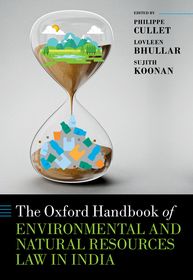
The Oxford Handbook of Environmental and Natural Resources Law in India
-
10% KEDVEZMÉNY?
- A kedvezmény csak az 'Értesítés a kedvenc témákról' hírlevelünk címzettjeinek rendeléseire érvényes.
- Kiadói listaár GBP 146.00
-
65 919 Ft (62 780 Ft + 5% áfa)
Az ár azért becsült, mert a rendelés pillanatában nem lehet pontosan tudni, hogy a beérkezéskor milyen lesz a forint árfolyama az adott termék eredeti devizájához képest. Ha a forint romlana, kissé többet, ha javulna, kissé kevesebbet kell majd fizetnie.
- Kedvezmény(ek) 10% (cc. 6 592 Ft off)
- Kedvezményes ár 59 327 Ft (56 502 Ft + 5% áfa)
Iratkozzon fel most és részesüljön kedvezőbb árainkból!
Feliratkozom
65 919 Ft

Beszerezhetőség
Megrendelésre a kiadó utánnyomja a könyvet. Rendelhető, de a szokásosnál kicsit lassabban érkezik meg.
Why don't you give exact delivery time?
A beszerzés időigényét az eddigi tapasztalatokra alapozva adjuk meg. Azért becsült, mert a terméket külföldről hozzuk be, így a kiadó kiszolgálásának pillanatnyi gyorsaságától is függ. A megadottnál gyorsabb és lassabb szállítás is elképzelhető, de mindent megteszünk, hogy Ön a lehető leghamarabb jusson hozzá a termékhez.
A termék adatai:
- Kiadó OUP Oxford
- Megjelenés dátuma 2024. augusztus 29.
- ISBN 9780198884682
- Kötéstípus Keménykötés
- Terjedelem880 oldal
- Méret 246x171 mm
- Súly 3296 g
- Nyelv angol 533
Kategóriák
Rövid leírás:
The Oxford Handbook of Environmental and Natural Resources Law in India offers the most comprehensive coverage of the diverse and complex discipline of environmental and natural resources law in India over the past fifty years.
TöbbHosszú leírás:
Environmental law is a broad discipline covering issues such as nature conservation, the prevention or abatement of pollution, and waste management. It also encompasses concerns related to natural resources, such as forests, minerals, and fisheries, and the balance between their use and conservation. India has been at the forefront of jurisprudential developments among countries with similar environmental, geographical, socio-economic, and cultural conditions. Concurrently, the country has been receptive to ideas and principles arising from other parts of the world or from international law. The growth of environmental and natural resources law in India has been sustained in equal measure by growing environmental awareness and the increasingly dire nature of the problems associated with the environment and natural resources, ranging from local issues to the global climate crisis. At the same time, the continuous push for development has not abated, leading to recurrent pressure to weaken existing standards for environmental protection and the management and use of natural resources. The Oxford Handbook of Environmental and Natural Resources Law in India offers the most comprehensive coverage of the diverse and complex discipline of environmental and natural resources law in India over the past fifty years. With forty-two contributions from law and non-law scholars, the Handbook presents diverse perspectives on several areas including biodiversity, climate change, water, forests, agriculture, health, resource extraction, and industrial development. By departing from the existing approach that examines natural resources law and environmental law separately, The Oxford Handbook of Environmental and Natural Resources Law in India offers a much-needed integrated analysis of the development of domestic jurisprudence vis-?-vis the environment and natural resources.
TöbbTartalomjegyzék:
Foreword
List of Contributors
Introduction
Part I: Background and Context
Environment, Natural Resources, and Environmental History
International Environmental Law and Interface with India's Domestic Law
Cross-Fertilization of Environmental Law in the SAARC: Exploring Substantive and Constitutional Environmental Rights
The Environment, the Constitution, and the Legal Framework at the National Level
Environmental Movements and Law
Part II: Institutional and Regulatory Dimensions
Governing the Environment in the 5th and 6th Schedule Areas
Bilateral Investment Treaties and the Environment
Economic Instruments and Economic Regulators
Liability
Part III: Principles and Concepts
Sustainable Development: Exploring Jurisprudential and Policy Trajectories
Prevention, Precaution, and Polluter Pays Principles
Public Trust Doctrine
Environmental Duties
Rights of Nature
Procedural Environmental Rights
Due Process and Environmental Law
Part IV: Land, Agriculture, and Biodiversity
Individual and Community Property Rights and Duties in Land and the Environment
Agriculture, Food Systems, and the Environment
Agriculture and Technology
Conservation and Use of Biological Resources
Biosafety in Synthetic Biology
Part V: Fisheries and Marine Environment
Marine Fisheries
Protecting the Coastal and the Marine Environment
Part VI: Forests, Ecosystems, and People
Forest Management and Conservation Regime
Forest Rights and the Forest Rights Act
Ecosystems' Protection and Wildlife
Part VII: Air, Climate Change, and Disasters
Air Quality Regulation
Climate Change: Policy, Institutional, and Legal Frameworks
Environmental Disasters and Climate Change
Part VIII: Water
Groundwater Law: Protection and Use
Water Quality and Water Pollution
Water Sharing and Protection: Inter-State Dimensions
Water Disputes and the Environment: Transboundary Dimensions
Part IX: Health and Sanitation
Health and the Environment
Sanitation: Linkages with the Environment and Public Health
Part X: Resource Extraction, Industrial Development, and Energy
Mining and the Environment
Hazardous Waste
The Bhopal Disaster and the Environment
Energy and Sustainability
Part XI: Enforcement and Litigation
Penalties and Compensation
National Green Tribunal and the Environment
Courts and Solid Waste Management in Urban Areas
Index

