

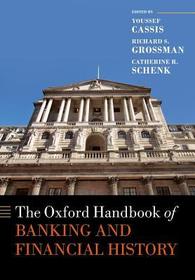
The Oxford Handbook of Banking and Financial History
Sorozatcím: Oxford Handbooks;
-
10% KEDVEZMÉNY?
- A kedvezmény csak az 'Értesítés a kedvenc témákról' hírlevelünk címzettjeinek rendeléseire érvényes.
- Kiadói listaár GBP 36.99
-
17 671 Ft (16 830 Ft + 5% áfa)
Az ár azért becsült, mert a rendelés pillanatában nem lehet pontosan tudni, hogy a beérkezéskor milyen lesz a forint árfolyama az adott termék eredeti devizájához képest. Ha a forint romlana, kissé többet, ha javulna, kissé kevesebbet kell majd fizetnie.
- Kedvezmény(ek) 10% (cc. 1 767 Ft off)
- Kedvezményes ár 15 904 Ft (15 147 Ft + 5% áfa)
Iratkozzon fel most és részesüljön kedvezőbb árainkból!
Feliratkozom
17 671 Ft

Beszerezhetőség
Megrendelésre a kiadó utánnyomja a könyvet. Rendelhető, de a szokásosnál kicsit lassabban érkezik meg.
Why don't you give exact delivery time?
A beszerzés időigényét az eddigi tapasztalatokra alapozva adjuk meg. Azért becsült, mert a terméket külföldről hozzuk be, így a kiadó kiszolgálásának pillanatnyi gyorsaságától is függ. A megadottnál gyorsabb és lassabb szállítás is elképzelhető, de mindent megteszünk, hogy Ön a lehető leghamarabb jusson hozzá a termékhez.
A termék adatai:
- Kiadó OUP Oxford
- Megjelenés dátuma 2017. december 7.
- ISBN 9780198815730
- Kötéstípus Puhakötés
- Terjedelem560 oldal
- Méret 246x171 mm
- Súly 938 g
- Nyelv angol 0
Kategóriák
Rövid leírás:
The financial crisis of 2008 aroused widespread interest in banking and financial history. Contributions to this volume analyse banking and financial history in a long-term comparative perspective. Lessons drawn from these analyses may well help future generations of policy makers avoid a repeat of the financial turbulence that erupted in 2008.
TöbbHosszú leírás:
The financial crisis of 2008 aroused widespread interest in banking and financial history among policy makers, academics, journalists, and even bankers, in addition to the wider public. References in the press to the term 'Great Depression' spiked after the failure of Lehman Brothers in November 2008, with similar surges in references to 'economic history' at various times during the financial turbulence.
In an attempt to better understand the magnitude of the shock, there was a demand for historical parallels. How severe was the financial crash? Was it, in fact, the most severe financial crisis since the Great Depression? Were its causes unique or part of a well-known historical pattern? And have financial crises always led to severe depressions?
Historical reflection on the recent financial crises and the long-term development of the financial system go hand in hand. This volume provides the material for such a reflection by presenting the state of the art in banking and financial history. Nineteen highly regarded experts present chapters on the economic and financial side of banking and financial activities, primarily though not solely in advanced economies, in a long-term comparative perspective. In addition to paying attention to general issues, not least those related to theoretical and methodological aspects of the discipline, the volume approaches the banking and financial world from four distinct but interrelated angles: financial institutions, financial markets, financial regulation, and financial crises.
The global financial crisis that began in 2007-08 and continued to rattle the Eurozone countries after 2010 has certainly been good for the market for financial history. The Oxford Handbook of Banking and Financial History is clearly a response to these events. In their introductory chapter, the editors set out their ambitious agenda, which is to deal with the individual parts of our modern complex financial system and trace how each has evolved over time. Each chapter ends with some insight into how the current turmoil in global banking and finance might affect part of the global financial system. This broad-ranging approach is very much in keeping with current analysis by policy economists, who have become very sensitive to how our financial system intertwines banks.
Tartalomjegyzék:
General Introduction
Part I: Thematic issues
Financial History and History
Financial History and Financial Economics
Finance and Economic Development
Part II: Financial Institutions
Private Banks and Private Banking
Commercial Banking
Investment Banking
From Multinational to Transnational Banking
Small-scale Credit Institutions
Part III: Financial Markets
Money Markets
Securities Markets
International Capital Flows
Financial Centres
Part IV: Financial Regulation
Monetary Systems
Central Banks
International Financial Cooperation
Regulation and Deregulation
State and Finance
Part V: Financial Crises
Banking Crises
Currency Crises
Sovereign Debt Defaults

