

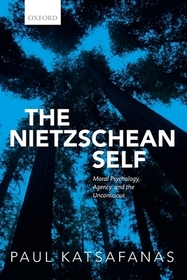
The Nietzschean Self
Moral Psychology, Agency, and the Unconscious
-
10% KEDVEZMÉNY?
- A kedvezmény csak az 'Értesítés a kedvenc témákról' hírlevelünk címzettjeinek rendeléseire érvényes.
- Kiadói listaár GBP 30.99
-
14 805 Ft (14 100 Ft + 5% áfa)
Az ár azért becsült, mert a rendelés pillanatában nem lehet pontosan tudni, hogy a beérkezéskor milyen lesz a forint árfolyama az adott termék eredeti devizájához képest. Ha a forint romlana, kissé többet, ha javulna, kissé kevesebbet kell majd fizetnie.
- Kedvezmény(ek) 10% (cc. 1 481 Ft off)
- Kedvezményes ár 13 325 Ft (12 690 Ft + 5% áfa)
Iratkozzon fel most és részesüljön kedvezőbb árainkból!
Feliratkozom
14 805 Ft

Beszerezhetőség
Megrendelésre a kiadó utánnyomja a könyvet. Rendelhető, de a szokásosnál kicsit lassabban érkezik meg.
Why don't you give exact delivery time?
A beszerzés időigényét az eddigi tapasztalatokra alapozva adjuk meg. Azért becsült, mert a terméket külföldről hozzuk be, így a kiadó kiszolgálásának pillanatnyi gyorsaságától is függ. A megadottnál gyorsabb és lassabb szállítás is elképzelhető, de mindent megteszünk, hogy Ön a lehető leghamarabb jusson hozzá a termékhez.
A termék adatai:
- Kiadó OUP Oxford
- Megjelenés dátuma 2018. december 13.
- ISBN 9780198837107
- Kötéstípus Puhakötés
- Terjedelem304 oldal
- Méret 239x167x16 mm
- Súly 464 g
- Nyelv angol 0
Kategóriák
Rövid leírás:
Paul Katsafanas presents a clear, systematic study of Nietzsche's moral psychology, showing its advantages over its rivals. He examines Nietzsche's accounts of conscious and unconscious; of the connection between drives, desires, affects, and values; of freedom; of the unity of the self, and its relation to its social and historical context.
TöbbHosszú leírás:
Nietzsche's works are replete with discussions of moral psychology, but to date there has been no systematic analysis of his account. How does Nietzsche understand human motivation, deliberation, agency, and selfhood? How does his account of the unconscious inform these topics? What is Nietzsche's conception of freedom, and how do we become free? Should freedom be a goal for all of us? How does--and how should--the individual relate to his social context? The Nietzschean Self offers a clear, comprehensive analysis of these central topics in Nietzsche's moral psychology. It analyzes his distinction between conscious and unconscious mental events, explains the nature of a type of motivational state that Nietzsche calls the 'drive', and examines the connection between drives, desires, affects, and values. It explores Nietzsche's account of willing unity of the self, freedom, and the relation of the self to its social and historical context. The Nietzschean Self argues that Nietzsche's account enjoys a number of advantages over the currently dominant models of moral psychology--especially those indebted to the work of Aristotle, Hume, and Kant--and considers the ways in which Nietzsche's arguments can reconfigure and improve upon debates in the contemporary literature on moral psychology and philosophy of action.
... elegantly-written, with complex exegetical work, philosophical discussion, and historical scholarship woven neatly into an admirably clear and readable whole.
Tartalomjegyzék:
Introduction
The Unconscious
Consciousness as Superficial and Falsifying
Drives
Values
Willing without a Will
The Unified Self
Self, Culture, and Society
The Free Individual
Nietzschean Moral Psychology and its Competitors
References
Index

