

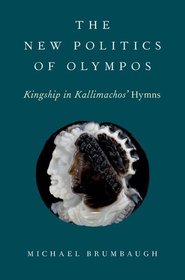
The New Politics of Olympos
Kingship in Kallimachos' Hymns
-
10% KEDVEZMÉNY?
- A kedvezmény csak az 'Értesítés a kedvenc témákról' hírlevelünk címzettjeinek rendeléseire érvényes.
- Kiadói listaár GBP 88.00
-
39 732 Ft (37 840 Ft + 5% áfa)
Az ár azért becsült, mert a rendelés pillanatában nem lehet pontosan tudni, hogy a beérkezéskor milyen lesz a forint árfolyama az adott termék eredeti devizájához képest. Ha a forint romlana, kissé többet, ha javulna, kissé kevesebbet kell majd fizetnie.
- Kedvezmény(ek) 10% (cc. 3 973 Ft off)
- Kedvezményes ár 35 759 Ft (34 056 Ft + 5% áfa)
Iratkozzon fel most és részesüljön kedvezőbb árainkból!
Feliratkozom
39 732 Ft

Beszerezhetőség
Megrendelésre a kiadó utánnyomja a könyvet. Rendelhető, de a szokásosnál kicsit lassabban érkezik meg.
Why don't you give exact delivery time?
A beszerzés időigényét az eddigi tapasztalatokra alapozva adjuk meg. Azért becsült, mert a terméket külföldről hozzuk be, így a kiadó kiszolgálásának pillanatnyi gyorsaságától is függ. A megadottnál gyorsabb és lassabb szállítás is elképzelhető, de mindent megteszünk, hogy Ön a lehető leghamarabb jusson hozzá a termékhez.
A termék adatai:
- Kiadó OUP USA
- Megjelenés dátuma 2019. november 15.
- ISBN 9780190059262
- Kötéstípus Keménykötés
- Terjedelem320 oldal
- Méret 155x236x27 mm
- Súly 612 g
- Nyelv angol
- Illusztrációk 5 0
Kategóriák
Rövid leírás:
This book details how Kallimachos' hymns individually and collectively examine the nature of power, authority, and good governance by situating these praise poems at the intersection of a literary tradition stretching back to archaic Greek poetry and a contemporary political discourse on kingship emerging in the early Hellenistic world.
TöbbHosszú leírás:
The New Politics of Olympos explores the dynamics of praise, power, and persuasion in Kallimachos' hymns, detailing how they simultaneously substantiate and interrogate the radically new phenomenon of Hellenistic kingship taking shape during Kallimachos' lifetime. Long before the Ptolemies invested vast treasure in establishing Alexandria as the center of Hellenic culture and learning, tyrants such as Peisistratos and Hieron recognized the value of poetry in advancing their political agendas. Plato, too, saw the vast power inherent in poetry, and famously advocated either censoring it (Republic) or harnessing it (Laws) for the good of the political community. As Xenophon notes in his Hieron and Pindar demonstrates in his politically charged epinikian hymns, wielding poetry's power entails a complex negotiation between the poet, the audience, and political leaders. Kallimachos' poetic medium for engaging in this dynamic, the hymn, had for centuries served as an unparalleled vehicle for negotiating with the super-powerful.
The New Politics of Olympos offers the first in-depth analysis of Kallimachos' only fully extant poetry book, the Hymns, by examining its contemporary political setting, engagement with a tradition of political thought stretching back to Homer, and portrayal of the poet as an image-maker for the king. In addition to investigating the political dynamics in the individual hymns, this book details how the poet's six hymns, once juxtaposed within a single bookroll, constitute a macro-narrative on the prerogatives of Ptolemaic kingship. Throughout the collection Kallimachos refigures the infamously factious divine family as a paradigm of stability and good governance in concert with the self-fashioning of the Ptolemaic dynasty. At the same time, the poet defines the characteristics and behaviors worthy of praise, effectively shaping contemporary political ethics. Thus, for a Ptolemaic reader, this poetry book may have served as an education in and inducement to good kingship.
Although Brumbaugh's interpretation is fundamentally political, scholars of religion will find much of interest in his interpretation of hymns as valuable political capital in the business of creating divine rulers.
Tartalomjegyzék:
List of Figures
Acknowledgements
Editions and Abbreviations
Introduction: Kallimachos and the Politics of Praise
Part I: On Zeus' Kingship
Chapter 1: Zeus as a Paradigm for Dynastic Continuity
Seeing Double
The Encomiastic Challenge of a Zeus Narrative
The Persuasive Rhetoric of Political "Correction"
Chapter 2: Kallimachos' Hymn "On Kingship"
Greatness, Justice, and the Politics of the Homeric Lottery
The Politics and Structures of Power in Zeus' Regime
"Kings and Singers" Re-Figured
Chapter 3: The Poetics of Praise in the Hymn to Zeus
Praise Makes the King - On Deeds, Praise, and Power
Hymnic Expectations and Musings on the Poet's Task
The (Meta)poetics of Rhea's Search
Dramatizing the Poetic Process
Part II: The Divine Family and the Ptolemaic Dynasty
Chapter 4: Apollo as a New Paradigm for Kingship
Poet as Client and Gatekeeper
Apollo (and) the King
Reading the Hymn in Context
A Poetics of Strife
Chapter 5: Saviors, Tyrants, and the Poetics of Empire
The Poetics of a Destabilized Kosmos
Apollo's Ordered Regime and Universal Empire
Ptolemaic Thalassocracy in a Destabilized Mediterranean
The Dynastic Legacy of "Soterism"
Distinguishing Kingship from Tyranny
Chapter 6: On the Good Queen
The Emergence of Ptolemaic Queenship
Kallimachos' Regal Goddesses
Conclusion: On the Good King According to Kallimachos
Figured Speech and the Didactics of Praise
Hymnic Paradeigmata - A Kallimachean Katoptron Basileos?
Bibliography

