

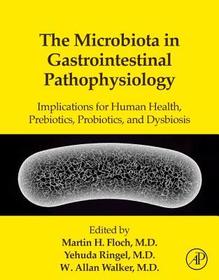
The Microbiota in Gastrointestinal Pathophysiology
Implications for Human Health, Prebiotics, Probiotics, and Dysbiosis
-
10% KEDVEZMÉNY?
- A kedvezmény csak az 'Értesítés a kedvenc témákról' hírlevelünk címzettjeinek rendeléseire érvényes.
- Kiadói listaár EUR 165.00
-
68 433 Ft (65 175 Ft + 5% áfa)
Az ár azért becsült, mert a rendelés pillanatában nem lehet pontosan tudni, hogy a beérkezéskor milyen lesz a forint árfolyama az adott termék eredeti devizájához képest. Ha a forint romlana, kissé többet, ha javulna, kissé kevesebbet kell majd fizetnie.
- Kedvezmény(ek) 10% (cc. 6 843 Ft off)
- Kedvezményes ár 61 590 Ft (58 658 Ft + 5% áfa)
Iratkozzon fel most és részesüljön kedvezőbb árainkból!
Feliratkozom
68 433 Ft

Beszerezhetőség
Megrendelésre a kiadó utánnyomja a könyvet. Rendelhető, de a szokásosnál kicsit lassabban érkezik meg.
Why don't you give exact delivery time?
A beszerzés időigényét az eddigi tapasztalatokra alapozva adjuk meg. Azért becsült, mert a terméket külföldről hozzuk be, így a kiadó kiszolgálásának pillanatnyi gyorsaságától is függ. A megadottnál gyorsabb és lassabb szállítás is elképzelhető, de mindent megteszünk, hogy Ön a lehető leghamarabb jusson hozzá a termékhez.
A termék adatai:
- Kiadó Elsevier Science
- Megjelenés dátuma 2016. december 5.
- ISBN 9780128040249
- Kötéstípus Keménykötés
- Terjedelem442 oldal
- Méret 276x215 mm
- Súly 1400 g
- Nyelv angol 0
Kategóriák
Hosszú leírás:
The Microbiota in Gastrointestinal Pathophysiology: Implications for Human Health, Prebiotics, Probiotics and Dysbiosis is a one-stop reference on the state-of-the-art research on gut microbial ecology in relation to human disease. This important resource starts with an overview of the normal microbiota of the gastrointestinal tract, including the esophagus, stomach, Ileum, and colon.
The book then identifies what a healthy vs. unhealthy microbial community looks like, including methods of identification. Also included is insight into which features and contributions the microbiota make that are essential and useful to host physiology, as is information on how to promote appropriate mutualisms and prevent undesirable dysbioses. Through the power of synthesizing what is known by experienced researchers in the field, current gaps are closed, raising understanding of the role of the microbiome and allowing for further research.
TöbbTartalomjegyzék:
1. The Upper Gastrointestinal Tract - Esophagus and Stomach
2. Characterizing and Functionally Defining the Gut Microbiota: Methodology and Implications
3. The Microbiota of the Gastrointestinal Tract in Infancy
4. The Methods of Identification of the Microbiota In aged
5. Escherichia coli Nissle 1917
6. Probiotics of the Acidophilus Group: Lactobacillus acidophilus, delbrueckii subsp bulgaricus and johnsonii
7. Lactobacillus rhamnosus, strain GG
8. Lactobacillus reuteri
9. Lactobacillus casei & Lactobacillus paracasei
10. The beneficial influences of Lactobacillus plantarum on human health and disease
11. Use of the Bacillus in Human Intestinal Probiotic Applications
12. Bifidobacteria as Probiotic Organisms: An Introduction
13. Bifidobacterium animalis spp. lactis
14. Bifidobacterium bifidum
15. Bifidobacterium breve
16. Bifidobacterium longum
17. Bifidobacterium longum spp. infantis
18. Saccharomyces boulardii
19. Streptococcus thermophilus [Streptococcus salivarius subsp thermophilus]
20. Complexities and Pitfalls in the Production of Multi-Species Probiotics: The Paradigmatic Case of VSL#3 Formulation and Visbiome
21. The Viruses of the Gut Microbiota
22. Dietary fiber, Soluble and Insoluble, Carbohydrates, Fructose and Lipids
23. Prebiotics, Inulin, and other Oligosaccharides
24. The Benefits of Yogurt, Cultures and Fermentation
25. Dysbiosis
26. Immunologic Response in the Host
27. Gastrointestinal Microbiota and the Nural System
28. Effect on the Host Metabolism
29. Relationship Between Gut Microbiota, Energy Metabolism and Obesity
30. Taxonomic and Metagenomic Alterations of Microbiota in Bariatric Surgery
31. The Influence of Microbiota on Mechanisms of Bariatric Surgery
32. Allergic and Immunologic Disorders
33. Probiotics Use in Infectious Disease (Respiratory, Diarrhea and Antibiotic-Associated Diarrhea)
34. The Use of FMT in Clostridia difficile and Potential Uses
35. Probiotics in the Treatment of Pouchitis
36. Probiotic Treatment in Crohn's Disease
37 Treatment of Inflammatory Bowel Disease in Ulcerative Colitis
38. Treatment of Functional Bowel Disorders with Prebiotics and Probiotics
39. Celiac Disease, the Microbiome and Probiotics
40. Probiotics for the Treatment of Liver Disease
41. The Prevention and Treatment of Radiation and Chemotherapy Induced Intestinal Mucositis
42. The Role of the Brain-Gut-Microbiome in Mental Health and Mental Disorders
43. Probiotics in Bacterial Vaginosis

