

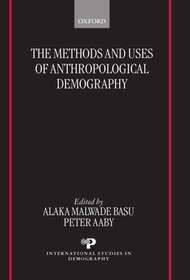
The Methods and Uses of Anthropological Demography
Sorozatcím: International Studies in Demography;
-
10% KEDVEZMÉNY?
- A kedvezmény csak az 'Értesítés a kedvenc témákról' hírlevelünk címzettjeinek rendeléseire érvényes.
- Kiadói listaár GBP 187.50
-
84 656 Ft (80 625 Ft + 5% áfa)
Az ár azért becsült, mert a rendelés pillanatában nem lehet pontosan tudni, hogy a beérkezéskor milyen lesz a forint árfolyama az adott termék eredeti devizájához képest. Ha a forint romlana, kissé többet, ha javulna, kissé kevesebbet kell majd fizetnie.
- Kedvezmény(ek) 10% (cc. 8 466 Ft off)
- Kedvezményes ár 76 191 Ft (72 563 Ft + 5% áfa)
Iratkozzon fel most és részesüljön kedvezőbb árainkból!
Feliratkozom
84 656 Ft

Beszerezhetőség
Megrendelésre a kiadó utánnyomja a könyvet. Rendelhető, de a szokásosnál kicsit lassabban érkezik meg.
Why don't you give exact delivery time?
A beszerzés időigényét az eddigi tapasztalatokra alapozva adjuk meg. Azért becsült, mert a terméket külföldről hozzuk be, így a kiadó kiszolgálásának pillanatnyi gyorsaságától is függ. A megadottnál gyorsabb és lassabb szállítás is elképzelhető, de mindent megteszünk, hogy Ön a lehető leghamarabb jusson hozzá a termékhez.
A termék adatai:
- Kiadó Clarendon Press
- Megjelenés dátuma 1998. szeptember 24.
- ISBN 9780198293378
- Kötéstípus Keménykötés
- Terjedelem340 oldal
- Méret 243x162x24 mm
- Súly 651 g
- Nyelv angol
- Illusztrációk tables 0
Kategóriák
Rövid leírás:
This volume takes stock of the current status of the comparatively new discipline of `Anthropological Demography', and discusses its major methods, its main strengths, and its chief limitations. It includes contributions from both mainstream demographers and foremost anthropologists, all stressing the necessity of a shared agenda for each discipline to progress successfully and avoid marginalization.
TöbbHosszú leírás:
This volume takes stock of the current status of the comparatively new discipline of `Anthropological Demography', and discusses its major methods, its main strengths, and its chief limitations. It includes contributions from both mainstream demographers and foremost anthropologists, all stressing the necessity of a shared agenda for each discipline to progress successfully and avoid marginalization.
While the unique research and personal satisfaction afforded by `participant observation' is described, the book also highlights the potential contribution to the understanding of demographic events of much more than the field methods of traditional anthropology. In particular, it stresses the insights possible from qualitative focus group interviews, from longitudinal studies and from a greater interest in `armchair' anthropology, in which demographers complement their quantitative findings with qualitative information and understanding gleaned from a careful reading of the anthropological literature, in the form of both ethnographies and anthropological theories. In addition, it stresses the larger world of the ideal anthropological demographer: a world that includes the cultural context of course, but also takes into account the historical and political forces that condition so much individual behaviour.
But the book is also a critical venture. It includes therefore considerable discussion of the common limits of the purely anthropological approach for understanding demographic events and processes, especially from a larger policy perspective, at the same time as it emphasizes the crucial role of the anthropological approach to designing policy that is potentially effective as well as socially and culturally sensitive. It reiterates the often complementary role of anthropological demography and also discusses some specific questions in demographic research which it does not as yet seem to have the capacity to illuminate.
The book is aimed primarily at demographers wishing to broaden their research agenda and deepen their understanding of demographic behaviour, but it also hopes to convert mainstream anthropologists to take a more active interest in demographic issues. Both disciplines, after all, have a common intense interest in the kind of life and death issues that they can fruitfully explore together or by using one another's research methods.
The book is an important contribution to a reconfiguration of demography as a scientific discipline, and the book is an obvious input to university courses within anthropology, sociology and geography on demography and development.
Tartalomjegyzék:
Introduction: Approaches to Anthropological Demography
Methodological Advances in Studying the Social Context of AIDS in Africa
Participant Observation in Demographic Research: Fieldwork Experiences in a Ghanaian Community
Using Qualitative Data for Understanding Old-Age Security and Fertility
Anthropological Insights into the Links between Women's Status and Demographic Behaviour, Illustrated with the Notions of Hypergamy and Territorial Exogamy
Kinship Structures, Marriage Systems, and Reproductive Behaviour: The Use of Anthropology and Demography in a Brazilian Case Study
Education, Fertility, and Child Survival: Unravelling the Links
A Rereading of Historical Material: An Alternative Account of the Position of Women in Ancient India
Political Economy and Cultural Processes in the Fertility Decline of Sicilian Artisans
Anthropological Perspectives on Migration in Africa
Are Men Weaker or Do their Sisters Talk Too Much? Sex Differences in Childhood Mortality and the Construction of `Biological' Differences
Cultural Models and Demographic Behaviour
Social Norms, Natural Fertility, and the Resumption of Postpartum `Contact' in The Gambia
The Limits of Diffusionism

