

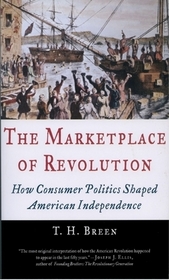
The Marketplace of Revolution
How Consumer Politics Shaped American Independence
-
10% KEDVEZMÉNY?
- A kedvezmény csak az 'Értesítés a kedvenc témákról' hírlevelünk címzettjeinek rendeléseire érvényes.
- Kiadói listaár GBP 16.49
-
7 445 Ft (7 090 Ft + 5% áfa)
Az ár azért becsült, mert a rendelés pillanatában nem lehet pontosan tudni, hogy a beérkezéskor milyen lesz a forint árfolyama az adott termék eredeti devizájához képest. Ha a forint romlana, kissé többet, ha javulna, kissé kevesebbet kell majd fizetnie.
- Kedvezmény(ek) 10% (cc. 745 Ft off)
- Kedvezményes ár 6 700 Ft (6 381 Ft + 5% áfa)
Iratkozzon fel most és részesüljön kedvezőbb árainkból!
Feliratkozom
7 445 Ft

Beszerezhetőség
Megrendelésre a kiadó utánnyomja a könyvet. Rendelhető, de a szokásosnál kicsit lassabban érkezik meg.
Why don't you give exact delivery time?
A beszerzés időigényét az eddigi tapasztalatokra alapozva adjuk meg. Azért becsült, mert a terméket külföldről hozzuk be, így a kiadó kiszolgálásának pillanatnyi gyorsaságától is függ. A megadottnál gyorsabb és lassabb szállítás is elképzelhető, de mindent megteszünk, hogy Ön a lehető leghamarabb jusson hozzá a termékhez.
A termék adatai:
- Kiadó OUP USA
- Megjelenés dátuma 2005. január 20.
- ISBN 9780195181319
- Kötéstípus Puhakötés
- Terjedelem400 oldal
- Méret 231x158x21 mm
- Súly 558 g
- Nyelv angol
- Illusztrációk 44 halftones & line illus. 0
Kategóriák
Rövid leírás:
A new interpretation about the coming of the American Revolution, Breen focuses on how the American colonists accumulated consumer goods from England.
TöbbHosszú leírás:
The Marketplace of Revolution offers a boldly innovative interpretation of the mobilization of ordinary Americans on the eve of independence. Breen explores how colonists who came from very different ethnic and religious backgrounds managed to overcome difference and create a common cause capable of galvanizing resistance. In a richly interdisciplinary narrative that weaves insights into a changing material culture with analysis of popular political protests, Breen shows how virtual strangers managed to communicate a sense of trust that effectively united men and women long before they had established a nation of their own.
The Marketplace of Revolution argues that the colonists' shared experience as consumers in a new imperial economy afforded them the cultural resources that they needed to develop a radical strategy of political protest--the consumer boycott. Never before had a mass political movement organized itself around disruption of the marketplace. As Breen demonstrates, often through anecdotes about obscure Americans, communal rituals of shared sacrifice provided an effective means to educate and energize a dispersed populace. The boycott movement--the signature of American resistance--invited colonists traditionally excluded from formal political processes to voice their opinions about liberty and rights within a revolutionary marketplace, an open, raucous public forum that defined itself around subscription lists passed door-to-door, voluntary associations, street protests, destruction of imported British goods, and incendiary newspaper exchanges. Within these exchanges was born a new form of politics in which ordinary man and women--precisely the people most often overlooked in traditional accounts of revolution--experienced an exhilarating surge of empowerment.
Breen recreates an "empire of goods" that transformed everyday life during the mid-eighteenth century. Imported manufactured items flooded into the homes of colonists from New Hampshire to Georgia. The Marketplace of Revolution explains how at a moment of political crisis Americans gave political meaning to the pursuit of happiness and learned how to make goods speak to power.
... raise[s] important questions about the politics of consumption in the early modern era, adding a valuable dimension to what has proved one of the liveliest historical fields in the past twenty years.

