

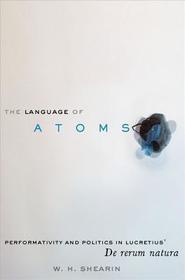
The Language of Atoms
Performativity and Politics in Lucretius' De rerum natura
-
10% KEDVEZMÉNY?
- A kedvezmény csak az 'Értesítés a kedvenc témákról' hírlevelünk címzettjeinek rendeléseire érvényes.
- Kiadói listaár GBP 93.00
-
41 989 Ft (39 990 Ft + 5% áfa)
Az ár azért becsült, mert a rendelés pillanatában nem lehet pontosan tudni, hogy a beérkezéskor milyen lesz a forint árfolyama az adott termék eredeti devizájához képest. Ha a forint romlana, kissé többet, ha javulna, kissé kevesebbet kell majd fizetnie.
- Kedvezmény(ek) 10% (cc. 4 199 Ft off)
- Kedvezményes ár 37 791 Ft (35 991 Ft + 5% áfa)
Iratkozzon fel most és részesüljön kedvezőbb árainkból!
Feliratkozom
41 989 Ft

Beszerezhetőség
Megrendelésre a kiadó utánnyomja a könyvet. Rendelhető, de a szokásosnál kicsit lassabban érkezik meg.
Why don't you give exact delivery time?
A beszerzés időigényét az eddigi tapasztalatokra alapozva adjuk meg. Azért becsült, mert a terméket külföldről hozzuk be, így a kiadó kiszolgálásának pillanatnyi gyorsaságától is függ. A megadottnál gyorsabb és lassabb szállítás is elképzelhető, de mindent megteszünk, hogy Ön a lehető leghamarabb jusson hozzá a termékhez.
A termék adatai:
- Kiadó OUP USA
- Megjelenés dátuma 2015. január 15.
- ISBN 9780190202422
- Kötéstípus Keménykötés
- Terjedelem232 oldal
- Méret 163x234x25 mm
- Súly 442 g
- Nyelv angol 0
Kategóriák
Rövid leírás:
The Language of Atoms argues that Epicurean writing, specifically Lucretius', offers a theory of performative language, of how language acts rather than describes.
TöbbHosszú leírás:
The Language of Atoms argues that ancient Epicurean writing on language offers a theory of performative language. Such a theory describes how languages acts, providing psychic therapy or creating new verbal meanings, rather than passively describing the nature of the universe. This observation allows us new insight into how Lucretius, our primary surviving Epicurean author, uses language in his great poem, De rerum natura (On the Nature of Things). The book begins with a double contention: on the one hand, while scholarship on Lucretius has looked to connect Lucretius' text to its larger cultural and historical context, it has never turned to speech act theory in this quest. This omission is striking at least in so far as speech act theory was developed precisely as a way of locating language (including texts) within a theory of action. The book studies Lucretius' work in the light of performative language, looking at promising, acts of naming, and the larger political implications of these linguistic acts. The Language of Atoms locates itself at the intersection of both older scholarly work on Epicureanism and recent developments on the reception history, and will thus offer scholars across the humanities a challenging new perspective on Lucretius' work.
One of the most exciting fields currently in Classics is the study of ancient philosophical texts not simply as systems of thought but as dynamic historical and discursive phenomena that exploit the social practices and linguistic resources of the culture in which they are produced. In his rigorous exploration of the performative dimension of the De rerum natura, Shearin takes the study of the language of Lucretius to a new level of critical sophistication, and offers a fresh and compelling understanding of the poem's claims to a practical, therapeutic function.
Tartalomjegyzék:
Acknowledgments
Preface
1) Speech Acts in Epicureanism
2) Lucretian Promises: fides, foedus, and the Politics of Nature
3) Antonomasia, Anonymity, and Atoms: Naming Effects in De rerum natura
4) Catachrestic Origins: Speech Acts and the Politics of the Performative
Works Cited
Index

