

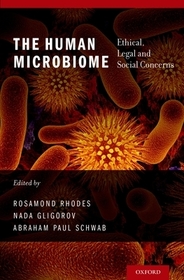
The Human Microbiome
Ethical, Legal and Social Concerns
-
10% KEDVEZMÉNY?
- A kedvezmény csak az 'Értesítés a kedvenc témákról' hírlevelünk címzettjeinek rendeléseire érvényes.
- Kiadói listaár GBP 78.00
-
35 217 Ft (33 540 Ft + 5% áfa)
Az ár azért becsült, mert a rendelés pillanatában nem lehet pontosan tudni, hogy a beérkezéskor milyen lesz a forint árfolyama az adott termék eredeti devizájához képest. Ha a forint romlana, kissé többet, ha javulna, kissé kevesebbet kell majd fizetnie.
- Kedvezmény(ek) 10% (kb. 3 522 Ft)
- Kedvezményes ár 31 695 Ft (30 186 Ft + 5% áfa)
Iratkozzon fel most és részesüljön kedvezőbb árainkból!
Feliratkozom
35 217 Ft

Beszerezhetőség
Megrendelésre a kiadó utánnyomja a könyvet. Rendelhető, de a szokásosnál kicsit lassabban érkezik meg.
Why don't you give exact delivery time?
A beszerzés időigényét az eddigi tapasztalatokra alapozva adjuk meg. Azért becsült, mert a terméket külföldről hozzuk be, így a kiadó kiszolgálásának pillanatnyi gyorsaságától is függ. A megadottnál gyorsabb és lassabb szállítás is elképzelhető, de mindent megteszünk, hogy Ön a lehető leghamarabb jusson hozzá a termékhez.
A termék adatai:
- Kiadás sorszáma 1
- Kiadó OUP USA
- Megjelenés dátuma 2013. augusztus 15.
- ISBN 9780199829415
- Kötéstípus Keménykötés
- Terjedelem288 oldal
- Méret 236x155x25 mm
- Súly 522 g
- Nyelv angol 0
Kategóriák
Rövid leírás:
Human microbiome research has revealed that legions of bacteria, viruses, and fungi live on our skin and within the cavities of our bodies. New knowledge from these recent studies shows that humans are superorganisms and that the microbiome is indispensible to our lives and our health. This volume explores some of the science on the human microbiome and considers the ethical, legal, and social concerns that are raised by this research.
TöbbHosszú leírás:
The human microbiome is the bacteria, viruses, and fungi that cover our skin, line our intestines, and flourish in our body cavities. Work on the human microbiome is new, but it is quickly becoming a leading area of biomedical research. What scientists are learning about humans and our microbiomes could change medical practice by introducing new treatment modalities. This new knowledge redefines us as superorganisms comprised of the human body and the collection of microbes that inhabit it and reveals how much we are a part of our environment. The understanding that microbes are not only beneficial but sometimes necessary for survival recasts our interaction with microbes from adversarial to neighborly.
This volume explores some of the science that makes human microbiome research possible. It then considers ethical, legal, and social concerns raised by microbiome research. Chapters explore issues related to personal identity, property rights, and privacy. The authors reflect on how human microbiome research challenges reigning views on public health and research ethics. They also address the need for thoughtful policies and procedures to guide the use of the biobanked human samples required for advancing this new domain of research. In the course of these explorations, they introduce examples from the history of biomedical science and recent legal cases that shed light on the issues and inform the policy recommendations they offer at the end of each topic's discussion.
This volume is the product of an NIH Human Microbiome Project grant. It represents three years of conversations focused on consensus formation by the twenty-seven members of the interdisciplinary Microbiome Working Group.
"The microbiome is a relatively new area of medical attention. Ethical issues related to the microbiome have barely been identified, much less carefully analyzed. This volume is an excellent start toward that ethical analysis. Many of the arguments are persuasive and provocative. In particular, some contributors challenge the ethical need for anonymizing microbiome specimens as well as the need for individual informed consent for specific uses of these specimens. I highly recommend this volume for all those interested in the microbiome and in new frontiers in medical ethics." -Leonard M. Fleck, Michigan State University
Tartalomjegyzék:
Acknowledgements
Microbiome Working Group Participants
Introduction: Looking Back and Looking Forward
Rosamond Rhodes
The Project Collaborators
Our Method
The Scope of this Volume
Reading this Book
1. The Human Microbiome: Science, History and Research
Lily E. Frank, Martin J. Blaser, Kurt Hirschhorn, Daniel A. Moros, Matthew E. Rhodes, Sean Philpott, Rhoda Sperling, Keith Benkov
Introduction
The Role of Microorganisms in the Environment
The Use of Microorganisms in Industry and Food Production
The History of Microorganisms in Human Health and Disease
The Human Microbiome
Human Microbiome Project and the National Institutes of Health
Research Tools and Methods
Acquisition of the Microbiome
Interactions between the Microbiome and the Host Genome
Manipulating the Microbiome for Medical Purposes
Conclusion
2. Personal Identity: Our Microbes, Ourselves
Nada Gligorov, Jody Azzouni, Douglas P. Lackey, Arnold Zweig
Introduction
Personal Identity over Time
The Human Microbiome and Numerical Identity
The Human Microbiome and Conceptions of Self
The Impact of Science on Commonsense Conceptions of Self
Conclusion
Policy Recommendations
3. Property and Research on the Human Microbiome
Mary Ann Baily, Abraham P. Schwab, Joseph Goldfarb, Kurt Hirschhorn, Rosamond Rhodes, Brett Trusko
Four Controversial Cases
Introduction
Ownership and Property in Philosophy
Ownership and Property in the Social Sciences
Ownership and Property in the Context of Biomedical Research
Current Property Structures and Research on the Human Microbiome
Patents
Copyrights
Property Rights and Biological Samples
Conclusion
Policy Recommendations
4. Privacy, Confidentiality, and New Ways of Knowing More
Nada Gligorov, Lily E. Frank, Abraham P. Schwab, Brett Trusko
Introduction
Philosophical Approaches to Privacy
Confidentiality
Legislations to Protect Medical and Research Information
Data Sharing
Conclusion
Policy Recommendations
5. Research Ethics
Rosamond Rhodes, Joseph W. Dauben, Lily E. Frank, Daniel A. Moros, Sean Philpott, Martin J. Blaser
Introduction
The Landscape of Microbiome Research
Historical Development of Research Ethics Regulation and Guidelines
Research Ethics and Human Microbiome Research
Critical Reflections on the U.S. Framework for Human Subject Research
Implications for the Conduct of Human Subject Microbiome Research
Research and Regulation of Probiotics and Phages
Conclusion
Policy Recommendations
6. Biobanks and the Human Microbiome
Abraham P. Schwab, Barbara Brenner, Joseph Goldfarb, Rochelle Hirschhorn, Sean Philpott
Introduction
What is a Biobank?
Human Microbiome Biobanks
Ethical, Legal, and Social Implications (ELSI) of Human Microbiome Biobanks
International Biobanks
Community Consultation: A Reasonable Approach to Participatory Research
Discrimination and Other Issues
Conclusion
Policy Recommendations
7. Public Health and Research on Populations
Rosamond Rhodes, Stefan Bernard Baumrin, Martin J. Blaser, William J. Earle, Debbie Indyk, Ethylin Wang Jabs, Daniel A. Moros, Lynne D. Richardson, Henry S. Sacks
Microbes and Public Health
Public Health, Liberty, and Privacy
Public Health Functions
Public Health Agency Powers
Public Health Methods
Research Regulations and Public Health Data Gathering
Quality Assurance, Quality Improvement and Surveillance
De Minimis Risk: A Proposal for a New Category of Research Risk
Additional Factors in the Ethical Conduct of Population Studies
Prevention and Education
Cautions for Public Health Policy Makers
Coda: Further Philosophical Reflections on Public Health and the Microbiome
Policy Recommendations
Glossary
Index

