

-
20% KEDVEZMÉNY?
- A kedvezmény csak az 'Értesítés a kedvenc témákról' hírlevelünk címzettjeinek rendeléseire érvényes.
- Kiadói listaár GBP 9.99
-
4 510 Ft (4 295 Ft + 5% áfa)
Az ár azért becsült, mert a rendelés pillanatában nem lehet pontosan tudni, hogy a beérkezéskor milyen lesz a forint árfolyama az adott termék eredeti devizájához képest. Ha a forint romlana, kissé többet, ha javulna, kissé kevesebbet kell majd fizetnie.
- Kedvezmény(ek) 20% (cc. 902 Ft off)
- Kedvezményes ár 3 608 Ft (3 436 Ft + 5% áfa)
- A kedvezmény érvényes eddig: 2026. június 30.
Iratkozzon fel most és részesüljön kedvezőbb árainkból!
Feliratkozom
4 510 Ft

Beszerezhetőség
Becsült beszerzési idő: A Prosperónál jelenleg nincsen raktáron, de a kiadónál igen. Beszerzés kb. 3-5 hét..
A Prosperónál jelenleg nincsen raktáron.
Why don't you give exact delivery time?
A beszerzés időigényét az eddigi tapasztalatokra alapozva adjuk meg. Azért becsült, mert a terméket külföldről hozzuk be, így a kiadó kiszolgálásának pillanatnyi gyorsaságától is függ. A megadottnál gyorsabb és lassabb szállítás is elképzelhető, de mindent megteszünk, hogy Ön a lehető leghamarabb jusson hozzá a termékhez.
A termék adatai:
- Kiadó OUP Oxford
- Megjelenés dátuma 2018. július 26.
- ISBN 9780198748762
- Kötéstípus Puhakötés
- Terjedelem176 oldal
- Méret 175x110x10 mm
- Súly 157 g
- Nyelv angol
- Illusztrációk 8 black and white images 30
Kategóriák
Rövid leírás:
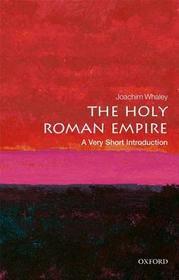
This Very Short Introduction explores the thousand-year history of the Holy Roman Empire, from its origins in 800 as Charlemagne's Frankish kingdom, to its destruction by Napoleon. Throughout, Joachim Whaley analyses the empire's crucial impact and role in the history of European power and politics.
TöbbHosszú leírás:
Voltaire's description of the Holy Roman Empire as 'neither holy, nor Roman, nor an empire' is often cited to underline its worthlessness. German historians traditionally despised it because it had allegedly impeded German unification. Since 1945 scholars have been more positive but the empire's history and significance is still largely misunderstood.
In this Very Short Introduction Joachim Whaley outlines the fascinating thousand-year history of the Holy Roman Empire. Founded in 800 on the basis of Charlemagne's Frankish kingdom, its imperial title went to the German monarchy which became established in the ninth and ten centuries. They claimed Charlemagne's legacy, including his role as protector of the papacy and guardian of the Church. Around 1500 the title Holy Roman Empire of the German Nation was adopted. An elective monarchy, the empire gradually developed from a feudal monarchy into a legal system that pacified the territories and cities of German-speaking Europe. By 1519 it had a supreme court and a regional enforcement system ended feuding. Throughout its lifetime, the empire's growth and history was shaped by the major developments in Europe, from the Reformation, to the Thirty Years War, to the French revolutionary wars, which led to Napoleon destroying the empire in 1806. The sense of a common history over a thousand years and the legal traditions established by the empire have shaped the history of German-speaking Europe ever since. Joachim Whaley analyses the empire's crucial impact and role in the history of European power and politics, and shows that there has never been a more durable political system in German history.
ABOUT THE SERIES: The Very Short Introductions series from Oxford University Press contains hundreds of titles in almost every subject area. These pocket-sized books are the perfect way to get ahead in a new subject quickly. Our expert authors combine facts, analysis, perspective, new ideas, and enthusiasm to make interesting and challenging topics highly readable.
By analysing and narrating the essentials of one of the most complex and long-lived of all European institutions, and moreover doing it lucidly and entertainingly, Whaley has performed something of a miracle.
Tartalomjegyzék:
Introduction - What was the Holy Roman Empire?
Roman Empire and German Kingdom: From Charlemagne to the Ottonians
The High Medieval Empire: From the Salians to the Hohenstaufen
The Later Medieval Empire: The emergence of the Habsburgs
The Early Modern Empire (1): From Maximilian I to the Thirty Years War
The Early Modern Empire (2): From the Peace of Westphalia to 1806
Conclusion: The Legacy of the Holy Roman Empire
Maps
Chronology
Further Reading
Index

