

-
10% KEDVEZMÉNY?
- A kedvezmény csak az 'Értesítés a kedvenc témákról' hírlevelünk címzettjeinek rendeléseire érvényes.
- Kiadói listaár GBP 310.00
-
148 102 Ft (141 050 Ft + 5% áfa)
Az ár azért becsült, mert a rendelés pillanatában nem lehet pontosan tudni, hogy a beérkezéskor milyen lesz a forint árfolyama az adott termék eredeti devizájához képest. Ha a forint romlana, kissé többet, ha javulna, kissé kevesebbet kell majd fizetnie.
- Kedvezmény(ek) 10% (cc. 14 810 Ft off)
- Kedvezményes ár 133 292 Ft (126 945 Ft + 5% áfa)
Iratkozzon fel most és részesüljön kedvezőbb árainkból!
Feliratkozom
148 102 Ft

Beszerezhetőség
Megrendelésre a kiadó utánnyomja a könyvet. Rendelhető, de a szokásosnál kicsit lassabban érkezik meg.
Why don't you give exact delivery time?
A beszerzés időigényét az eddigi tapasztalatokra alapozva adjuk meg. Azért becsült, mert a terméket külföldről hozzuk be, így a kiadó kiszolgálásának pillanatnyi gyorsaságától is függ. A megadottnál gyorsabb és lassabb szállítás is elképzelhető, de mindent megteszünk, hogy Ön a lehető leghamarabb jusson hozzá a termékhez.
A termék adatai:
- Kiadó OUP Oxford
- Megjelenés dátuma 2002. augusztus 29.
- ISBN 9780198167136
- Kötéstípus Keménykötés
- Terjedelem348 oldal
- Méret 255x195x24 mm
- Súly 1139 g
- Nyelv angol
- Illusztrációk numerous halftones and musical examples 0
Kategóriák
Rövid leírás:
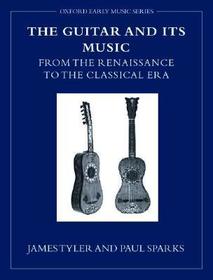
Following James Tyler's earlier introduction to the history, repertory, and playing techniques of the four- and five-course guitar (The Early Guitar, OUP 1980), which performers and scholars of Renaissance and Baroque guitar and lute music and classical guitarists found valuable and enlightening, this new book, written in collaboration with Paul Sparks and incorporating the latest ideas and research, is an authoritative guide to the history and repertory of the guitar from the Renaissance to the dawn of the Classical era.
TöbbHosszú leírás:
More than twenty years ago James Tyler wrote a modest introduction to the history, repertory, and playing techniques of the four- and five-course guitar. Entitled The Early Guitar: A History and Handbook (OUP 1980), this work proved valuable and enlightening not only to performers and scholars of Renaissance and Baroque guitar and lute music but also to classical guitarists. This new book, written in collaboration with Paul Sparks (their previous book for OUP, The Early Mandolin, appeared in 1989), presents new ideas and research on the history and development of the guitar and its music from the Renaissance to the dawn of the Classical era.
Tyler's systematic study of the two main guitar types found between about 1550 and 1750 focuses principally on what the sources of the music (published and manuscript) and the writings of contemporary theorists reveal about the nature of the instruments and their roles in the music making of the period. The annotated lists of primary sources, previously published in The Early Guitar but now revised and expanded, constitute the most comprehensive bibliography of Baroque guitar music to date. His appendices of performance practice information should also prove indispensable to performers and scholars alike.
Paul Sparks also breaks new ground, offering an extensive study of a period in the guitar's history--notably c.1759-c.1800--which the standard histories usually dismiss in a few short paragraphs. Far from being a dormant instrument at this time, the guitar is shown to have been central to music-making in France, Italy, the Iberian Peninsula, and South America. Sparks provides a wealth of information about players, composers, instruments, and surviving compositions from this neglected but important period, and he examines how the five-course guitar gradually gave way to the six-string instrument, a process that occurred in very different ways (and at different times) in France, Italy, Spain, Germany, and Britain.
... exquisitely researched tome ... fascinating as a tool for frequent reference and a good read too.
Tartalomjegyzék:
Dedication
Preface
List of Illustrations
List of Tables
List of Musical Examples
List of Abbreviations
Acknowledgements
Part I: The Guitar in the Sixteenth Century
Spain: La Guitarra de quatro ordenes
France: The Creation of the Repertory
England: '... yused of gentilmen, and of the best sort ...'
Italy: La Chitarra da sette corde
Italy: The Role of the Guitar in the Rise of Monody
Part II: The Spanish Guitar (c.1600-c.1750)
Italy: The Creation of the Repertory
France: Les Guitarristes Royals
1. England
2. The Low Countries
3. Scandinavia
4. Germany and the Austrian Empire
Spain, Portugal, and the New World
Appendix I. A Brief Guide to Reading and Interpreting Baroque Guitar Tablatures
Appendix II. Sources of Specific Information on the Tuning and Stringing of the Five-course Guitar
Appendix III. The Mandora
Part III: The Origins of the Classical Guitar
1750-69: The Emergence of the Six-Course Guitar
1. Spain, Portugal, and South America
2. France
3. Britain
1770-89: The First Six-String Guitars
1. A Short History of String Making
2. Spain, South America, and Portugal
3. Italy
4. France
5. England. Germany, and Austria
1790 to the Early 1800s: The Triumph of the Six-String Guitar
1. Spain and Portugal
2. Britain
3. Italy
4. France
5. Germany, Austria, and Elsewhere
The Guitar 1750-c.1800: Practical Information
1. The Instrument
2. Strings
3. Playing Positions
4. Specialist Techniques and Ornamentation
Appendix IV: Primary Sources (1750-c. 1800)
Paris - Instrumental Music (Published)
Paris - Songs with Guitar Accompaniment (Published)
Guitar Methods (Published and Manuscript)
Non-Parisian Guitar Music (Published and Manuscript)
Appendix V: Pieces for Guitar (c.1750-c.!800)
Bibliography of Secondary Sources
Index

