

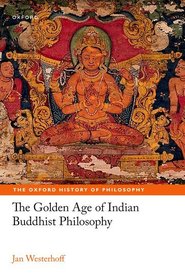
The Golden Age of Indian Buddhist Philosophy
Sorozatcím: The Oxford History of Philosophy;
-
10% KEDVEZMÉNY?
- A kedvezmény csak az 'Értesítés a kedvenc témákról' hírlevelünk címzettjeinek rendeléseire érvényes.
- Kiadói listaár GBP 20.99
-
9 476 Ft (9 025 Ft + 5% áfa)
Az ár azért becsült, mert a rendelés pillanatában nem lehet pontosan tudni, hogy a beérkezéskor milyen lesz a forint árfolyama az adott termék eredeti devizájához képest. Ha a forint romlana, kissé többet, ha javulna, kissé kevesebbet kell majd fizetnie.
- Kedvezmény(ek) 10% (cc. 948 Ft off)
- Kedvezményes ár 8 529 Ft (8 123 Ft + 5% áfa)
Iratkozzon fel most és részesüljön kedvezőbb árainkból!
Feliratkozom
9 476 Ft

Beszerezhetőség
Megrendelésre a kiadó utánnyomja a könyvet. Rendelhető, de a szokásosnál kicsit lassabban érkezik meg.
Why don't you give exact delivery time?
A beszerzés időigényét az eddigi tapasztalatokra alapozva adjuk meg. Azért becsült, mert a terméket külföldről hozzuk be, így a kiadó kiszolgálásának pillanatnyi gyorsaságától is függ. A megadottnál gyorsabb és lassabb szállítás is elképzelhető, de mindent megteszünk, hogy Ön a lehető leghamarabb jusson hozzá a termékhez.
A termék adatai:
- Kiadó OUP Oxford
- Megjelenés dátuma 2023. február 1.
- ISBN 9780198878391
- Kötéstípus Puhakötés
- Terjedelem352 oldal
- Méret 235x154x20 mm
- Súly 530 g
- Nyelv angol 276
Kategóriák
Rövid leírás:
Jan Westerhoff unfolds the story of one of the richest episodes in the history of Indian thought, the development of Buddhist philosophy during the first millennium CE. He aims to offer the reader a systematic grasp of key Buddhist concepts such as non-self, suffering, reincarnation, karma, and nirvana.
TöbbHosszú leírás:
Jan Westerhoff unfolds the story of one of the richest episodes in the history of Indian thought, the development of Buddhist philosophy in the first millennium CE. He starts from the composition of the Abhidharma works before the beginning of the common era and continues up to the time of Dharmakirti in the sixth century. This period was characterized by the development of a variety of philosophical schools and approaches that have shaped Buddhist thought up to the present day: the scholasticism of the Abhidharma, the Madhyamaka's theory of emptiness, Yogacara idealism, and the logical and epistemological works of Dinnaga and Dharmakirti. The book attempts to describe the historical development of these schools in their intellectual and cultural context, with particular emphasis on three factors that shaped the development of Buddhist philosophical thought: the need to spell out the contents of canonical texts, the discourses of the historical Buddha and the Mahayana sutras; the desire to defend their positions by sophisticated arguments against criticisms from fellow Buddhists and from non-Buddhist thinkers of classical Indian philosophy; and the need to account for insights gained through the application of specific meditative techniques. While the main focus is the period up to the sixth century CE, Westerhoff also discusses some important thinkers who influenced Buddhist thought between this time and the decline of Buddhist scholastic philosophy in India at the beginning of the thirteenth century. His aim is that the historical presentation will also allow the reader to get a better systematic grasp of key Buddhist concepts such as non-self, suffering, reincarnation, karma, and nirvana.
'A remarkable accomplishment especially for its consistent emphasis on a systematic engagement with Buddhist philosophy'
Tartalomjegyzék:
Introduction
Abhidharma
Madhyamaka
Yogacara
The School of Dinnaga and Dharmakirti

