

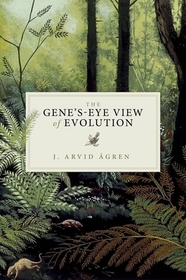
The Gene's-Eye View of Evolution
-
10% KEDVEZMÉNY?
- A kedvezmény csak az 'Értesítés a kedvenc témákról' hírlevelünk címzettjeinek rendeléseire érvényes.
- Kiadói listaár GBP 35.99
-
16 249 Ft (15 475 Ft + 5% áfa)
Az ár azért becsült, mert a rendelés pillanatában nem lehet pontosan tudni, hogy a beérkezéskor milyen lesz a forint árfolyama az adott termék eredeti devizájához képest. Ha a forint romlana, kissé többet, ha javulna, kissé kevesebbet kell majd fizetnie.
- Kedvezmény(ek) 10% (cc. 1 625 Ft off)
- Kedvezményes ár 14 624 Ft (13 928 Ft + 5% áfa)
Iratkozzon fel most és részesüljön kedvezőbb árainkból!
Feliratkozom
16 249 Ft

Beszerezhetőség
Megrendelésre a kiadó utánnyomja a könyvet. Rendelhető, de a szokásosnál kicsit lassabban érkezik meg.
Why don't you give exact delivery time?
A beszerzés időigényét az eddigi tapasztalatokra alapozva adjuk meg. Azért becsült, mert a terméket külföldről hozzuk be, így a kiadó kiszolgálásának pillanatnyi gyorsaságától is függ. A megadottnál gyorsabb és lassabb szállítás is elképzelhető, de mindent megteszünk, hogy Ön a lehető leghamarabb jusson hozzá a termékhez.
A termék adatai:
- Kiadó OUP Oxford
- Megjelenés dátuma 2021. július 21.
- ISBN 9780198862260
- Kötéstípus Keménykötés
- Terjedelem258 oldal
- Méret 239x165x14 mm
- Súly 580 g
- Nyelv angol 122
Kategóriák
Rövid leírás:
The central aim of this accessible book is to show how the gene's-eye view differs from the traditional organismal account of evolution, trace its historical origins, clarify typical misunderstandings and, by using examples from contemporary experimental work, show why so many evolutionary biologists still consider it an indispensable heuristic.
TöbbHosszú leírás:
'Arvid --gren has undertaken the most meticulously thorough reading of the relevant literature that I have ever encountered, deploying an intelligent understanding to pull it into a coherent story. As if that wasn't enough, he gets it right.' (Richard Dawkins)
To many evolutionary biologists, the central challenge of their discipline is to explain adaptation, the appearance of design in the living world. With the theory of evolution by natural selection, Charles Darwin elegantly showed how a purely mechanistic process can achieve this striking feature of nature. Since then, the way many biologists have thought about evolution and natural selection is as a theory about individual organisms. Over a century later, a subtle but radical shift in perspective emerged with the gene's-eye view of evolution in which natural selection was conceptualized as a struggle between genes for replication and transmission to the next generation. This viewpoint culminated with the publication of The Selfish Gene by Richard Dawkins (Oxford University Press, 1976) and is now commonly referred to as selfish gene thinking.
The gene's-eye view has subsequently played a central role in evolutionary biology, although it continues to attract controversy. The central aim of this accessible book is to show how the gene's-eye view differs from the traditional organismal account of evolution, trace its historical origins, clarify typical misunderstandings and, by using examples from contemporary experimental work, show why so many evolutionary biologists still consider it an indispensable heuristic. The book concludes by discussing how selfish gene thinking fits into ongoing debates in evolutionary biology, and what they tell us about the future of the gene's-eye view of evolution.
The Gene's-Eye View of Evolution is suitable for graduate-level students taking courses in evolutionary biology, behavioural ecology, and evolutionary genetics, as well as professional researchers in these fields. It will also appeal to a broader, interdisciplinary audience from the social sciences and humanities including philosophers and historians of science.
It deserves a wide readership beyond the community of professional evolutionists. If I were offering a course on the philosophy of biology, my required textbooks would be Darwin's On the Origin of Species and --gren's most valuable survey.
Tartalomjegyzék:
Preface
Introduction: A New Way to Read Nature
Historical Origins
Defining and Refining Selfish Genes
Difficulties of the Theory
Inclusive Fitness and Hamilton's Rule
Empirical Implications
Conclusion: The Gene's-Eye View Today

