

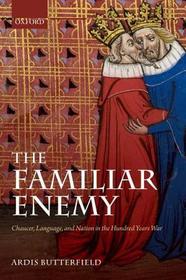
The Familiar Enemy
Chaucer, Language, and Nation in the Hundred Years War
-
10% KEDVEZMÉNY?
- A kedvezmény csak az 'Értesítés a kedvenc témákról' hírlevelünk címzettjeinek rendeléseire érvényes.
- Kiadói listaár GBP 42.99
-
19 409 Ft (18 485 Ft + 5% áfa)
Az ár azért becsült, mert a rendelés pillanatában nem lehet pontosan tudni, hogy a beérkezéskor milyen lesz a forint árfolyama az adott termék eredeti devizájához képest. Ha a forint romlana, kissé többet, ha javulna, kissé kevesebbet kell majd fizetnie.
- Kedvezmény(ek) 10% (cc. 1 941 Ft off)
- Kedvezményes ár 17 468 Ft (16 637 Ft + 5% áfa)
Iratkozzon fel most és részesüljön kedvezőbb árainkból!
Feliratkozom
19 409 Ft

Beszerezhetőség
Megrendelésre a kiadó utánnyomja a könyvet. Rendelhető, de a szokásosnál kicsit lassabban érkezik meg.
Why don't you give exact delivery time?
A beszerzés időigényét az eddigi tapasztalatokra alapozva adjuk meg. Azért becsült, mert a terméket külföldről hozzuk be, így a kiadó kiszolgálásának pillanatnyi gyorsaságától is függ. A megadottnál gyorsabb és lassabb szállítás is elképzelhető, de mindent megteszünk, hogy Ön a lehető leghamarabb jusson hozzá a termékhez.
A termék adatai:
- Kiadó OUP Oxford
- Megjelenés dátuma 2013. március 7.
- ISBN 9780199657704
- Kötéstípus Puhakötés
- Terjedelem480 oldal
- Méret 232x156x26 mm
- Súly 694 g
- Nyelv angol
- Illusztrációk 10 black and white halftones, 3 maps 0
Kategóriák
Rövid leírás:
The Familiar Enemy examines the linguistic, literary, and cultural identities of England and France during the Hundred Years War. It explores works by Deschamps, Charles d'Orléans, and Gower, as well as Chaucer.
TöbbHosszú leírás:
The Familiar Enemy re-examines the linguistic, literary, and cultural identities of England and France within the context of the Hundred Years War. During this war, two profoundly intertwined peoples developed complex strategies for expressing their aggressively intimate relationship. This special connection between the English and the French has endured into the modern period as a model for Western nationhood. Ardis Butterfield reassesses the concept of 'nation' in this period through a wide-ranging discussion of writing produced in war, truce, or exile from the thirteenth to the fifteenth century, concluding with reflections on the retrospective views of this conflict created by the trials of Jeanne d'Arc and by Shakespeare's Henry V. She considers authors writing in French, 'Anglo-Norman', English, and the comic tradition of Anglo-French 'jargon', including Machaut, Deschamps, Froissart, Chaucer, Gower, Charles d'Orléans, as well as many lesser-known or anonymous works. Traditionally Chaucer has been seen as a quintessentially English author. This book argues that he needs to be resituated within the deeply francophone context, not only of England but the wider multilingual cultural geography of medieval Europe. It thus suggests that a modern understanding of what 'English' might have meant in the fourteenth century cannot be separated from 'French', and that this has far-reaching implications both for our understanding of English and the English, and of French and the French.
This will be recognized as one of the most important books in Middle English and Chaucer Studies of the last thirty years ... it offers illuminating long perspectives on contemporary debates on where and when nationhood begins and ends, and on how linguistic practices mesh with territorial and political structuresa brilliant and timely book.
Tartalomjegyzék:
Acknowledgements
List of Illustrations and maps
Bibliographical note
List of Abbreviations
Preface
I Nation and Language
Introduction: Pre-nation and post-nation
Origins and language
A common language?
II Exchanging Terms: War and Peace
Fighting talk
Exchanging Terms
Trading languages
Lingua franca: the international language of love
III Vernacular Subjects
The English subject
Mother tongues
Betrayal and Nation
Conclusion
Bibliography
Index

