

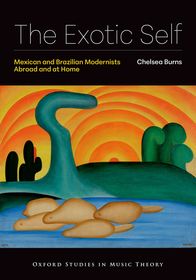
The Exotic Self
Mexican and Brazilian Modernists Abroad and at Home
Sorozatcím: Oxford Studies in Music Theory;
-
10% KEDVEZMÉNY?
- A kedvezmény csak az 'Értesítés a kedvenc témákról' hírlevelünk címzettjeinek rendeléseire érvényes.
- Kiadói listaár GBP 78.00
-
35 217 Ft (33 540 Ft + 5% áfa)
Az ár azért becsült, mert a rendelés pillanatában nem lehet pontosan tudni, hogy a beérkezéskor milyen lesz a forint árfolyama az adott termék eredeti devizájához képest. Ha a forint romlana, kissé többet, ha javulna, kissé kevesebbet kell majd fizetnie.
- Kedvezmény(ek) 10% (cc. 3 522 Ft off)
- Kedvezményes ár 31 695 Ft (30 186 Ft + 5% áfa)
Iratkozzon fel most és részesüljön kedvezőbb árainkból!
Feliratkozom
35 217 Ft

Beszerezhetőség
Becsült beszerzési idő: A Prosperónál jelenleg nincsen raktáron, de a kiadónál igen. Beszerzés kb. 3-5 hét..
A Prosperónál jelenleg nincsen raktáron.
Why don't you give exact delivery time?
A beszerzés időigényét az eddigi tapasztalatokra alapozva adjuk meg. Azért becsült, mert a terméket külföldről hozzuk be, így a kiadó kiszolgálásának pillanatnyi gyorsaságától is függ. A megadottnál gyorsabb és lassabb szállítás is elképzelhető, de mindent megteszünk, hogy Ön a lehető leghamarabb jusson hozzá a termékhez.
A termék adatai:
- Kiadó OUP USA
- Megjelenés dátuma 2025. november 26.
- ISBN 9780197792865
- Kötéstípus Keménykötés
- Terjedelem324 oldal
- Méret 244x178x30 mm
- Súly 748 g
- Nyelv angol
- Illusztrációk 94 music examples, 15 figures 657
Kategóriák
Rövid leírás:
When Europeans and North Americans listen to music by Latin American composers, what do they hear? What, for that matter, do these composers' compatriots hear? In The Exotic Self, Chelsea Burns argues that the national sound of Heitor Villa-Lobos, Carlos Chávez, Silvestre Revueltas, and others is as readily traceable to market pressures as it is to artistic commitments. Foreign audiences expected exoticist stereotypes of Indigeneity and Blackness, while critics at home demanded a sonic fantasy of "authentic" folk life. Burns analyzes the works of these modernist composers anew, finding much that exceeds the imposed framework of identity.
TöbbHosszú leírás:
When Europeans and North Americans listen to music by Latin American composers, what do they hear? What, for that matter, do these composers' compatriots hear? The answer, historically, has been the sound of the nation. Scholars, critics, patrons, and audiences have often suggested that Latin American music either does or ought to reflect an aesthetic supposedly inherent in Latin American cultures and even bodies.
Marshaling historically informed close readings of musical text, The Exotic Self reveals the voluminous meanings of works historically pigeonholed by identity-driven assumptions. Chelsea Burns focuses on Brazilian and Mexican modernists from 1920 to 1940, arguing that the national sound of Heitor Villa-Lobos, Carlos Chávez, Silvestre Revueltas, and others is as readily traceable to market pressures as it is to artistic commitments. These composers embraced, knowingly and sometimes reluctantly, exoticist stereotypes of Indigeneity and Blackness as the price of access to metropolitan audiences. At home, intellectuals and politicians also demanded sonic fantasies of "folk" life, here understood as the authentic voice of a national culture rivaling those of the global north.
Recognizing that the authentic and the exotic are two sides of the same tarnished coin, Burns analyzes the works of Mexican and Brazilian modernists anew. What emerges are singular artists with much to say beyond the framework of identity.
Tartalomjegyzék:
Introduction
Negotiating Identities: Carlos Chávez and the Trouble with Musical Nationalism
False Choices: The Elusive Promise of Música Universal
Subversion and Polysemy
Popular Music as National Music
Canción as Case Study: The Domestic Politics of Vernacular Music in Mexico
Indigeneity and Fantastical Distance
Epilogue: On Incompleteness

