

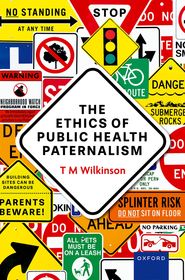
The Ethics of Public Health Paternalism
-
20% KEDVEZMÉNY?
- A kedvezmény csak az 'Értesítés a kedvenc témákról' hírlevelünk címzettjeinek rendeléseire érvényes.
- Kiadói listaár GBP 77.00
-
34 765 Ft (33 110 Ft + 5% áfa)
Az ár azért becsült, mert a rendelés pillanatában nem lehet pontosan tudni, hogy a beérkezéskor milyen lesz a forint árfolyama az adott termék eredeti devizájához képest. Ha a forint romlana, kissé többet, ha javulna, kissé kevesebbet kell majd fizetnie.
- Kedvezmény(ek) 20% (cc. 6 953 Ft off)
- Kedvezményes ár 27 812 Ft (26 488 Ft + 5% áfa)
- A kedvezmény érvényes eddig: 2026. június 30.
Iratkozzon fel most és részesüljön kedvezőbb árainkból!
Feliratkozom
34 765 Ft

Beszerezhetőség
Becsült beszerzési idő: A Prosperónál jelenleg nincsen raktáron, de a kiadónál igen. Beszerzés kb. 3-5 hét..
A Prosperónál jelenleg nincsen raktáron.
Why don't you give exact delivery time?
A beszerzés időigényét az eddigi tapasztalatokra alapozva adjuk meg. Azért becsült, mert a terméket külföldről hozzuk be, így a kiadó kiszolgálásának pillanatnyi gyorsaságától is függ. A megadottnál gyorsabb és lassabb szállítás is elképzelhető, de mindent megteszünk, hogy Ön a lehető leghamarabb jusson hozzá a termékhez.
A termék adatai:
- Kiadó OUP Oxford
- Megjelenés dátuma 2025. február 6.
- ISBN 9780198895817
- Kötéstípus Keménykötés
- Terjedelem258 oldal
- Méret 240x164x20 mm
- Súly 536 g
- Nyelv angol 577
Kategóriák
Rövid leírás:
The Ethics of Public Health Paternalism considers policies that try to stop people damaging their own health, in the context of political and moral philosophy.
TöbbHosszú leírás:
This is an open access title available under the terms of a CC BY-NC-ND 4.0 International licence. It is free to read on the Oxford Academic platform and offered as a free PDF download from OUP and selected open access locations.
The Ethics of Public Health Paternalism is about policies that try to stop people damaging their own health. From the point of view of public health advocates, if people did not smoke, or drank less alcohol, or kept off junk food and sugary liquids, they would tend to be healthier. Hence such tactics as taxing tobacco, restricting the sale of alcohol, and limiting the density of fast-food outlets. Because these tactics appear to limit freedom of choice, they are often pejoratively described as the actions of a 'nanny state' that overvalues health and wrongly infringes on the autonomy of adults. But many of us want to be healthy rather than ill, and alive rather than dead. Does a state really nanny us when it uses its power to make us healthier? If it does, should it stop?
Some public health policies might reduce inequities of health, or save costs in medical treatment, or correct market failures. But, as this book shows, lots would not. The best case for many public health interventions is paternalistic, aiming to steer people away from making unhealthy choices against their own interests. But even though it is the best case, it often fails. It overvalues health and undervalues autonomy. It exaggerates the influence of addiction and the marketing of unhealthy products. Except for smoking, we do not have the evidence needed to show that unhealthy choices are so mistaken as to justify the interventions. Much of what modern public health does, when it tries to stop adults damaging their health, has not been justified.
The Ethics of Public Health Paternalism applies political and moral philosophy to the ideas of both supporters and critics of public health interventions. It uses philosophical analysis of the values of health and well-being to explain what sort of evidence is needed to support public health interventions, thus exposing a major gap in the arguments of public health advocates, and it engages in detail with empirical evidence, for instance about smokers' regrets.
The book is comprised of thirteen clearly written, well organized chapters laying out the case against many forms of public health paternalism. Chapters include substantive examples and critical analysis of arguments in favor of paternalistic policies regarding public health.
Tartalomjegyzék:
Introduction: Public Health and Paternalism
Public Health and the Nanny State
The Limited and Variable Value of Health
The Value of Health and a Challenge to Public Health
Mistakes and Unhealthy Behaviour
Applications: Smoking, Alcohol, Fattening Food, and Drink
Autonomy
Do Public Health Interventions Infringe on Autonomy?
Rationality, Addiction, and Manipulation
Nudges and Counter-Manipulation
The Nanny State and Market Failure
Health Equity and Distributive Ethics
What Is Left for Public Health?

