

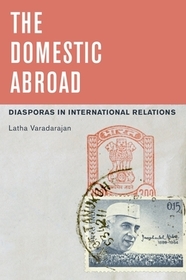
The Domestic Abroad
Diasporas in International Relations
-
10% KEDVEZMÉNY?
- A kedvezmény csak az 'Értesítés a kedvenc témákról' hírlevelünk címzettjeinek rendeléseire érvényes.
- Kiadói listaár GBP 29.99
-
13 540 Ft (12 895 Ft + 5% áfa)
Az ár azért becsült, mert a rendelés pillanatában nem lehet pontosan tudni, hogy a beérkezéskor milyen lesz a forint árfolyama az adott termék eredeti devizájához képest. Ha a forint romlana, kissé többet, ha javulna, kissé kevesebbet kell majd fizetnie.
- Kedvezmény(ek) 10% (kb. 1 354 Ft)
- Kedvezményes ár 12 186 Ft (11 606 Ft + 5% áfa)
Iratkozzon fel most és részesüljön kedvezőbb árainkból!
Feliratkozom
13 540 Ft

Beszerezhetőség
Megrendelésre a kiadó utánnyomja a könyvet. Rendelhető, de a szokásosnál kicsit lassabban érkezik meg.
Why don't you give exact delivery time?
A beszerzés időigényét az eddigi tapasztalatokra alapozva adjuk meg. Azért becsült, mert a terméket külföldről hozzuk be, így a kiadó kiszolgálásának pillanatnyi gyorsaságától is függ. A megadottnál gyorsabb és lassabb szállítás is elképzelhető, de mindent megteszünk, hogy Ön a lehető leghamarabb jusson hozzá a termékhez.
A termék adatai:
- Kiadó OUP USA
- Megjelenés dátuma 2012. november 29.
- ISBN 9780199938650
- Kötéstípus Puhakötés
- Terjedelem256 oldal
- Méret 155x231x15 mm
- Súly 386 g
- Nyelv angol 0
Kategóriák
Rövid leírás:
This book proposes a re-consideration of both the meaning of transnationalism and the nature of national and state identity in global politics. In order to do this, the author draws from two literatures that are rarely brought into conversation with International Relations scholarship: postcolonial theory and historical-materialism, developing her argument through an analysis of the post-1947 Indian state and the relationship between its emergent economic power and its diaspora.
TöbbHosszú leírás:
In the past few decades, and across disparate geographical contexts, states have adopted policies and initiatives aimed at institutionalizing relationships with "their" diasporas. These practices, which range from creating new ministries to granting dual citizenship, are aimed at integrating diasporas as part of a larger "global" nation that is connected to, and has claims on the institutional structures of the home state. Although links, both formal and informal, between diasporas and their presumptive homelands have existed in the past, the recent developments constitute a far more widespread and qualitatively different phenomenon.
In this book, Latha Varadarajan theorizes this novel and largely overlooked trend by introducing the concept of the "domestic abroad." Varadarajan demonstrates that the remapping of the imagined boundaries of the nation, the visible surface of the phenomenon, is intrinsically connected to the political-economic transformation of the state that is typically characterized as "neoliberalism." The domestic abroad must therefore be understood as the product of two simultaneous, on-going processes: the diasporic re-imagining of the nation and the neoliberal restructuring of the state.
The argument unfolds through a historically nuanced study of the production of the domestic abroad in India. The book traces the complex history and explains the political logic of the remarkable transition from the Indian state's guarded indifference toward its diaspora in the period after independence, to its current celebrations of the "global Indian nation." In doing so, The Domestic Abroad reveals the manner in which the boundaries of the nation and the extent of the authority of the state, in India and elsewhere, are dynamically shaped by the development of capitalist social relations on both global and national scales.
In recent years, numerous scholars have undertaken analyses of diasporas in international affairs. However, few bring the theoretical innovation or conceptual sophistication that Varadarajan displays here...Varadarajan offers a rich meticulously detailed illustration of the theory...In so doing, she provides the road map for future comparative empirical applications of the theory. An absolutely essential contribution. Summing Up: Essential.
Tartalomjegyzék:
1. Introducing the Domestic Abroad
2. Re-imagined Nations and Re-structured States: Explaining the Domestic Abroad
3. Putting the Diaspora in its Place: From Colonial Transnationalism to Postcolonial Nationalism
4. The Making and Unmaking of Hegemony: Indian Capitalism from Swadeshi to Swraj
5. From Indians Abroad to the Global Indian
Conclusion
Appendices

