

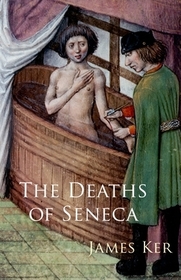
The Deaths of Seneca
-
10% KEDVEZMÉNY?
- A kedvezmény csak az 'Értesítés a kedvenc témákról' hírlevelünk címzettjeinek rendeléseire érvényes.
- Kiadói listaár GBP 52.00
-
23 478 Ft (22 360 Ft + 5% áfa)
Az ár azért becsült, mert a rendelés pillanatában nem lehet pontosan tudni, hogy a beérkezéskor milyen lesz a forint árfolyama az adott termék eredeti devizájához képest. Ha a forint romlana, kissé többet, ha javulna, kissé kevesebbet kell majd fizetnie.
- Kedvezmény(ek) 10% (cc. 2 348 Ft off)
- Kedvezményes ár 21 130 Ft (20 124 Ft + 5% áfa)
Iratkozzon fel most és részesüljön kedvezőbb árainkból!
Feliratkozom
23 478 Ft

Beszerezhetőség
Bizonytalan a beszerezhetőség. Érdemes még egyszer keresni szerzővel és címmel. Ha nem talál másik, kapható kiadást, forduljon ügyfélszolgálatunkhoz!
Why don't you give exact delivery time?
A beszerzés időigényét az eddigi tapasztalatokra alapozva adjuk meg. Azért becsült, mert a terméket külföldről hozzuk be, így a kiadó kiszolgálásának pillanatnyi gyorsaságától is függ. A megadottnál gyorsabb és lassabb szállítás is elképzelhető, de mindent megteszünk, hogy Ön a lehető leghamarabb jusson hozzá a termékhez.
A termék adatai:
- Kiadó OUP USA
- Megjelenés dátuma 2009. október 22.
- ISBN 9780195387032
- Kötéstípus Keménykötés
- Terjedelem432 oldal
- Méret 245x164x30 mm
- Súly 738 g
- Nyelv angol
- Illusztrációk 39 black and white halftones 0
Kategóriák
Rövid leírás:
Beginning in antiquity and extending to the present day, audiences have felt compelled to revisit and retell Seneca's death scene. They have seen it as an opportunity for investigating Seneca as an author and cultural figure, and for examining the different forms and meanings of the "death scene" in general.
TöbbHosszú leírás:
The forced suicide of Seneca, former adviser to Nero, is one of the most tortured ? and most revisited ? death scenes from classical antiquity. After fruitlessly opening his veins and drinking hemlock, Seneca finally succumbed to death in a stifling steam bath, while his wife Paulina, who had attempted suicide as well, was bandaged up and revived by Nero's men. From the first century to the present day, writers and artists have retold this scene in order to
rehearse and revise Seneca's image and writings, and to scrutinize the event of human death.
In The Deaths of Seneca, James Ker offers the first comprehensive cultural history of Seneca's death scene, situating it in the Roman imagination and tracing its many subsequent interpretations. Ker shows first how the earliest accounts of the death scene by Tacitus and others were shaped by conventions of Greco-Roman exitus-description and Julio-Claudian dynastic history. At the book's center is an exploration of Seneca's own prolific writings about death ? whether anticipating
death in his letters, dramatizing it in the tragedies, or offering therapy for loss in the form of consolations ? which offered the primary lens through which Seneca's contemporaries would view the author's death. These ancient approaches set the stage for prolific receptions, and Ker traces how the death scene
was retold in both literary and visual versions, from St. Jerome to Heiner Müller and from medieval illuminations to Peter Paul Rubens and Jacques-Louis David. Dozens of interpreters, engaging with prior versions and with Seneca's writings, forged new and sometimes controversial views on Seneca's legacy and, more broadly, on mortality and suicide. The Deaths of Seneca presents a new, historically inclusive, approach to reading this major Roman author.
[a] stimulating book
Tartalomjegyzék:
Acknowledgements
List of Figures
Abbreviations
Introduction
Part I: Historical Narratives
Three Death-Descriptions: Tacitus, Suetonius, Cassius Dio
Neronian Exits: Writing Death into History
Part II: Seneca the Author
The Man of Many Genres in his Death
Consolations on the Departure of the Consoler
A Closing Scenein the Theaters of Ethics, Tragedy, and History
End of a Series: Death in Epistolary Time
Part III: Receptions
Tracing the Tradition
Part IV: Themes
Forced Suicide and the Bodily Paths to Libertas
Passing into Memory: Seneca's Imago and its Reproduction
Places Suburban and Serious: The Ruins of Seneca and Scipio
Epilogue
Primary Sources
Bibliography

