

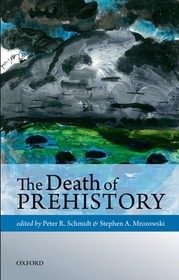
The Death of Prehistory
-
10% KEDVEZMÉNY?
- A kedvezmény csak az 'Értesítés a kedvenc témákról' hírlevelünk címzettjeinek rendeléseire érvényes.
- Kiadói listaár GBP 105.00
-
47 407 Ft (45 150 Ft + 5% áfa)
Az ár azért becsült, mert a rendelés pillanatában nem lehet pontosan tudni, hogy a beérkezéskor milyen lesz a forint árfolyama az adott termék eredeti devizájához képest. Ha a forint romlana, kissé többet, ha javulna, kissé kevesebbet kell majd fizetnie.
- Kedvezmény(ek) 10% (cc. 4 741 Ft off)
- Kedvezményes ár 42 667 Ft (40 635 Ft + 5% áfa)
Iratkozzon fel most és részesüljön kedvezőbb árainkból!
Feliratkozom
47 407 Ft

Beszerezhetőség
Megrendelésre a kiadó utánnyomja a könyvet. Rendelhető, de a szokásosnál kicsit lassabban érkezik meg.
Why don't you give exact delivery time?
A beszerzés időigényét az eddigi tapasztalatokra alapozva adjuk meg. Azért becsült, mert a terméket külföldről hozzuk be, így a kiadó kiszolgálásának pillanatnyi gyorsaságától is függ. A megadottnál gyorsabb és lassabb szállítás is elképzelhető, de mindent megteszünk, hogy Ön a lehető leghamarabb jusson hozzá a termékhez.
A termék adatai:
- Kiadó OUP Oxford
- Megjelenés dátuma 2013. november 28.
- ISBN 9780199684595
- Kötéstípus Keménykötés
- Terjedelem392 oldal
- Méret 221x144x29 mm
- Súly 618 g
- Nyelv angol
- Illusztrációk 30 in-text illustrations 0
Kategóriák
Rövid leírás:
This volume provides authoritative examples of how the concept of prehistory has diminished histories of other cultures outside the West and how archaeologists can reclaim more inclusive histories set within the idiom of deep histories--accepting ancient pre-literate histories as an integral part of the flow of human history.
TöbbHosszú leírás:
Since the eighteenth century, the concept of prehistory was exported by colonialism to far parts of the globe and applied to populations lacking written records. Prehistory in these settings came to represent primitive people still living in a state without civilization and its foremost index, literacy. Yet, many societies outside the Western world had developed complex methods of history making and documentation, including epic poetry and the use of physical and mental mnemonic devices. Even so, the deeply engrained concept of prehistory--deeply entrenched in European minds up to the beginning of the twenty-first century--continues to deny history and historical identify to peoples throughout the world.
The fourteen essays, by notable archaeologists of the Americas, Africa, Europe, and Asia, provide authoritative examples of how the concept of prehistory has diminished histories of other cultures outside the West and how archaeologists can reclaim more inclusive histories set within the idiom of deep histories--accepting ancient pre-literate histories as an integral part of the flow of human history.
Tartalomjegyzék:
Preface
List of Figures
Notes on Contributors
Introduction: The Death of Prehistory
Part I: Histories of Prehistory
Prehistory's History
Presencing the Past: Implications for Bridging the History-Prehistory Divide
Part II: Perspectives Arising Out of Africa and India
Routes to History: Archaeology and Being Articulate in Eastern Africa
Historical Archaeology, Colonial Entanglements, and Recuperating 'Timeless' Histories through Structuralism
Swahili Historical Chronicles from an Archaeological Perspective: Bridging History, Archaeology, Coast, and Hinterland in Southern Tanzania
Creating Prehistory and Protohistory: Constructing otherness and politics of contemporary indigenous populations in India
Part III: Perspective Arising Out of the Americas
History Interrupted: Doing 'Historical Archaeology' in Central America
Rethinking the Archaeology of Human/Environmental: Interactions in Deep-Time History
Sites in History, History in Sites: Archaeology, historical anthropology and indigenous knowledge in the Chesapeake
The Tyranny of Prehistory and the Search for a Deeper History
Cultural Practice and Authenticity: The search for real Indians in New England in the 'historical' period
Pueblo Time, Space, and History in the Aftermath of the Pueblo Revolt of 1680
Conclusion: Reflections on Reforming the Past, Looking to the Future
Appendix: Swahili Chronicles
Bibliography
Index

