

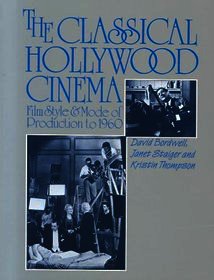
The Classical Hollywood Cinema
Film Style and Mode of Production to 1960
-
10% KEDVEZMÉNY?
- A kedvezmény csak az 'Értesítés a kedvenc témákról' hírlevelünk címzettjeinek rendeléseire érvényes.
- Kiadói listaár GBP 50.00
-
22 575 Ft (21 500 Ft + 5% áfa)
Az ár azért becsült, mert a rendelés pillanatában nem lehet pontosan tudni, hogy a beérkezéskor milyen lesz a forint árfolyama az adott termék eredeti devizájához képest. Ha a forint romlana, kissé többet, ha javulna, kissé kevesebbet kell majd fizetnie.
- Kedvezmény(ek) 10% (cc. 2 258 Ft off)
- Kedvezményes ár 20 318 Ft (19 350 Ft + 5% áfa)
Iratkozzon fel most és részesüljön kedvezőbb árainkból!
Feliratkozom
22 575 Ft

Beszerezhetőség
A kiadónál véglegesen elfogyott, nem rendelhető. Érdemes újra keresni a címmel, hátha van újabb kiadás.
Why don't you give exact delivery time?
A beszerzés időigényét az eddigi tapasztalatokra alapozva adjuk meg. Azért becsült, mert a terméket külföldről hozzuk be, így a kiadó kiszolgálásának pillanatnyi gyorsaságától is függ. A megadottnál gyorsabb és lassabb szállítás is elképzelhető, de mindent megteszünk, hogy Ön a lehető leghamarabb jusson hozzá a termékhez.
A termék adatai:
- Kiadó Columbia University Press
- Megjelenés dátuma 1987. január 29.
- ISBN 9780231060554
- Kötéstípus Puhakötés
- Terjedelem506 oldal
- Méret 190x247 mm
- Nyelv angol
- Illusztrációk 144 0
Kategóriák
Rövid leírás:
How films are conceived,planned, and produced leaves a mark upon the films, directly and structurally. The relations between film style and mode of production are, according to the authors, reciprocal and mutually influencing. The authors trace such topics as style, economics, and technology over time, demonstrating how significant changes occurrred in Hollywood from the earliest days through the sixties.
TöbbHosszú leírás:
How films are conceived,planned, and produced leaves a mark upon the films, directly and structurally. The relations between film style and mode of production are, according to the authors, reciprocal and mutually influencing. The authors trace such topics as style, economics, and technology over time, demonstrating how significant changes occurrred in Hollywood from the earliest days through the sixties. -- American Film
""A tour de force... destined to become itself a classic in film studies and a magnificent introduction to the American cinema for a much wider audience... 'The Classical Hollywood Cinema' will surely arouse discussion and debate--how could it not, since no one who studies film at whatever level can henceforth ignore it."" -- American Film
TöbbTartalomjegyzék:
Part 1. The classical Hollywood style, 1917-60 by David Bordwell
An excessively obvious cinema
Story causality and motivation
The Hollywood mode of production to 1930, by Janet Staiger
Classical narration
The formulation of the classical style, 1909-28, by Kristin Thompson
Time in the classical film
Film style and technology to 1930
Space in the classical film
The Hollywood mode of production, 1930-60, by Janet Staiger
Shot and scene
Film style and technology, 1930-60, by David Bordwell
The bounds of difference
Historical implications of the classical Hollywood cinema, by David Bordwell and Janet Staiger
The Hollywood mode of production: its conditions of exercise
Standardization and differentiation: The reinforcement and dispersion of Hollywood's practices
The director system: management in the first years
The director-unity system: management of multiple-unit companies after 1909
The central producer system: centralized management after 1914
The division and order of production: the subdivision of the work from the first years through the 1920s
From primitive to classical
The formulation of the classical narrative
The continuity system
Classical narrative space and the spectator's attention
The stability of the classical approach after 1917
Technology, style and mode of production, by David Bordwell and Janet Staiger
Initial standardization of the basic technology, by Kristin Thompson
Major technological changes of the 1920s, by Kristin Thompson
The Mazda tests of 1928
The introduction of sound, by David Bordwell
The labor-force, financing and the mode of production
The producer-unit system: management by specialization after 1931
The package-unit system: unit management after 1955
Deep-focus cinematography
Technicolor
Widescreen processes and stereophonic sound
Since 1960: the persistence of a mode of film practice
Alternative modes of film practice

