

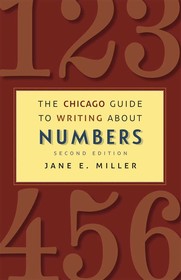
The Chicago Guide to Writing about Numbers 2e
Second Edition
-
10% KEDVEZMÉNY?
- A kedvezmény csak az 'Értesítés a kedvenc témákról' hírlevelünk címzettjeinek rendeléseire érvényes.
- Kiadói listaár GBP 56.50
-
26 992 Ft (25 707 Ft + 5% áfa)
Az ár azért becsült, mert a rendelés pillanatában nem lehet pontosan tudni, hogy a beérkezéskor milyen lesz a forint árfolyama az adott termék eredeti devizájához képest. Ha a forint romlana, kissé többet, ha javulna, kissé kevesebbet kell majd fizetnie.
- Kedvezmény(ek) 10% (cc. 2 699 Ft off)
- Kedvezményes ár 24 293 Ft (23 136 Ft + 5% áfa)
Iratkozzon fel most és részesüljön kedvezőbb árainkból!
Feliratkozom
26 992 Ft

Beszerezhetőség
A kiadónál átmenetileg nincs raktáron, ezért a szokásosnál (2-4 hét) többet kell várni a beszerzésre. Ez általában néhány hét plusz időt jelent.
Why don't you give exact delivery time?
A beszerzés időigényét az eddigi tapasztalatokra alapozva adjuk meg. Azért becsült, mert a terméket külföldről hozzuk be, így a kiadó kiszolgálásának pillanatnyi gyorsaságától is függ. A megadottnál gyorsabb és lassabb szállítás is elképzelhető, de mindent megteszünk, hogy Ön a lehető leghamarabb jusson hozzá a termékhez.
A termék adatai:
- Kiadó University of Chicago Press
- Megjelenés dátuma 2015. április 21.
- ISBN 9780226185637
- Kötéstípus Keménykötés
- Terjedelem360 oldal
- Méret 223x142x29 mm
- Súly 604 g
- Nyelv angol 0
Kategóriák
Rövid leírás:
Earning praise from scientists, journalists, faculty, and students, "The Chicago Guide to Writing about Numbers" has helped thousands of writers communicate data clearly and effectively. Its publication offered a much-needed bridge between good quantitative analysis and clear expository writing, using straightforward principles and efficient prose. With this new edition, Jane Miller draws on a decade of additional experience and research, expanding her advice on reaching everyday audiences and further integrating non-print formats. Miller, an experienced teacher of research methods, statistics, and research writing, opens by introducing a set of basic principles for writing about numbers, then presents a toolkit of techniques that can be applied to prose, tables, charts, and presentations. Throughout the book, she emphasizes flexibility, showing writers that different approaches work for different kinds of data and different types of audiences. The second edition adds a chapter on writing about numbers for lay audiences, explaining how to avoid overwhelming readers with jargon and technical issues. Also new is an appendix comparing the contents and formats of speeches, research posters, and papers, to teach writers how to create all three types of communication without starting each from scratch. An expanded companion website includes new multimedia resources such as slide shows and podcasts that illustrate the concepts and techniques, along with an updated study guide of problem sets and suggested course extensions. This continues to be the only book that brings together all the tasks that go into writing about numbers, integrating advice on finding data, calculating statistics, organizing ideas, designing tables and charts, and writing prose all in one volume. Field-tested with students and professionals alike, this holistic book is the go-to guide for everyone who writes or speaks about numbers.
Contents:
List of Tables
List of Figures
List of Boxes
Acknowledgments
1. Introduction
Part I. Principles
2. Seven Basic Principles
3. Causality, Statistical Significance, and Substantive Significance
4. Five More Technical Principles
Part II. Tools
5. Basic Types of Quantitative Comparisons
6. Creating Effective Tables
7. Creating Effective Charts
8. Choosing Effective Examples and Analogies
Part III. pulling it all together
9. Writing about Distributions and Associations
10. Writing about Data and Methods
11. Writing Scientific Papers and Reports
12. Speaking about Numbers
13. Writing for Applied Audiences: Issue Briefs, Chartbooks, Posters, and General-Interest Articles
Appendix A. Implementing "Generalization, Example, Exceptions" (GEE)
Appendix B. Comparison of Research Papers, Posters, and Speeches
Notes
Reference List
Index
Hosszú leírás:
Earning praise from scientists, journalists, faculty, and students, "The Chicago Guide to Writing about Numbers" has helped thousands of writers communicate data clearly and effectively. Its publication offered a much-needed bridge between good quantitative analysis and clear expository writing, using straightforward principles and efficient prose. With this new edition, Jane Miller draws on a decade of additional experience and research, expanding her advice on reaching everyday audiences and further integrating non-print formats. Miller, an experienced teacher of research methods, statistics, and research writing, opens by introducing a set of basic principles for writing about numbers, then presents a toolkit of techniques that can be applied to prose, tables, charts, and presentations. Throughout the book, she emphasizes flexibility, showing writers that different approaches work for different kinds of data and different types of audiences. The second edition adds a chapter on writing about numbers for lay audiences, explaining how to avoid overwhelming readers with jargon and technical issues. Also new is an appendix comparing the contents and formats of speeches, research posters, and papers, to teach writers how to create all three types of communication without starting each from scratch. An expanded companion website includes new multimedia resources such as slide shows and podcasts that illustrate the concepts and techniques, along with an updated study guide of problem sets and suggested course extensions. This continues to be the only book that brings together all the tasks that go into writing about numbers, integrating advice on finding data, calculating statistics, organizing ideas, designing tables and charts, and writing prose all in one volume. Field-tested with students and professionals alike, this holistic book is the go-to guide for everyone who writes or speaks about numbers.
Contents:
List of Tables
List of Figures
List of Boxes
Acknowledgments
1. Introduction
Part I. Principles
2. Seven Basic Principles
3. Causality, Statistical Significance, and Substantive Significance
4. Five More Technical Principles
Part II. Tools
5. Basic Types of Quantitative Comparisons
6. Creating Effective Tables
7. Creating Effective Charts
8. Choosing Effective Examples and Analogies
Part III. pulling it all together
9. Writing about Distributions and Associations
10. Writing about Data and Methods
11. Writing Scientific Papers and Reports
12. Speaking about Numbers
13. Writing for Applied Audiences: Issue Briefs, Chartbooks, Posters, and General-Interest Articles
Appendix A. Implementing "Generalization, Example, Exceptions" (GEE)
Appendix B. Comparison of Research Papers, Posters, and Speeches
Notes
Reference List
Index

