

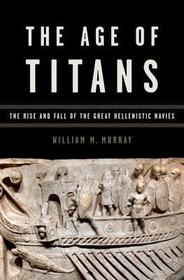
The Age of Titans
The Rise and Fall of the Great Hellenistic Navies
Sorozatcím: Onassis Series in Hellenic Culture;
-
10% KEDVEZMÉNY?
- A kedvezmény csak az 'Értesítés a kedvenc témákról' hírlevelünk címzettjeinek rendeléseire érvényes.
- Kiadói listaár GBP 83.00
-
37 474 Ft (35 690 Ft + 5% áfa)
Az ár azért becsült, mert a rendelés pillanatában nem lehet pontosan tudni, hogy a beérkezéskor milyen lesz a forint árfolyama az adott termék eredeti devizájához képest. Ha a forint romlana, kissé többet, ha javulna, kissé kevesebbet kell majd fizetnie.
- Kedvezmény(ek) 10% (cc. 3 747 Ft off)
- Kedvezményes ár 33 727 Ft (32 121 Ft + 5% áfa)
Iratkozzon fel most és részesüljön kedvezőbb árainkból!
Feliratkozom
37 474 Ft

Beszerezhetőség
Megrendelésre a kiadó utánnyomja a könyvet. Rendelhető, de a szokásosnál kicsit lassabban érkezik meg.
Why don't you give exact delivery time?
A beszerzés időigényét az eddigi tapasztalatokra alapozva adjuk meg. Azért becsült, mert a terméket külföldről hozzuk be, így a kiadó kiszolgálásának pillanatnyi gyorsaságától is függ. A megadottnál gyorsabb és lassabb szállítás is elképzelhető, de mindent megteszünk, hogy Ön a lehető leghamarabb jusson hozzá a termékhez.
A termék adatai:
- Kiadó OUP USA
- Megjelenés dátuma 2012. január 19.
- ISBN 9780195388640
- Kötéstípus Keménykötés
- Terjedelem384 oldal
- Méret 234x155x22 mm
- Súly 680 g
- Nyelv angol
- Illusztrációk 38 halftones 0
Kategóriák
Rövid leírás:
The Age of Titans examines how heavy warships crewed by thousands of men developed from the agile triremes so popular during the Greek Classical Age. Following Alexander the Great, a new focus on naval siege warfare explains the rise in popularity of big ship navies and defines the model of naval power they made possible.
TöbbHosszú leírás:
While we know a great deal about naval strategies in the classical Greek and later Roman periods, our understanding of the period in between--the Hellenistic Age--has never been as complete. However, thanks to new physical evidence discovered in the past half-century and the construction of Olympias, a full-scale working model of an Athenian trieres (trireme) by the Hellenic Navy during the 1980s, we now have new insights into the evolution of naval warfare following the death of Alexander the Great. In what has been described as an ancient naval arms race, the successors of Alexander produced the largest warships of antiquity, some as long as 400 feet carrying as many as 4000 rowers and 3000 marines. Vast, impressive, and elaborate, these warships "of larger form"--as described by Livy--were built not just to simply convey power but to secure specific strategic objectives. When these particular factors disappeared, this "Macedonian" model of naval power also faded away--that is, until Cleopatra and Mark Antony made one brief, extravagant attempt to reestablish it, an endeavor Octavian put an end to once and for all at the battle of Actium. Representing the fruits of more than thirty years of research, The Age of Titans provides the most vibrant account to date of Hellenistic naval warfare.
This book is one of the most interesting and innovative studies I have read in recent years. ... The exposition is clear and logically structured, the argumentation convincing and built up in a systematic way, the style succinct, the information up to date.
Tartalomjegyzék:
Acknowledgements
Abbreviations
Introduction: Understanding the Big Ship Phenomenon
1. Frontal Ramming and the Development of "Fours" and "Fives"
2. Frontal Ramming: Structural Considerations
3. The Development of Naval Siege Warfare
4. Philo the Byzantine and the Requirements of Naval Siege Warfare
5. Big Ships, Boarding, and Catapults
6. The Culmination of the Big Ship Phenomenon
7. The End of the Big Ship Phenomenon
Conclusion
Appendices
Appendix A: Testimonia for "Fours"
Appendix B: Testimonia for "Fives"
Appendix C: Testimonia for "Sixes" to "Tens"
Appendix D: Testimonia for "Elevens" to "Forty"
Appendix E: Book V of Philo's Compendium of Mechanics-The Naval Sections
Appendix F: Testimonia for Naval Artillery
Glossary
Chronology
Bibliography
Index

