

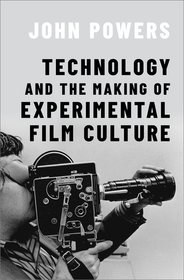
Technology and the Making of Experimental Film Culture
-
10% KEDVEZMÉNY?
- A kedvezmény csak az 'Értesítés a kedvenc témákról' hírlevelünk címzettjeinek rendeléseire érvényes.
- Kiadói listaár GBP 27.49
-
12 411 Ft (11 820 Ft + 5% áfa)
Az ár azért becsült, mert a rendelés pillanatában nem lehet pontosan tudni, hogy a beérkezéskor milyen lesz a forint árfolyama az adott termék eredeti devizájához képest. Ha a forint romlana, kissé többet, ha javulna, kissé kevesebbet kell majd fizetnie.
- Kedvezmény(ek) 10% (cc. 1 241 Ft off)
- Kedvezményes ár 11 170 Ft (10 638 Ft + 5% áfa)
Iratkozzon fel most és részesüljön kedvezőbb árainkból!
Feliratkozom
12 411 Ft

Beszerezhetőség
Megrendelésre a kiadó utánnyomja a könyvet. Rendelhető, de a szokásosnál kicsit lassabban érkezik meg.
Why don't you give exact delivery time?
A beszerzés időigényét az eddigi tapasztalatokra alapozva adjuk meg. Azért becsült, mert a terméket külföldről hozzuk be, így a kiadó kiszolgálásának pillanatnyi gyorsaságától is függ. A megadottnál gyorsabb és lassabb szállítás is elképzelhető, de mindent megteszünk, hogy Ön a lehető leghamarabb jusson hozzá a termékhez.
A termék adatai:
- Kiadó OUP USA
- Megjelenés dátuma 2023. szeptember 7.
- ISBN 9780197683392
- Kötéstípus Puhakötés
- Terjedelem280 oldal
- Méret 236x157x17 mm
- Súly 449 g
- Nyelv angol
- Illusztrációk 26 color plates + 25 b&w halftones 435
Kategóriák
Rövid leírás:
Technology and the Making of Experimental Film Culture examines how the avant-garde embraced small-gauge media technologies such as the Bolex camera, 16mm reversal film stocks, commercial film laboratories, and low-budget optical printers, investing them with meaning and value. This book uses technology as a lens for examining the process of making: where ideas come from, how they are put into practice, and how arguments about those ideas foster cultural and artistic commitments and communities.
TöbbHosszú leírás:
The Bolex camera, 16mm reversal film stocks, commercial film laboratories, and low-budget optical printers were the small-gauge media technologies that provided the infrastructure for experimental filmmaking at the height of its cultural impact. Technology and the Making of Experimental Film Culture examines how the avant-garde embraced these material resources and invested them with meanings and values adjacent to those of semiprofessional film culture.
By reasserting the physicality of the body in making time-lapse and kinesthetic sequences with the Bolex, filmmakers conversed with other art forms and integrated broader spheres of humanistic and scientific inquiry into their artistic process. Drawing from the photographic qualities of stocks such as Tri-X and Kodachrome, they discovered pliant metaphors that allowed them to connect their artistic practice to metaphysics, spiritualism, and Hollywood excess. By framing film labs as mystical or adversarial, they cultivated an oppositionality that valorized control over the artistic process. And by using the optical printer as a tool for excavating latent meaning out of found footage, they posited the reworking of images as fundamental to the exploration of personal and cultural identity.
Providing a wealth of new detail about the making of canonized avant-garde classics by such luminaries as Carolee Schneemann, Jack Smith, and Stan Brakhage, as well as rediscovering works from overlooked artists such as Chick Strand, Amy Halpern, and Gunvor Nelson, Technology and the Making of Experimental Film Culture uses technology as a lens for examining the process of making: where ideas come from, how they are put into practice, and how arguments about those ideas foster cultural and artistic commitments and communities.
In this book's four brilliantly designed chapters, Powers grounds postwar avant-garde film in key technologies....the technological elements of familiar experimental filmmakers....developed more deliberately than they have been in critical texts like Visionary Film, and Powers also introduces numerous less recognizable filmmakers and films. The archival scholarship is outstanding, as the critical contexts build 'film culture' out of author interviews, artist notebooks and statements, and different kinds of small-press, academic, and mainstream film and photography magazines. The book includes a generous selection of color plates, helpful extended definitions of each new technology, reproductions of photography ads, movie frames, and lab receipts, plus some fascinating details in extended footnotes. A major contribution to the study of North American experimental cinema.
Tartalomjegyzék:
List of Illustrations
Introduction: Proscriptive Orientations
Chapter 1. The Twitters of the Machine: The Bolex H-16 Camera In and Out of Control
Chapter 2. Untrue Truisms: The Paradoxes of Reversal Film Stock
Chapter 3. A Lab of One's Own: Personal Cinema Invades the Film Laboratory
Chapter 4. Holding the Jalopy Together: The Optical Printer and DIY Culture
Epilogue: Midwives for Existence
Notes
Selected Bibliography
Index

