

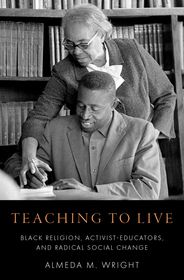
Teaching to Live
Black Religion, Activist-Educators, and Radical Social Change
-
10% KEDVEZMÉNY?
- A kedvezmény csak az 'Értesítés a kedvenc témákról' hírlevelünk címzettjeinek rendeléseire érvényes.
- Kiadói listaár GBP 21.99
-
9 928 Ft (9 455 Ft + 5% áfa)
Az ár azért becsült, mert a rendelés pillanatában nem lehet pontosan tudni, hogy a beérkezéskor milyen lesz a forint árfolyama az adott termék eredeti devizájához képest. Ha a forint romlana, kissé többet, ha javulna, kissé kevesebbet kell majd fizetnie.
- Kedvezmény(ek) 10% (kb. 993 Ft)
- Kedvezményes ár 8 935 Ft (8 510 Ft + 5% áfa)
Iratkozzon fel most és részesüljön kedvezőbb árainkból!
Feliratkozom
9 928 Ft

Beszerezhetőség
Becsült beszerzési idő: A Prosperónál jelenleg nincsen raktáron, de a kiadónál igen. Beszerzés kb. 3-5 hét..
A Prosperónál jelenleg nincsen raktáron.
Why don't you give exact delivery time?
A beszerzés időigényét az eddigi tapasztalatokra alapozva adjuk meg. Azért becsült, mert a terméket külföldről hozzuk be, így a kiadó kiszolgálásának pillanatnyi gyorsaságától is függ. A megadottnál gyorsabb és lassabb szállítás is elképzelhető, de mindent megteszünk, hogy Ön a lehető leghamarabb jusson hozzá a termékhez.
A termék adatai:
- Kiadó OUP USA
- Megjelenés dátuma 2024. április 23.
- ISBN 9780197663424
- Kötéstípus Keménykötés
- Terjedelem256 oldal
- Méret 163x229x45 mm
- Súly 476 g
- Nyelv angol 481
Kategóriák
Rövid leírás:
Teaching to Live explores the connections between religion, education, and struggles for freedom within African American communities throughout the twentieth century by examining the lives of African American activist-educators. Almeda M. Wright interrogates how religion inspired them to educate in radical and transformative ways and invites readers to continue exploring how these concepts will evolve for future generations of activist-educators.
TöbbHosszú leírás:
Teaching to Live: Black Religion, Activist-Educators, and Radical Social Change interrogates the stories of African American activist-educators whose faith convictions inspired them to educate in radical and transformative ways. Many of these educators are known only or primarily for their educational theory or activism, and their religious convictions have often been obscured or outright ignored. Almeda M. Wright seeks to rectify this omission, exploring the connections between religion, education, and struggles for freedom within twentieth-century African American communities by telling the stories of key African American teachers.
Wright brings together the lives and work of three related subgroups of activist-educators: those who worked in public or secular education but were religiously inspired; radical scholars who transformed the ways that Black religion and Black religious life are studied and valued; and radical religious educators, or those educators who were involved more formally with the religious formation of Black people but who regarded this work of spiritual development as part of the struggle for freedom and liberation of all people. She begins with the reflections of Anna Julia Cooper, W. E. B. Du Bois, Ida B. Wells, and Nannie Helen Burroughs, who attempted to transform American society by expanding the involvement of African Americans as contributors to all aspects of American life, especially the religious, intellectual, and cultural spheres. Wright also examines the activist-educators at the center of the mid-twentieth-century Civil Rights Movement, such as the religious and lay leaders Septima Clark and James Lawson, and the cadre of student leaders and teachers they trained. Finally, she investigates how the models of religious activist-educators Olivia Pearl Stokes and Albert Cleage emerged in the last quarter of the twentieth century at the same time that questions about the centrality of Black Christianity in the African American community and Black activism began to take shape.
The rich and complex narratives of these educators show how religion, education, and radical social change can intersect. This book invites readers to continue exploring how these concepts will evolve for future generations of activist-educators.
Wright provides the most important work on religious education in a generation. The religious activist educator grounded in the lives and histories of Black faith and justice leaders is an identity and vocation that will be taught, shared, and lived by future generations of religious educators.
Tartalomjegyzék:
Introduction: Religion, Education and Radical Social Change
Section I: Telling our own Stories
1. Anna Julia Cooper
2. W. E. B. Du Bois
Section II: Teaching to Live
3. Ida B. Wells
4. Nannie Helen Burroughs
Section III: Radical Love, Citizenship and Education
5. Septima Poinsett Clark
6. James Lawson
Section IV: Radical Black Religious Education, Post Civil Rights
7. Olivia Pearl Stokes
8. Albert Cleage, Jr.
Conclusion: Looking Backward to Move Forward
Bibliography

