

-
10% KEDVEZMÉNY?
- A kedvezmény csak az 'Értesítés a kedvenc témákról' hírlevelünk címzettjeinek rendeléseire érvényes.
- Kiadói listaár GBP 99.00
-
44 698 Ft (42 570 Ft + 5% áfa)
Az ár azért becsült, mert a rendelés pillanatában nem lehet pontosan tudni, hogy a beérkezéskor milyen lesz a forint árfolyama az adott termék eredeti devizájához képest. Ha a forint romlana, kissé többet, ha javulna, kissé kevesebbet kell majd fizetnie.
- Kedvezmény(ek) 10% (cc. 4 470 Ft off)
- Kedvezményes ár 40 229 Ft (38 313 Ft + 5% áfa)
Iratkozzon fel most és részesüljön kedvezőbb árainkból!
Feliratkozom
44 698 Ft

Beszerezhetőség
Megrendelésre a kiadó utánnyomja a könyvet. Rendelhető, de a szokásosnál kicsit lassabban érkezik meg.
Why don't you give exact delivery time?
A beszerzés időigényét az eddigi tapasztalatokra alapozva adjuk meg. Azért becsült, mert a terméket külföldről hozzuk be, így a kiadó kiszolgálásának pillanatnyi gyorsaságától is függ. A megadottnál gyorsabb és lassabb szállítás is elképzelhető, de mindent megteszünk, hogy Ön a lehető leghamarabb jusson hozzá a termékhez.
A termék adatai:
- Kiadó OUP USA
- Megjelenés dátuma 2013. május 2.
- ISBN 9780199985050
- Kötéstípus Keménykötés
- Terjedelem304 oldal
- Méret 165x236x33 mm
- Súly 530 g
- Nyelv angol 0
Kategóriák
Rövid leírás:
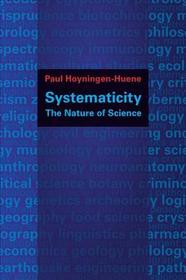
In Systematicity, Paul Hoyningen-Huene answers the question "What is science?" by proposing that scientific knowledge is primarily distinguished from other forms of knowledge, especially from everyday knowledge, by being more systematic.
TöbbHosszú leírás:
In Systematicity, Paul Hoyningen-Huene answers the question "What is science?" by proposing that scientific knowledge is primarily distinguished from other forms of knowledge, especially everyday knowledge, by being more systematic. "Science" is here understood in the broadest possible sense, encompassing not only the natural sciences but also mathematics, the social sciences, and the humanities. The author develops his thesis in nine dimensions in which it is claimed that science is more systematic than other forms of knowledge: regarding descriptions, explanations, predictions, the defense of knowledge claims, critical discourse, epistemic connectedness, an ideal of completeness, knowledge generation, and the representation of knowledge. He compares his view with positions on the question held by philosophers from Aristotle to Nicholas Rescher. The book concludes with an exploration of some consequences of Hoyningen-Huene's view concerning the genesis and dynamics of science, the relationship of science and common sense, normative implications of the thesis, and the demarcation criterion between science and pseudo-science.
Systematicity constitutes a welcome contribution to the general philosophy of science. The research agenda for general philosophy of science has been shifting over the last three decades as many philosophers of science have focused on issues in the philosophy of the special sciences, philosophy of physics, philosophy of biology, and the like. In Systematicity, Hoyningen-Huene shows that there is still important and interesting work to be done in general philosophy of science. One leaves the book with a deeper appreciation for the nature of science, as the subtitle suggests, and why science rightly holds the important place it does in contemporary Western cultures. The book has the marks of being written by a mature scholar, erudite, wide ranging, and carefully argued.
Tartalomjegyzék:
Preface
1 Introduction
1.1 Historical Remarks
1.2 The Question "What Is Science?" in Focus
2 The Main Thesis
2.1 Science and Systematicity
A) A Little History
B) Preliminary Remarks
2.2 The Concept of Systematicity
2.3 The Structure of the Argument
3 The Systematicity of Science Unfolded
3.1 Descriptions
A) Some Preliminaries
B) Axiomatization
C) Classification, Taxonomy, and Nomenclature
D) Periodization
E) Quantification
F) Empirical Generalizations
G) Historical Descriptions
3.2 Explanations
A) Some Preliminaries
B) Explanations Using Empirical Generalizations
C) Explanations Using Theories
D) Explanations of Human Actions
E) Reductive Explanations
F) Historical Explanations
G) Explanation and Understanding in the Humanities in General
H) Explanations in the Study of Literature
3.3 Predictions
A) Some Preliminaries
B) Predictions Based on Empirical Regularities of the Data in Question
C) Predictions Based on Correlations with Other Data Sets
D) Predictions Based on (Fundamental) Theories or Laws
E) Predictions Based on Models
F) Predictions Based on Delphi Methods
3.4 The Defense of Knowledge Claims
A) Some Preliminaries
B) Non-Evidential Considerations
C) Empirical Generalizations, Models, and Theories
D) Causal Influence
E) The Verum Factum Principle
F) The Role of Mathematics in the Sciences
G) Historical Sciences
3.5 Critical Discourse
A) Some Preliminaries
B) Norms and Institutions
C) Practices in Science Fostering Critical Discourse
3.6. Epistemic Connectedness
A) Preliminaries: The Problem
B) Failing Answers
C) The Concept of Epistemic Connectedness
D) Revisiting the Examples
3.7 The Ideal of Completeness
A) Some Preliminaries
B) Examples
3.8 The Generation of New Knowledge
A) Some Preliminaries
B) Data Collection
C) The Exploitation of Knowledge from Other Domains
D) The Generation of New Knowledge as an Autocatalytic Process
3.9 The Representation of Knowledge
A) Some Preliminaries
B) Examples
4 Comparison with Other Positions
4.1 Aristotle
A) The Position
B) Comparison with Systematicity Theory
4.2 René Descartes
A) The Position
B) Comparison with Systematicity Theory
4.3 Immanuel Kant
A) The Position
B) Comparison with Systematicity Theory
4.4 Logical Empiricism
A) The Position
B) Comparison with Systematicity Theory
4.5 Karl R. Popper
A) The Position
B) Comparison with Systematicity Theory
4.6 Thomas S. Kuhn
A) The Position
B) Comparison with Systematicity Theory
4.7 Paul K. Feyerabend
A) The Position
B) Comparison with Systematicity Theory
4.8 Nicholas Rescher
A) The Position
B) Comparison with Systematicity Theory
5 Consequences for Scientific Knowledge
5.1 The Genesis and Dynamics of Science
A) Conceptual Clarifications
B) The Genesis of a Science
C) The Dynamics of Science
5.2 Science and Common Sense
A) The Preservation of Common Sense
B) The Deviations from Common Sense
C) Additional Remarks
5.3 Normative Consequences
5.4 Demarcation from Pseudo-Science
A) A Little History
B) Systematicity Theory's Demarcation Criterion
6 Conclusion
Notes
Literature
Literature

