

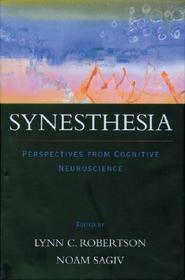
Synesthesia
Perspectives from Cognitive Neuroscience
-
10% KEDVEZMÉNY?
- A kedvezmény csak az 'Értesítés a kedvenc témákról' hírlevelünk címzettjeinek rendeléseire érvényes.
- Kiadói listaár GBP 84.00
-
37 926 Ft (36 120 Ft + 5% áfa)
Az ár azért becsült, mert a rendelés pillanatában nem lehet pontosan tudni, hogy a beérkezéskor milyen lesz a forint árfolyama az adott termék eredeti devizájához képest. Ha a forint romlana, kissé többet, ha javulna, kissé kevesebbet kell majd fizetnie.
- Kedvezmény(ek) 10% (cc. 3 793 Ft off)
- Kedvezményes ár 34 133 Ft (32 508 Ft + 5% áfa)
Iratkozzon fel most és részesüljön kedvezőbb árainkból!
Feliratkozom
37 926 Ft

Beszerezhetőség
Megrendelésre a kiadó utánnyomja a könyvet. Rendelhető, de a szokásosnál kicsit lassabban érkezik meg.
Why don't you give exact delivery time?
A beszerzés időigényét az eddigi tapasztalatokra alapozva adjuk meg. Azért becsült, mert a terméket külföldről hozzuk be, így a kiadó kiszolgálásának pillanatnyi gyorsaságától is függ. A megadottnál gyorsabb és lassabb szállítás is elképzelhető, de mindent megteszünk, hogy Ön a lehető leghamarabb jusson hozzá a termékhez.
A termék adatai:
- Kiadó OUP USA
- Megjelenés dátuma 2004. november 11.
- ISBN 9780195166231
- Kötéstípus Keménykötés
- Terjedelem304 oldal
- Méret 160x234x20 mm
- Súly 578 g
- Nyelv angol
- Illusztrációk 16pp colour plates, numerous line drawings 0
Kategóriák
Rövid leírás:
Owing to its bizarre nature and its implications for understanding how brains work, synesthesia has recently received a lot of attention in the popular press and motivated a great deal of research and discussion among scientists. The questions generated by these two communities are intriguing. This volume brings together a distinguished group of investigators from diverse backgrounds - among them neuroscientists, novelists, and synesthetes themselves - who provide fascinating answers to these questions. The research presented in this volume demonstrates that it is no longer reasonable to ask whether or not synesthesia is real - we must ask how we can account for it from cognitive, neurobiological, developmental, and evolutionary perspectives.
TöbbHosszú leírás:
Owing to its bizarre nature and its implications for understanding how brains work, synesthesia has recently received a lot of attention in the popular press and motivated a great deal of research and discussion among scientists. The questions generated by these two communities are intriguing: Does the synesthetic phenomenon require awareness and attention? How does a feature that is not present become bound to one that is? Does synesthesia develop or is it hard wired? Should it change our way of thinking about perceptual experience in general? What is its value in understanding perceptual systems as a whole?
This volume brings together a distinguished group of investigators from diverse backgrounds--among them neuroscientists, novelists, and synesthetes themselves--who provide fascinating answers to these questions. Although each approaches synesthesia from a very different perspective, and each was curious about and investigated synesthesia for very different reasons, the similarities between their work cannot be ignored. The research presented in this volume demonstrates that it is no longer reasonable to ask whether or not synesthesia is real--we must now ask how we can account for it from cognitive, neurobiological, developmental, and evolutionary perspectives. This book will be important reading for any scientist interested in brain and mind, not to mention synesthetes themselves, and others who might be wondering what all the fuss is about.
Overall, this work provides a broad cross-section of interest for synaesthesia researchers, and does so in a readable and comprehensive way. The division into subsections makes the relationship between each paper more explicit, and the detailed index is particularly useful. I recommend this book to researchers and students, in philosophy, psychology, or neuroscience, and it is a must-read for those wishing to get acquainted with this unusual and fascinating phenomenon.
Tartalomjegyzék:
Part 1: General overview
Synesthesia in perspective
Some demographic and socio-cultural aspects of synesthesia
Varieties of synesthetic experience
Part 2: Perception and attention
On the perceptual reality of synesthetic colour
Binding of graphemes and synesthetic colours in color-graphemic synesthesia
Synesthesia and the binding problem
Can attention modulate colour-graphemic synesthesia?
Part 3: Consciousness and cognition
Synesthesia: a window on the hard problem of consciousness
The emergence of the human mind: some clues from synesthesia
Part 4: Development and learning
Neonatal synesthesia: a re-evaluation
Developmental constraints on theories of synesthesia
Part 5: Commentary
Synesthesia: implications for attention, binding and consciousness: a commentary

