

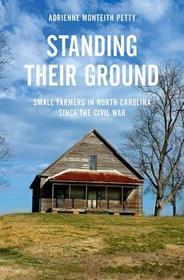
Standing Their Ground
Small Farmers in North Carolina since the Civil War
-
10% KEDVEZMÉNY?
- A kedvezmény csak az 'Értesítés a kedvenc témákról' hírlevelünk címzettjeinek rendeléseire érvényes.
- Kiadói listaár GBP 105.00
-
47 407 Ft (45 150 Ft + 5% áfa)
Az ár azért becsült, mert a rendelés pillanatában nem lehet pontosan tudni, hogy a beérkezéskor milyen lesz a forint árfolyama az adott termék eredeti devizájához képest. Ha a forint romlana, kissé többet, ha javulna, kissé kevesebbet kell majd fizetnie.
- Kedvezmény(ek) 10% (cc. 4 741 Ft off)
- Kedvezményes ár 42 667 Ft (40 635 Ft + 5% áfa)
Iratkozzon fel most és részesüljön kedvezőbb árainkból!
Feliratkozom
47 407 Ft

Beszerezhetőség
Megrendelésre a kiadó utánnyomja a könyvet. Rendelhető, de a szokásosnál kicsit lassabban érkezik meg.
Why don't you give exact delivery time?
A beszerzés időigényét az eddigi tapasztalatokra alapozva adjuk meg. Azért becsült, mert a terméket külföldről hozzuk be, így a kiadó kiszolgálásának pillanatnyi gyorsaságától is függ. A megadottnál gyorsabb és lassabb szállítás is elképzelhető, de mindent megteszünk, hogy Ön a lehető leghamarabb jusson hozzá a termékhez.
A termék adatai:
- Kiadó OUP USA
- Megjelenés dátuma 2013. október 3.
- ISBN 9780199938520
- Kötéstípus Keménykötés
- Terjedelem296 oldal
- Méret 163x236x25 mm
- Súly 590 g
- Nyelv angol 0
Kategóriák
Rövid leírás:
This book explores a local iteration of a profound human experience: the transformation of agriculture. Focusing on small farm owners in North Carolina, it argues that they resisted changes to farming that did not square with their agrarian ideology. However, the antidemocratic character of the Jim Crow South weakened their resistance.
TöbbHosszú leírás:
The transformation of agriculture was one of the most far-reaching developments of the modern era. In analyzing how and why this change took place in the United States, scholars have most often focused on Midwestern family farmers, who experienced the change during the first half of the twentieth century, and southern sharecroppers, swept off the land by forces beyond their control.
Departing from the conventional story, this book focuses on small farm owners in North Carolina from the post-Civil War era to the post-Civil Rights era. It reveals that the transformation was more protracted and more contested than historians have understood it to be. Even though the number of farm owners gradually declined over the course of the century, the desire to farm endured among landless farmers, who became landowners during key moments of opportunity. Moreover, this book departs from other studies by considering all farm owners as a single class, rejecting the widespread approach of segregating black farm owners. The violent and restrictive political culture of Jim Crow regime, far from only affecting black farmers, limited the ability of all farmers to resist changes in agriculture.
By the 1970s, the vast reduction in the number of small farm owners had simultaneously destroyed a Southern yeomanry that had been the symbol of American democracy since the time of Thomas Jefferson, rolled back gains in landownership that families achieved during the first half century after the Civil War, and remade the rural South from an agrarian society to a site of global agribusiness.
The well-known irony is that politicians extolled the virtues of the family farm even as they created policies to destroy family farming. This is hardly true only for North Carolina, but with Pettys deft handling of this story at the local level, the cost to individuals and families is painfully clear ... Overall, Standing Their Ground is a first-rate study.
Tartalomjegyzék:
Contents
Map of Southeastern North Carolina
Introduction
Chapter 1: On Their Farms and Among Their Pines: The Lower Cape Fear on the Eve of the Civil War
Chapter 2: Land for the Poor: The Rise of Small Farm Owners in the Age of Commercial Agriculture
Chapter 3: Keep the Stock Law Off Of Us: Defending the Open Range
Chapter 4: You Can't Eat Tobacco: The Politics of Self Sufficiency
Chapter 5: The Right of the Little Man to Live: Small Farm Owners and the Agricultural Adjustment Act
Chapter 6: From Foxholes to Farms: The GI Bill and the Enduring Agrarian Ideal
Chapter 7: Nice Work If You Can Get It: Small Farm Owners and Part-Time Work
Chapter 8: These Catastrophe Days: Federal Farm Policy During the 1950s
Chapter 9: Nailing the Small Farmer in the Coffin: The Politics of Tobacco and the Agrarian Ideal
Conclusion
Bibliography
Notes
Index

