

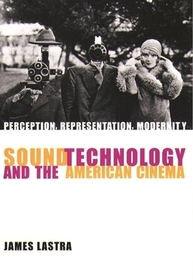
Sound Technology and the American Cinema
Perception, Representation, Modernity
Sorozatcím: Film and Culture Series;
-
10% KEDVEZMÉNY?
- A kedvezmény csak az 'Értesítés a kedvenc témákról' hírlevelünk címzettjeinek rendeléseire érvényes.
- Kiadói listaár GBP 28.00
-
12 642 Ft (12 040 Ft + 5% áfa)
Az ár azért becsült, mert a rendelés pillanatában nem lehet pontosan tudni, hogy a beérkezéskor milyen lesz a forint árfolyama az adott termék eredeti devizájához képest. Ha a forint romlana, kissé többet, ha javulna, kissé kevesebbet kell majd fizetnie.
- Kedvezmény(ek) 10% (cc. 1 264 Ft off)
- Kedvezményes ár 11 378 Ft (10 836 Ft + 5% áfa)
Iratkozzon fel most és részesüljön kedvezőbb árainkból!
Feliratkozom
12 642 Ft

Beszerezhetőség
Becsült beszerzési idő: A Prosperónál jelenleg nincsen raktáron, de a kiadónál igen. Beszerzés kb. 3-5 hét..
A Prosperónál jelenleg nincsen raktáron.
Why don't you give exact delivery time?
A beszerzés időigényét az eddigi tapasztalatokra alapozva adjuk meg. Azért becsült, mert a terméket külföldről hozzuk be, így a kiadó kiszolgálásának pillanatnyi gyorsaságától is függ. A megadottnál gyorsabb és lassabb szállítás is elképzelhető, de mindent megteszünk, hogy Ön a lehető leghamarabb jusson hozzá a termékhez.
A termék adatai:
- Kiadó Columbia University Press
- Megjelenés dátuma 2000. szeptember 22.
- ISBN 9780231115179
- Kötéstípus Puhakötés
- Terjedelem288 oldal
- Méret 228 x 150 mm
- Nyelv angol 0
Kategóriák
Rövid leírás:
Representational technologies including photography, phonography, and the cinema have helped define modernity itself. Since the nineteenth century, these technologies have challenged our trust of sensory perception, given the ephemeral unprecedented parity with the eternal, and created profound temporal and spatial displacements. But current approaches to representational and cultural history often neglect to examine these technologies. James Lastra seeks to remedy this neglect.
Lastra argues that we are nowhere better able to track the relations between capital, science, and cultural practice than in photography, phonography, and the cinema. In particular, he maps the development of sound recording from its emergence to its confrontation with and integration into the Hollywood film.
Reaching back into the late eighteenth century, to natural philosophy, stenography, automata, and human physiology, Lastra follows the shifting relationships between our senses, technology, and representation.
TöbbHosszú leírás:
Representational technologies including photography, phonography, and the cinema have helped define modernity itself. Since the nineteenth century, these technologies have challenged our trust of sensory perception, given the ephemeral unprecedented parity with the eternal, and created profound temporal and spatial displacements. But current approaches to representational and cultural history often neglect to examine these technologies. James Lastra seeks to remedy this neglect.
Lastra argues that we are nowhere better able to track the relations between capital, science, and cultural practice than in photography, phonography, and the cinema. In particular, he maps the development of sound recording from its emergence to its confrontation with and integration into the Hollywood film.
Reaching back into the late eighteenth century, to natural philosophy, stenography, automata, and human physiology, Lastra follows the shifting relationships between our senses, technology, and representation.
Több
