

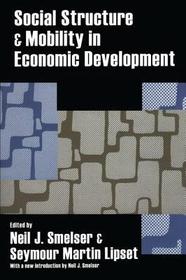
Social Structure and Mobility in Economic Development
-
20% KEDVEZMÉNY?
- A kedvezmény csak az 'Értesítés a kedvenc témákról' hírlevelünk címzettjeinek rendeléseire érvényes.
- Kiadói listaár GBP 45.99
-
21 971 Ft (20 925 Ft + 5% áfa)
Az ár azért becsült, mert a rendelés pillanatában nem lehet pontosan tudni, hogy a beérkezéskor milyen lesz a forint árfolyama az adott termék eredeti devizájához képest. Ha a forint romlana, kissé többet, ha javulna, kissé kevesebbet kell majd fizetnie.
- Kedvezmény(ek) 20% (cc. 4 394 Ft off)
- Kedvezményes ár 17 577 Ft (16 740 Ft + 5% áfa)
- A kedvezmény érvényes eddig: 2025. december 31.
Iratkozzon fel most és részesüljön kedvezőbb árainkból!
Feliratkozom
21 971 Ft

Beszerezhetőség
Becsült beszerzési idő: Várható beérkezés: 2026. január vége.
A Prosperónál jelenleg nincsen raktáron.
Why don't you give exact delivery time?
A beszerzés időigényét az eddigi tapasztalatokra alapozva adjuk meg. Azért becsült, mert a terméket külföldről hozzuk be, így a kiadó kiszolgálásának pillanatnyi gyorsaságától is függ. A megadottnál gyorsabb és lassabb szállítás is elképzelhető, de mindent megteszünk, hogy Ön a lehető leghamarabb jusson hozzá a termékhez.
A termék adatai:
- Kiadás sorszáma 1
- Kiadó Routledge
- Megjelenés dátuma 2005. június 30.
- Kötetek száma Paperback
- ISBN 9780202307992
- Kötéstípus Puhakötés
- Terjedelem418 oldal
- Méret 229x152 mm
- Súly 680 g
- Nyelv angol 0
Kategóriák
Rövid leírás:
The foundation of this volume is the notion that the several processes of change constituting economic and social development are systematically interrelated
TöbbHosszú leírás:
The foundation of this volume is the notion that the several processes of change constituting economic and social development are systematically interrelated. The essence of development is the appearance of rapid rates of increases in many different indices--output per capita, political participation, literacy and the like. These quantitative changes are, however, commonly accompanied by vast changes in the social structure--markets emerge, political bureaucracies arise, and new educational systems appear. Written by the leading authorities on the subject, this group of papers tackles the causes and consequences of social mobility. Each author brings his particular skills to bear on various aspects of the problem in studies of persons moving from rural to urban settings, from one kind of industry to another and from one prestige level to another. Several of the papers review the theoretical and methodological issues involved in comparative research on social mobility while others compare and contrast traditional and modern stratification systems. Various papers explore the economic, religious and psychological basis of social mobility, concluding with enquiry into the consequences of rapid mobility, especially in terms of the political stability of developing nations. Because social mobility is a central consideration in any study of economic and social change, every student of change will use this pioneering reference source as a text for all future research. Contributors include Otis Dudley Duncan, Harold L. Wilensky, Michael G. Smith, Bert F. Hoselitz, Wilbert E. Moore, Natalie Rogoff Rams°y, Gideon Sjoberg, Reinhard Bendix, Harry Crockett, David Matza, Lester Seligman, and Gino Germani. Neil J. Smelser is emeritus professor, Department of Sociology, University of California, Berkeley. Seymour Martin Lipset was professor of sociology and director of the Institute of International Studies at the University of California, Berkeley.
TöbbTartalomjegyzék:
1: Social Structure, Mobility and Development; 2: Methodological Issues in the Analysis of Social Mobility; 3: Measures and Effects of Social Mobility; 4: Pre-Industrial Stratification Systems; 5: Interaction between Industrial and Pre-Industrial Stratification Systems; 6: Changes in Occupational Structures; 7: Changes in Rates and Forms of Mobility; 8: Rural-Urban Balance and Models of Economic Development; 9: A Case Study in Cultural and Educational Mobility: Japan and the Protestant Ethic; 10: Psychological Origins of Mobility; 11: The Disreputable Poor; 12: Political Mobility and Economic Development; 13: Social and Political Consequences of Mobility
Több
