

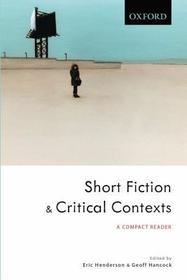
Short Fiction and Critical Contexts: A Compact Reader
-
10% KEDVEZMÉNY?
- A kedvezmény csak az 'Értesítés a kedvenc témákról' hírlevelünk címzettjeinek rendeléseire érvényes.
- Kiadói listaár GBP 24.99
-
11 282 Ft (10 745 Ft + 5% áfa)
Az ár azért becsült, mert a rendelés pillanatában nem lehet pontosan tudni, hogy a beérkezéskor milyen lesz a forint árfolyama az adott termék eredeti devizájához képest. Ha a forint romlana, kissé többet, ha javulna, kissé kevesebbet kell majd fizetnie.
- Kedvezmény(ek) 10% (cc. 1 128 Ft off)
- Kedvezményes ár 10 154 Ft (9 671 Ft + 5% áfa)
Iratkozzon fel most és részesüljön kedvezőbb árainkból!
Feliratkozom
11 282 Ft

Beszerezhetőség
Bizonytalan a beszerezhetőség. Érdemes még egyszer keresni szerzővel és címmel. Ha nem talál másik, kapható kiadást, forduljon ügyfélszolgálatunkhoz!
Why don't you give exact delivery time?
A beszerzés időigényét az eddigi tapasztalatokra alapozva adjuk meg. Azért becsült, mert a terméket külföldről hozzuk be, így a kiadó kiszolgálásának pillanatnyi gyorsaságától is függ. A megadottnál gyorsabb és lassabb szállítás is elképzelhető, de mindent megteszünk, hogy Ön a lehető leghamarabb jusson hozzá a termékhez.
A termék adatai:
- Kiadó OUP Canada
- Megjelenés dátuma 2009. szeptember 3.
- ISBN 9780195429930
- Kötéstípus Puhakötés
- Terjedelem520 oldal
- Méret 230x152x18 mm
- Súly 416 g
- Nyelv angol
- Illusztrációk 3 photos 0
Kategóriák
Rövid leírás:
Short Fiction and Critical Contexts: A Compact Reader provides college and university instructors and their students with a versatile, challenging, and engaging resource for the study of short fiction-all in a compact format. The anthology compiles a mix of classic and contemporary stories alongside non-fiction excerpts to aid in student analysis and critical study.
TöbbHosszú leírás:
Short Fiction and Critical Contexts: A Compact Reader provides college and university instructors and their students with a versatile, challenging, and engaging resource for the study of short fiction-all in a compact format. The book includes a mixture of older, 'classic' stories by acknowledged masters of the form, such as Poe, Joyce, and Mansfield, and newer, less-anthologized writers, such as Timothy Taylor, Richard Van Camp, and Shani Mootoo. The anthology represents a
diversity of ethnic, cultural, and national backgrounds and also highlights female and Canadian authors. The first half of the text presents 40 fiction selections spanning from 1842 to 2006 and arranged by order of publication. Each story is introduced by a headnote that provides a brief biography of the
author, information on his or her approach to writing fiction, and information about the story itself. The second half of the text collects a variety of documents written on the topic of the short story, many by the authors anthologized in the first half of the text. This section engages the reader first-hand with the key ideas driving short fiction as well as examples of fiction's critical reception from 1850 to the present. Short Fiction and Critical Contexts: A Compact Reader is
not only an ideal introduction to the formal study of the literary form, but also an engaging, readable, and enduring addition to any reader's bookshelf.
Tartalomjegyzék:
Preface
Introduction
Stories
1. E.A. Poe, 'The Masque of the Red Death'
2. C.P. Gilman, 'The Yellow Wallpaper'
3. S. Crane, 'A Mystery of Heroism'
4. E. Wharton, 'A Journey'
5. E. P. Johnson, 'The Derelict'
6. J. Joyce, 'A Painful Case'
7. F. Kafka, 'Report to an Academy'
8. J.G. Sime, 'An Irregular Union'
9. D.H. Lawrence, 'Tickets, Please'
10. K. Mansfield, 'The Stranger'
11. M. Callaghan, 'A Predicament'
12. E. Hemingway, 'The Capital of the World'
13. M. Aymé, 'The Walker through walls'
14. H. Böll, 'My Sad Face'
15. S. Ross, 'The Runaway'
16. E. Wilson, 'The Window'
17. M. Laurence, 'The Loons'
18. I. Calvino, 'The Origin of the Birds'
19. M-C. Blaise, 'Eyes'
20. A. Carter, 'The Company of Wolves'
21. M. Gallant, 'Between Zero and One'
22. E. Spencer, 'The Girl Who Loved Horses'
23. M. Atwood, 'Happy Endings'
24. J.L. Borges, 'Shakespeare's Memory'
25. J. Dalisay, 'Heartland'
26. A. Hempel, 'Nashville Gone to Ashes'
27. B. Mukherjee, 'The Lady from Lucknow'
28. R. Carver, 'Errand'
29. A. Munro, 'Pictures of the Ice'
30. D. Schoemperlen, 'The Antonyms of Fiction'
31. M. Dougan, 'Black Cherry'
32. S. Mootoo, 'Out on Main Street'
33. E. Danticat, 'Children of the Sea'
34. G. Hollingshead, 'The People of the Sudan'
35. B. Gowdy, 'We So Seldom Look on Love'
36. H. Murakami, 'The Seventh Man'
37. T. Taylor, 'Smoke's Fortune'
38. R. Van Camp, 'Sky Burial'
39. T. King, 'A Short History of Indians in Canada'
40. S. Selvadurai, 'The Demoness Kali'
Dialogues & Documents
1. Prologue: The Need for Narrative
a) R. Fulford, 'The Need for Narrative'
b) T. Gullason, 'The Qualities of an Outstanding Story'
c) I. Calvino, 'Fourteen Ways of Looking at a Classic'
2. The Art of the Short Story
a) E.A. Poe, 'The Single Effect'
b) H. James, 'Rendering Reality'
c) B. Matthews, 'Codifying the Short Story'
d) J. Conrad, 'Fiction's Appeal'
e) V. Woolf, 'Rendering Experience'
f) E. Bowen, 'The Morality of the Short Story'
g) J. Cortázar, 'Exploring "Storyness" through Metaphor'
3. Genre and the Short Story
a) The Novel and the Short Story
i. E. Wharton, 'Situation Is the Main Concern of the Short Story,
Character of the Novel'
ii. S. Millhauser, 'The Short Story Concentrates on its Grain of Sand'
iii. G. Hollingshead, 'A Point of Perfect, Drunken Poise'
b) The Lyric and the Short Story
i. E. Baldeshwiler, 'The Lyric Short Story: The Sketch of a History'
c) History and the Short Story
i. M. Scofield, 'Story and History in Raymond Carver'
4. Epiphany and the Short Story
a) J. Joyce, 'The Joycean Epiphany'
b) P. Stevick, 'Against Epiphany'
c) T. M. Leitch, 'Moving Toward Disillusionment'
d) C. Hallett, 'Significant Omissions'
5. Reality, Fantasy, and the Short Story
a) F. O'Connor, 'The Grotesque'
b) T. Todorov, 'The Fantastic'
c) A. Carter, 'The "Tale"'
d) G. Hancock, 'Magic Realism'
e) L. Hutcheon, 'Fantasy, Reality, and Metafiction'
6. The Short Story and Its Practitioners
a) C.P. Gilman, 'Why I Wrote "The Yellow Wallpaper"'
b) Chekhov, From Letters 1888-99
c) S. Crane, 'Humanity Was a Much More Interesting Study'
d) T. King, 'Native Fiction'
e) S. Selvadurai, 'Literature of the South Asian Diaspora'
f) Dialogues
i. A. Munro
ii. B. Mukherjee
iii. S. Mootoo
7. Epilogue
a) V. Nabokov, 'How to Read Well'
b) A. Manguel, 'In Praise of Reading'
c) M. Atwood, 'The Need for a Reader'

