

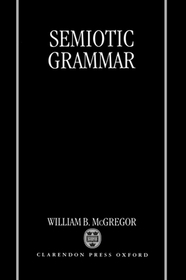
Semiotic Grammar
-
10% KEDVEZMÉNY?
- A kedvezmény csak az 'Értesítés a kedvenc témákról' hírlevelünk címzettjeinek rendeléseire érvényes.
- Kiadói listaár GBP 137.50
-
62 081 Ft (59 125 Ft + 5% áfa)
Az ár azért becsült, mert a rendelés pillanatában nem lehet pontosan tudni, hogy a beérkezéskor milyen lesz a forint árfolyama az adott termék eredeti devizájához képest. Ha a forint romlana, kissé többet, ha javulna, kissé kevesebbet kell majd fizetnie.
- Kedvezmény(ek) 10% (cc. 6 208 Ft off)
- Kedvezményes ár 55 873 Ft (53 213 Ft + 5% áfa)
Iratkozzon fel most és részesüljön kedvezőbb árainkból!
Feliratkozom
62 081 Ft

Beszerezhetőség
Megrendelésre a kiadó utánnyomja a könyvet. Rendelhető, de a szokásosnál kicsit lassabban érkezik meg.
Why don't you give exact delivery time?
A beszerzés időigényét az eddigi tapasztalatokra alapozva adjuk meg. Azért becsült, mert a terméket külföldről hozzuk be, így a kiadó kiszolgálásának pillanatnyi gyorsaságától is függ. A megadottnál gyorsabb és lassabb szállítás is elképzelhető, de mindent megteszünk, hogy Ön a lehető leghamarabb jusson hozzá a termékhez.
A termék adatai:
- Kiadó OUP Oxford
- Megjelenés dátuma 1997. szeptember 4.
- ISBN 9780198236887
- Kötéstípus Keménykötés
- Terjedelem448 oldal
- Méret 242x165x30 mm
- Súly 843 g
- Nyelv angol
- Illusztrációk line figures, tables 0
Kategóriák
Rövid leírás:
William B. McGregor proposes and develops a new theory of grammar based on the notion of the linguistic sign. In interpreting language and its structure as a semiotic system consisting of signs, he provides a range of new analyses of well established syntactic and morphological relations, categories, and roles. This book constitutes an important and valuable contribution to linguistic theory. The author draws on his extensive knowledge of Australian Aboriginal languages, as well as discussing data from more familiar languages, such as English.
TöbbHosszú leírás:
The label `semiotic grammar' captures a fundamental property of the grammars of human languages: not only is language a semiotic system in the familiar Saussurean sense, but its organizing system, its grammar, is also a semiotic system. This proposition, explicated in detail by William McGregor in this book, constitutes a new theory of grammar.
Semiotic Grammar is `functional' rather than `formal' in its intellectual origins, approaches, and methods. It demonstrates, however, that neither a purely functional nor a purely formal account of language is adequate, given the centrality of the sign as the fundamental unit of grammatical analysis. The author distinguishes four types of grammatical signs: experiential, logical, interpersonal, and textural. The signifiers of these signs are syntagmatic relationships of the following types, respectively: constituency, dependency, conjugational (scopal) and linking (indexical, connective).
McGregor illustrates and exemplifies the theory with data from a variety of languages including English, Acehnese, Polish, Finnish, Japanese, Chinese, and Mohawk; and from his pioneering research on Gooniyandi and Nyulnyul, two languages of the Kimberleys region of Western Australia.
As one who desires to produce a 'practical' bilingual grammar and dictionary for a group of people living in a multilingual-multicultural environment, I found many of M's arguments for semiotic grammar compelling, largely because he attempts to explain linguistic units on the basis of the unity of syntax, semantics and pragmatics.
Tartalomjegyzék:
Preface
Introduction
Basic Concepts of Grammatical Theory
Syntagmatic Relations: A Classification of Signs
Constituency: The Experiential Semiotic
Dependency: The Logical Semiotic
Conjugation: The Interpersonal Semiotic
Linking Relationships: The Textural Semiotic
Enough Ain't Enough: The Grammar of Nominal Tautologies in English
Grammar and Beyond
References
Index

