

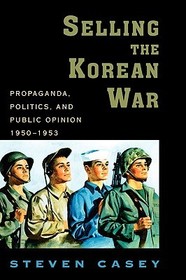
Selling the Korean War
Propaganda, Politics, and Public Opinion in the United States, 1950-1953
-
10% KEDVEZMÉNY?
- A kedvezmény csak az 'Értesítés a kedvenc témákról' hírlevelünk címzettjeinek rendeléseire érvényes.
- Kiadói listaár GBP 100.00
-
45 150 Ft (43 000 Ft + 5% áfa)
Az ár azért becsült, mert a rendelés pillanatában nem lehet pontosan tudni, hogy a beérkezéskor milyen lesz a forint árfolyama az adott termék eredeti devizájához képest. Ha a forint romlana, kissé többet, ha javulna, kissé kevesebbet kell majd fizetnie.
- Kedvezmény(ek) 10% (kb. 4 515 Ft)
- Kedvezményes ár 40 635 Ft (38 700 Ft + 5% áfa)
Iratkozzon fel most és részesüljön kedvezőbb árainkból!
Feliratkozom
45 150 Ft

Beszerezhetőség
Megrendelésre a kiadó utánnyomja a könyvet. Rendelhető, de a szokásosnál kicsit lassabban érkezik meg.
Why don't you give exact delivery time?
A beszerzés időigényét az eddigi tapasztalatokra alapozva adjuk meg. Azért becsült, mert a terméket külföldről hozzuk be, így a kiadó kiszolgálásának pillanatnyi gyorsaságától is függ. A megadottnál gyorsabb és lassabb szállítás is elképzelhető, de mindent megteszünk, hogy Ön a lehető leghamarabb jusson hozzá a termékhez.
A termék adatai:
- Kiadó OUP USA
- Megjelenés dátuma 2008. március 20.
- ISBN 9780195306927
- Kötéstípus Keménykötés
- Terjedelem488 oldal
- Méret 236x160x38 mm
- Súly 816 g
- Nyelv angol
- Illusztrációk 20 halftones 0
Kategóriák
Rövid leírás:
Korea was the first limited war the U.S. experienced in the contemporary period. In this book, Steven Casey explores how President Harry Truman tried to sell it to the American public.
TöbbHosszú leírás:
How presidents spark and sustain support for wars remains an enduring and significant problem. Korea was the first limited war the U.S. experienced in the contemporary period - the first recent war fought for something less than total victory. In Selling the Korean War, Steven Casey explores how President Truman and then Eisenhower tried to sell it to the American public.
Based on a massive array of primary sources, Casey subtly explores the government's selling activities from all angles. He looks at the halting and sometimes chaotic efforts of Harry Truman and Dean Acheson, Dwight Eisenhower and John Foster Dulles. He examines the relationships that they and their subordinates developed with a host of other institutions, from Congress and the press to Hollywood and labor. And he assesses the complex and fraught interactions between the military and war correspondents in the battlefield theater itself.
From high politics to bitter media spats, Casey guides the reader through the domestic debates of this messy, costly war. He highlights the actions and calculations of colorful figures, including Senators Robert Taft and Joseph McCarthy, and General Douglas MacArthur. He details how the culture and work routines of Congress and the media influenced political tactics and daily news stories. And he explores how different phases of the war threw up different problems - from the initial disasters in the summer of 1950 to the giddy prospects of victory in October 1950, from the massive defeats in the wake of China's massive intervention to the lengthy period of stalemate fighting in 1952 and 1953.
Steven Casey has drawn a masterly analysis of what is certain to become the standard work on its subject.... The whole study is, moreover, conveyed with real verve and at a cracking pace.... An exceptionally good book which does full justice to the complexity of the comestic politics of the Korean War and the rold of the media, official institutions, and politicians in shaping public opinion.
Tartalomjegyzék:
Introduction
Part One: The War against North Korea, June-November 1950
Keeping the Home Front Cool
Censorship is Abhorrent to General MacArthur
Mobilizing for a Police Action
On the Offensive
Part Two: The War against China, November 1950-July 1951
An Entirely New War
Dealing with the Disaster School of Journalism
Mobilizing with the Utmost Speed
Why Korea?
The MacArthur Controversy
Part Three: The Stalemate War, July 1951-July 1953
Interminable Truce Talks
Steady Improvements
The Advent of Eisenhower
Conclusion

