

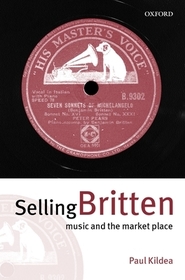
Selling Britten
Music and the Market Place
-
10% KEDVEZMÉNY?
- A kedvezmény csak az 'Értesítés a kedvenc témákról' hírlevelünk címzettjeinek rendeléseire érvényes.
- Kiadói listaár GBP 180.00
-
81 270 Ft (77 400 Ft + 5% áfa)
Az ár azért becsült, mert a rendelés pillanatában nem lehet pontosan tudni, hogy a beérkezéskor milyen lesz a forint árfolyama az adott termék eredeti devizájához képest. Ha a forint romlana, kissé többet, ha javulna, kissé kevesebbet kell majd fizetnie.
- Kedvezmény(ek) 10% (kb. 8 127 Ft)
- Kedvezményes ár 73 143 Ft (69 660 Ft + 5% áfa)
Iratkozzon fel most és részesüljön kedvezőbb árainkból!
Feliratkozom
81 270 Ft

Beszerezhetőség
Megrendelésre a kiadó utánnyomja a könyvet. Rendelhető, de a szokásosnál kicsit lassabban érkezik meg.
Why don't you give exact delivery time?
A beszerzés időigényét az eddigi tapasztalatokra alapozva adjuk meg. Azért becsült, mert a terméket külföldről hozzuk be, így a kiadó kiszolgálásának pillanatnyi gyorsaságától is függ. A megadottnál gyorsabb és lassabb szállítás is elképzelhető, de mindent megteszünk, hogy Ön a lehető leghamarabb jusson hozzá a termékhez.
A termék adatai:
- Kiadó OUP Oxford
- Megjelenés dátuma 2002. augusztus 22.
- ISBN 9780198167150
- Kötéstípus Keménykötés
- Terjedelem266 oldal
- Méret 242x162x20 mm
- Súly 623 g
- Nyelv angol
- Illusztrációk 4pp halfton plates and numerous tablestion 0
Kategóriák
Rövid leírás:
This book explores the effect of commercial and national institutions on the music of one of the foremost British composers of the twentieth century, Benjamin Britten. Radio, the recording industry, government subsidies for the arts, Covent Garden, the post-war establishment of music festivals, were all agents for dramatic changes in the art-music culture which Britten skilfully used to his advantage.
TöbbHosszú leírás:
At the end of the nineteenth century Britain was a country without an opera culture, and in the concert halls the Austro-Germanic symphonic repertory reigned supreme. In the following fifty years the art-music culture changed dramatically. Radio, the gramophone and the recording industry, government arts subsidies, Covent Garden, and a post-war resurgence in national and civic pride which contributed to the spread of music festivals, were the agents of change.
Born in 1913, Benjamin Britten was well placed to take advantage of these market forces, which he did consistently and skilfully from the 1930s onwards. His relationships with Boosey & Hawkes, Decca, Covent Garden, the Aldeburgh Festival, the English Opera Group, and the Arts Council, had a huge influence on the music he wrote. This book explores the effect of these commercial and national institutions on the music of one of the foremost British composers of the twentieth century.
Paul Kildea's Selling Britten offers a new approach to understanding the composer. It moves beyond musicological or even quasi-biographical analysis of the oeuvre to study the hard realities of markets and financial constraints.
Tartalomjegyzék:
List of Illustrations and Tables
List of Abbreviations
Preface
Introduction
Carrying Music to the Masses
Britten and the BBC
The Impresario and the English Opera Group
The Arts Council's Pursuit of 'Grand Opera'
Aldeburgh's Court Composer
Recording a Reputation
Bibliography
Index

