

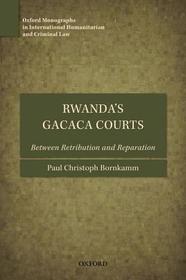
Rwanda's Gacaca Courts
Between Retribution and Reparation
Sorozatcím: Oxford Monographs in International Humanitarian & Criminal Law;
-
10% KEDVEZMÉNY?
- A kedvezmény csak az 'Értesítés a kedvenc témákról' hírlevelünk címzettjeinek rendeléseire érvényes.
- Kiadói listaár GBP 105.00
-
50 163 Ft (47 775 Ft + 5% áfa)
Az ár azért becsült, mert a rendelés pillanatában nem lehet pontosan tudni, hogy a beérkezéskor milyen lesz a forint árfolyama az adott termék eredeti devizájához képest. Ha a forint romlana, kissé többet, ha javulna, kissé kevesebbet kell majd fizetnie.
- Kedvezmény(ek) 10% (cc. 5 016 Ft off)
- Kedvezményes ár 45 147 Ft (42 998 Ft + 5% áfa)
Iratkozzon fel most és részesüljön kedvezőbb árainkból!
Feliratkozom
50 163 Ft

Beszerezhetőség
Megrendelésre a kiadó utánnyomja a könyvet. Rendelhető, de a szokásosnál kicsit lassabban érkezik meg.
Why don't you give exact delivery time?
A beszerzés időigényét az eddigi tapasztalatokra alapozva adjuk meg. Azért becsült, mert a terméket külföldről hozzuk be, így a kiadó kiszolgálásának pillanatnyi gyorsaságától is függ. A megadottnál gyorsabb és lassabb szállítás is elképzelhető, de mindent megteszünk, hogy Ön a lehető leghamarabb jusson hozzá a termékhez.
A termék adatai:
- Kiadó OUP Oxford
- Megjelenés dátuma 2012. január 12.
- ISBN 9780199694471
- Kötéstípus Keménykötés
- Terjedelem274 oldal
- Méret 240x163x22 mm
- Súly 572 g
- Nyelv angol 0
Kategóriák
Rövid leírás:
The Gacaca courts are a traditional justice mechanism used by the Rwandan government to try lower-level perpetrators of the 1994 genocide. This book provides an empirical analysis of these courts, assessing their rules and procedures as well as their contribution to reconciliation in Rwanda.
TöbbHosszú leírás:
Rwanda's Gacaca courts provide an innovative response to the genocide of 1994. Incorporating elements of both African dispute resolution and of Western-style criminal courts, Gacaca courts are in line with recent trends to revive traditional grassroots mechanisms as a way of addressing a violent past. Having been devised as a holistic approach to prosecution and punishment as well as to healing and repairing, they also reflect the increasing importance of victim participation in international criminal justice.
This book critically examines the Gacaca courts' achievements as a mechanism of criminal justice and as a tool for healing, repairing, and reconciling the shattered communities. Having prosecuted over one million people suspected of crimes during the 1994 genocide, the courts have been both praised for their efficiency and condemned for their lack of due process. Drawing upon extensive observations of trial proceedings, this book is the first to provide a detailed analysis of the Gacaca legislation and its practical implementation. It discusses the Gacaca courts within the framework of transitional and international criminal justice and argues that, despite the trend towards local, tailor-made solutions to the challenges of political transition, there is a common set of principles to be respected in addressing the past. Evaluating the Gacaca courts against the backdrop of existing or emerging principles, such as the duties to investigate and prosecute, and the right to the truth, the book provides a sophisticated critique of Rwanda's reconciliation policy. In doing so, it contributes to the development and the clarification of these principles. It concludes that Gacaca courts have achieved a great deal in stimulating a basic discourse on the genocide, but they have also contributed to assigning collective responsibility and may thus end up deepening the divides within Rwandan society.
Tartalomjegyzék:
Introduction
A Short History of the Rwandan Genocide and Its Aftermath
The Implementation of Modern Gacaca
Transitional Justice Through ProsecutionTransitional Justice Through Reparation Conclusion
Appendix: The Gacaca Law

