

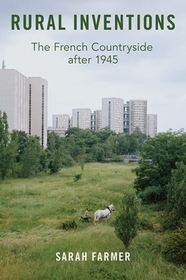
Rural Inventions
The French Countryside after 1945
-
10% KEDVEZMÉNY?
- A kedvezmény csak az 'Értesítés a kedvenc témákról' hírlevelünk címzettjeinek rendeléseire érvényes.
- Kiadói listaár GBP 47.49
-
21 441 Ft (20 420 Ft + 5% áfa)
Az ár azért becsült, mert a rendelés pillanatában nem lehet pontosan tudni, hogy a beérkezéskor milyen lesz a forint árfolyama az adott termék eredeti devizájához képest. Ha a forint romlana, kissé többet, ha javulna, kissé kevesebbet kell majd fizetnie.
- Kedvezmény(ek) 10% (cc. 2 144 Ft off)
- Kedvezményes ár 19 297 Ft (18 378 Ft + 5% áfa)
Iratkozzon fel most és részesüljön kedvezőbb árainkból!
Feliratkozom
21 441 Ft

Beszerezhetőség
Csak rendelésre kapható a kiadónál, kissé időigényes.
Why don't you give exact delivery time?
A beszerzés időigényét az eddigi tapasztalatokra alapozva adjuk meg. Azért becsült, mert a terméket külföldről hozzuk be, így a kiadó kiszolgálásának pillanatnyi gyorsaságától is függ. A megadottnál gyorsabb és lassabb szállítás is elképzelhető, de mindent megteszünk, hogy Ön a lehető leghamarabb jusson hozzá a termékhez.
A termék adatai:
- Kiadó OUP USA
- Megjelenés dátuma 2020. április 22.
- ISBN 9780190079079
- Kötéstípus Keménykötés
- Terjedelem200 oldal
- Méret 160x236x22 mm
- Súly 431 g
- Nyelv angol
- Illusztrációk 31 illustrations 0
Kategóriák
Rövid leírás:
Rural Inventions looks at the transformation of rural France in the 1950s and 1960s when rapid modernization and explosive economic growth drove peasants from the countryside and eroded village traditions. It shows that the French responded not only with nostalgia but also by inhabiting the countryside in new ways. This book explores the rise of restored peasant houses as second residences; utopian experiments in rural communes and in "going back to the land"; environmentalism; the literary success of peasant autobiographies; photography; and other representations through which the French revalorized rural life and landscapes. This book presents postwar rural France as a site not just of decline and loss but also of change and adaptation.
TöbbHosszú leírás:
At the close of the twentieth century, even as globalization spurred the growth of megacities worldwide, inhabiting the French countryside had become an internationally-shared fantasy and practice. Accounts of moving into old farmhouses were bestsellers, and houses and barns built by peasants had been renovated as second homes throughout the rural hinterland. Such developments, Sarah Farmer argues, did not simply stem from nostalgia for a rural past or a desire to invest in real estate. Rather, they defined new versions of the rural that emerge in post-agrarian societies.
In post-World War II France, cutting-edge technological modernization and explosive economic growth uprooted rural populations and eroded the village traditions of a largely peasant nation. And yet, this book argues, rural France did not vanish in the sweeping transformations of the 1950s and 1960s. The French responded to the collapse of peasant society and threats to cherished landscapes by devising new ways of inhabiting the countryside, making them the sites of change and adaptation. In addition to the rise of restored peasant houses as second residences, Rural Inventions explores the utopian experiments in rural communes and in "going back to the land"; environmentalism; the extraordinary success of peasant autobiographies; photography; and other representations through which the French revalorized rural life and landscapes. The peasantry as a social class may have died out, but the countryside persisted, valued as a site not only for agriculture but increasingly for sport and leisure, tourism, social and political engagement, and a natural environment worth protecting.
The postwar French state and the nation's rural and urban inhabitants, Sarah Farmer eloquently shows, remade the French countryside in relation to the city and to the world at large, not only invoking traditional France but also creating a vibrant and evolving part of the France yet to come.
In this beautifully written account of postwar urban-rural relations, Sarah Farmer pushes back against declensionist 'vanishing peasant' narratives and argues that the give-and-take between rural and urban France led to renewal and transformation rather than decline and decay. From rural men and women who purchased washing machines and joined the environmental movement, to the urban French who sought refuge from the city by way of peasant memoirs and country homes, Farmer persuasively argues for connection rather than dislocation....This is a must-read for anyone working on the period in France. It will also speak to scholars of other geographical areas as a comparative, given the foundational nature of questions surrounding urban-rural relations, agricultural industrialization, and modernity. Lastly, its length and transparent prose mean that it would be suitable for both undergraduate and graduate teaching.
Tartalomjegyzék:
Acknowledgements
Introduction
1. The Peasantry Is Dead, Long Live the Peasantry!
2. Second Homes: Peasant Dwellings as Rural Retreats
3. Back to the Land: Rural Utopias in 1970s France
4. Progress and Nostalgia: Memoirs of French Peasant Life
5. Disrupted Landscapes: Raymond Depardon's Visual Memoir
Conclusion
Notes
Selected Bibliography
Index

