

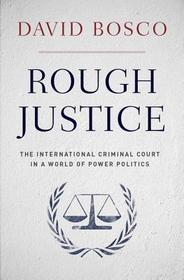
Rough Justice
The International Criminal Court's Battle to Fix the World, One Prosecution at a Time
-
10% KEDVEZMÉNY?
- A kedvezmény csak az 'Értesítés a kedvenc témákról' hírlevelünk címzettjeinek rendeléseire érvényes.
- Kiadói listaár GBP 47.99
-
21 667 Ft (20 635 Ft + 5% áfa)
Az ár azért becsült, mert a rendelés pillanatában nem lehet pontosan tudni, hogy a beérkezéskor milyen lesz a forint árfolyama az adott termék eredeti devizájához képest. Ha a forint romlana, kissé többet, ha javulna, kissé kevesebbet kell majd fizetnie.
- Kedvezmény(ek) 10% (kb. 2 167 Ft)
- Kedvezményes ár 19 500 Ft (18 572 Ft + 5% áfa)
Iratkozzon fel most és részesüljön kedvezőbb árainkból!
Feliratkozom
21 667 Ft

Beszerezhetőség
Becsült beszerzési idő: A Prosperónál jelenleg nincsen raktáron, de a kiadónál igen. Beszerzés kb. 3-5 hét..
A Prosperónál jelenleg nincsen raktáron.
Why don't you give exact delivery time?
A beszerzés időigényét az eddigi tapasztalatokra alapozva adjuk meg. Azért becsült, mert a terméket külföldről hozzuk be, így a kiadó kiszolgálásának pillanatnyi gyorsaságától is függ. A megadottnál gyorsabb és lassabb szállítás is elképzelhető, de mindent megteszünk, hogy Ön a lehető leghamarabb jusson hozzá a termékhez.
A termék adatai:
- Kiadó OUP USA
- Megjelenés dátuma 2014. január 30.
- ISBN 9780199844135
- Kötéstípus Keménykötés
- Terjedelem312 oldal
- Méret 160x236x33 mm
- Súly 544 g
- Nyelv angol 0
Kategóriák
Rövid leírás:
The story of the movement to establish the International Criminal Court, its tumultuous first decade, and the challenges it will continue to face in the future.
TöbbHosszú leírás:
The Nuremberg trials after World War II constituted a landmark in the development of international criminal justice: presided over by jurists from the victorious powers, it set new standards for defining international war crimes. Set in motion shortly after the creation of the United Nations, the courts seemed to point toward a future in which the international community could more effectively prosecute crimes against humanity and advance the cause of justice and the rule of law throughout the world. However, the onset of the Cold War stymied all efforts to create an effective international criminal court. Neither the US nor the USSR was willing to face the possibility of being judged in a forum controlled by ideological adversaries.
Despite the lack of progress, the dream of the court lived on through the 1980s, and when the Cold War ended, a new opportunity arose. After the UN's creation of temporary courts during the Balkan wars of the early 1990s, a powerful grassroots movement championing a permanent international criminal court emerged. Facing stiff resistance from the US and other powerful states, the movement triumphed against great odds. The court was established in 2002, and it now has the support of over 100 states (but not the US). The US opposes it outright and the Russians and Chinese are skeptical of it for a simple reason: as the most powerful states, they have no intention of surrendering jurisdictional authority over their own citizens to lesser powers. As a consequence, the court has faced numerous setbacks, and many have questioned whether it has any real power at all. It has ended up focusing its energies on pursuing war criminals in weak states, typically in Africa. It is now caught on the horns of a dilemma: to pursue justice, it does what it can where it can, but it cannot actually prosecute figures in powerful states. Russia will never surrender troops who may have acted badly in Georgia, and America is not about to hand over soldiers who killed civilians in Afghanistan.
Yet the court has had some minor successes, and we should remember that it is still in its very early days. As the years pass, its jurisdictional authority may expand, and the norms that it advances may achieve the status of common sense. Time will tell. In Rough Justice, David Bosco tells the story of the movement to establish the court and its tumultuous first decade. He also considers its prospects for the future, especially the very real challenges that it faces. This is an authoritative account of an international institution that is prototypical of the post-Cold War era.
Excellent.
Tartalomjegyzék:
Introduction
1. A Framework for Analysis
2. Origins
3. The Phantom Court (1998-2002)
4. Caution and Consensus (July 2002-March 2005)
5. Breakthrough (2005-2008)
6. Power Plays (2008-2012)
Conclusion: A Constrained Court

