

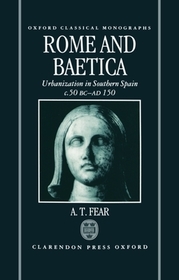
Rome and Baetica
Urbanization in Southern Spain c.50 BC-AD 150
Sorozatcím: Oxford Classical Monographs;
-
10% KEDVEZMÉNY?
- A kedvezmény csak az 'Értesítés a kedvenc témákról' hírlevelünk címzettjeinek rendeléseire érvényes.
- Kiadói listaár GBP 157.50
-
71 111 Ft (67 725 Ft + 5% áfa)
Az ár azért becsült, mert a rendelés pillanatában nem lehet pontosan tudni, hogy a beérkezéskor milyen lesz a forint árfolyama az adott termék eredeti devizájához képest. Ha a forint romlana, kissé többet, ha javulna, kissé kevesebbet kell majd fizetnie.
- Kedvezmény(ek) 10% (cc. 7 111 Ft off)
- Kedvezményes ár 64 000 Ft (60 953 Ft + 5% áfa)
Iratkozzon fel most és részesüljön kedvezőbb árainkból!
Feliratkozom
71 111 Ft

Beszerezhetőség
Megrendelésre a kiadó utánnyomja a könyvet. Rendelhető, de a szokásosnál kicsit lassabban érkezik meg.
Why don't you give exact delivery time?
A beszerzés időigényét az eddigi tapasztalatokra alapozva adjuk meg. Azért becsült, mert a terméket külföldről hozzuk be, így a kiadó kiszolgálásának pillanatnyi gyorsaságától is függ. A megadottnál gyorsabb és lassabb szállítás is elképzelhető, de mindent megteszünk, hogy Ön a lehető leghamarabb jusson hozzá a termékhez.
A termék adatai:
- Kiadó Clarendon Press
- Megjelenés dátuma 1996. április 25.
- ISBN 9780198150275
- Kötéstípus Keménykötés
- Terjedelem304 oldal
- Méret 225x145x23 mm
- Súly 502 g
- Nyelv angol
- Illusztrációk 3 maps 0
Kategóriák
Rövid leírás:
The book explores the cultural interaction between Rome and the various native groups found in Baetica (ancient Andalusia). It examines the degree to which Rome wished to change the area, how far our available evidence will allow us to see the outcome of such attempts, and the varied reactions of the native populations to the Roman presence.
TöbbHosszú leírás:
This book examines the development of urban units and their relationship to the adoption of Roman cultural forms in the province of Baetica (roughly modern Andalusia) in the Early Imperial period. Its starting point is a general examination of the notion of `Romanization' followed by a discussion of whether a positivistic interpretation of this concept can be inferred from the development of various sorts of towns found in the province. The nature, implications, extent, and results of Vespasian's Latinitas in the Iberian peninsula are discussed in depth in this respect. The material remains of the province are also examined to see what light they can cast on the problem of `Romanization'. Finally, the degree to which non-Roman cultural forms persisted in the province is discussed with the implications that this may have for the cultural dynamics of the region. The conclusions attempt to draw together the results of these analyses and suggest that Roman Imperialism is best seen through a model which envisages the creation of new synthetic cultural forms rather than through the traditional model of Romanization and resistance.
an important new contribution in this field ...this is a valuable addition to the current debate about the impact of Rome in Iberia.

