

-
10% KEDVEZMÉNY?
- A kedvezmény csak az 'Értesítés a kedvenc témákról' hírlevelünk címzettjeinek rendeléseire érvényes.
- Kiadói listaár GBP 45.49
-
20 538 Ft (19 560 Ft + 5% áfa)
Az ár azért becsült, mert a rendelés pillanatában nem lehet pontosan tudni, hogy a beérkezéskor milyen lesz a forint árfolyama az adott termék eredeti devizájához képest. Ha a forint romlana, kissé többet, ha javulna, kissé kevesebbet kell majd fizetnie.
- Kedvezmény(ek) 10% (cc. 2 054 Ft off)
- Kedvezményes ár 18 484 Ft (17 604 Ft + 5% áfa)
Iratkozzon fel most és részesüljön kedvezőbb árainkból!
Feliratkozom
20 538 Ft

Beszerezhetőség
Megrendelésre a kiadó utánnyomja a könyvet. Rendelhető, de a szokásosnál kicsit lassabban érkezik meg.
Why don't you give exact delivery time?
A beszerzés időigényét az eddigi tapasztalatokra alapozva adjuk meg. Azért becsült, mert a terméket külföldről hozzuk be, így a kiadó kiszolgálásának pillanatnyi gyorsaságától is függ. A megadottnál gyorsabb és lassabb szállítás is elképzelhető, de mindent megteszünk, hogy Ön a lehető leghamarabb jusson hozzá a termékhez.
A termék adatai:
- Kiadó OUP USA
- Megjelenés dátuma 2014. június 5.
- ISBN 9780199358847
- Kötéstípus Puhakötés
- Terjedelem438 oldal
- Méret 231x152x30 mm
- Súly 612 g
- Nyelv angol 0
Kategóriák
Rövid leírás:
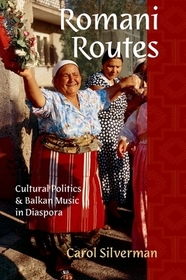
Over the past two decades, a steady stream of recordings, videos, feature films, and concerts has presented the music of European Gypsies, or Roma, to Western audiences, who have greeted them with exceptional enthusiasm. In this book, Silverman introduces readers to the people and cultures who produce this music.
TöbbHosszú leírás:
Over the past two decades, a steady stream of recordings, videos, feature films, and concerts has presented the music of European Gypsies, or Roma, to Western audiences, who have greeted them with exceptional enthusiasm. Yet, as author Carol Silverman notes, "Roma are revered as musicians and reviled as people." In this book, Silverman introduces readers to the people and cultures who produce this music, offering a sensitive and incisive analysis of how Romani musicians function successfully within oppressive circumstances. Focusing on the Romani communities in southeastern Europe then moving to the diaspora communities, her book examines the music within these diverse Gypsy communities, the lives and careers of outstanding musicians, and the presentation of music in the electronic media and world music concert circuit. Silverman touches on the way that the Roma exemplify many qualities -- rootlessness, cultural hybridity, transnationalism -- that are taken to characterize late modern experience. Rather than just celebrating these qualities, she presents the musicians as complicated, pragmatic individuals who work creatively within the many constraints that inform their lives. As both a performer and presenter of world music, Silverman has worked extensively with Romani communities for more than two decades both in their home countries and in the diaspora. At a time when the political and economic plight of European Roma and the popularity of their music are objects of international attention, Silverman's book is incredibly timely.
A masterpiece! Silverman's work is of tremendous importance for anyone interested in the Romani people, the Balkans, and also anthropology, ethnology, gender, music, performance, creativity, diasporas, and the nature of life as it is lived.
Tartalomjegyzék:
Table of Contents
Figures and Charts
Acknowledgements
Notes on Transliteration
About the Companion Website
Part I: Introduction
Chapter 1: Balkan Roma: History, Politics, and Performance
Chapter 2: Musical Styles and Genres
Chapter 3: Dilemmas of Diaspora, Hybridity, and Identity
Part II: Music in Diasporic Homes
Chapter 4: Transnational Families
Chapter 5: Transnational Celebrations
Chapter 6: Transnational Dance
Part III Music, States, and Markets
Chapter 7: Dilemmas of Heritage and the Bulgarian Socialist State
Chapter 8: Cultural Politics of Postsocialist Markets and Festivals
Chapter 9: Bulgarian Pop/Folk: Chalga
Part IV: Musicians in Transit
Chapter 10: Esma Redzepova: "Queen of Gypsy Music"
Chapter 11: Yuri Yunakov: Saxophonist, Refugee, Citizen
Chapter 12: Romani Music as World Music
Chapter 13: Collaboration, Appropriation, and Transnational Flows
Notes
References
Index

