

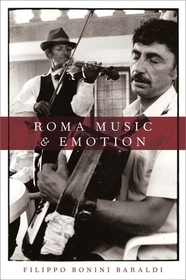
Roma Music and Emotion
-
10% KEDVEZMÉNY?
- A kedvezmény csak az 'Értesítés a kedvenc témákról' hírlevelünk címzettjeinek rendeléseire érvényes.
- Kiadói listaár GBP 120.00
-
54 180 Ft (51 600 Ft + 5% áfa)
Az ár azért becsült, mert a rendelés pillanatában nem lehet pontosan tudni, hogy a beérkezéskor milyen lesz a forint árfolyama az adott termék eredeti devizájához képest. Ha a forint romlana, kissé többet, ha javulna, kissé kevesebbet kell majd fizetnie.
- Kedvezmény(ek) 10% (cc. 5 418 Ft off)
- Kedvezményes ár 48 762 Ft (46 440 Ft + 5% áfa)
Iratkozzon fel most és részesüljön kedvezőbb árainkból!
Feliratkozom
54 180 Ft

Beszerezhetőség
Megrendelésre a kiadó utánnyomja a könyvet. Rendelhető, de a szokásosnál kicsit lassabban érkezik meg.
Why don't you give exact delivery time?
A beszerzés időigényét az eddigi tapasztalatokra alapozva adjuk meg. Azért becsült, mert a terméket külföldről hozzuk be, így a kiadó kiszolgálásának pillanatnyi gyorsaságától is függ. A megadottnál gyorsabb és lassabb szállítás is elképzelhető, de mindent megteszünk, hogy Ön a lehető leghamarabb jusson hozzá a termékhez.
A termék adatai:
- Kiadó OUP USA
- Megjelenés dátuma 2021. szeptember 9.
- ISBN 9780190096786
- Kötéstípus Keménykötés
- Terjedelem368 oldal
- Méret 243x160x25 mm
- Súly 667 g
- Nyelv angol
- Illusztrációk 43 images 136
Kategóriák
Rövid leírás:
Roma Music and Emotion is an important work of scholarship at the intersection of ethnomusicology and anthropology, combining long-term field research with hypotheses from the cognitive sciences to illustrate the musical world of the Roma of Transylvania and, in so doing, propose a groundbreaking anthropological theory on the emotional power of music
TöbbHosszú leírás:
In Roma Music and Emotion, author Filippo Bonini Baraldi forges a much-needed theory of music, emotion, and empathy from an anthropological perspective, addressing the failure of the prevailing psychological theories on music and emotion to account for non-western musical cultures.
Bonini Baraldi, having spent years among the Hungarian Roma of rural Transylvania, presents compelling ethnographic descriptions of their weddings, funerals, community celebrations, and intimate family gatherings. Based on extensive field research and informed by hypotheses drawn from the cognitive sciences, the anthropology of art, and aesthetics, Roma Music and Emotion analyzes why Roma musicians cry along with music and how they arouse specific feelings in their audiences.
Translated by Margaret Rigaud and written in clear prose, Roma Music and Emotion makes an important ethnomusicological contribution to theoretical discussions of the relationship between music and emotion.
This book is simply a superb example of the best that the anthropology of music and sound has to offer.
Tartalomjegyzék:
Foreword, by Steven Feld
Acknowledgements
Notes to the English edition
Linguistic conventions
Introduction
Part 1: Musical emotions: When and why do they arise?
Section 1: Performing for Others, Performing for Oneself
Chapter 1: The professional ethics of the Roma musicians of Ceuaş
Chapter 2: Village Celebrations
Chapter 3: How to make music work, how to arouse emotions
Chapter 4: After the "service": time to party in tiganie
Chapter 5: Other occasions when musical emotions can arise in tiganie
Chapter 6: A musical experience of being inwardly torn apart
Section 2: Performing for the dead, arousing pity in the living
Chapter 7: Funerals and the politics of emotion
Chapter 8: The soundscape of a funeral wake
Part 2: Why do the Roma of Ceuaş cry with music?
Chapter 9: Musical emotions in the Roma community of Ceuaş: A concentric model
Chapter 10: Performing sorrow
Chapter 11: Personal tunes
Chapter 12: Being milos
Chapter 13: What is musical empathy?
Chapter 14: Towards an anthropological approach to musical empathy
Conclusion
Epilogue
Glossary
Bibliography
Discography
Filmography
List of figures
Index of Audiovisual documents
Index

