

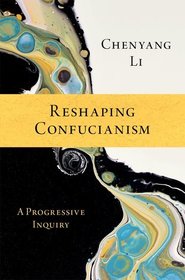
Reshaping Confucianism
A Progressive Inquiry
-
10% KEDVEZMÉNY?
- A kedvezmény csak az 'Értesítés a kedvenc témákról' hírlevelünk címzettjeinek rendeléseire érvényes.
- Kiadói listaár GBP 75.00
-
33 862 Ft (32 250 Ft + 5% áfa)
Az ár azért becsült, mert a rendelés pillanatában nem lehet pontosan tudni, hogy a beérkezéskor milyen lesz a forint árfolyama az adott termék eredeti devizájához képest. Ha a forint romlana, kissé többet, ha javulna, kissé kevesebbet kell majd fizetnie.
- Kedvezmény(ek) 10% (kb. 3 386 Ft)
- Kedvezményes ár 30 476 Ft (29 025 Ft + 5% áfa)
Iratkozzon fel most és részesüljön kedvezőbb árainkból!
Feliratkozom
33 862 Ft

Beszerezhetőség
Megrendelésre a kiadó utánnyomja a könyvet. Rendelhető, de a szokásosnál kicsit lassabban érkezik meg.
Why don't you give exact delivery time?
A beszerzés időigényét az eddigi tapasztalatokra alapozva adjuk meg. Azért becsült, mert a terméket külföldről hozzuk be, így a kiadó kiszolgálásának pillanatnyi gyorsaságától is függ. A megadottnál gyorsabb és lassabb szállítás is elképzelhető, de mindent megteszünk, hogy Ön a lehető leghamarabb jusson hozzá a termékhez.
A termék adatai:
- Kiadó OUP USA
- Megjelenés dátuma 2023. december 18.
- ISBN 9780197657621
- Kötéstípus Keménykötés
- Terjedelem344 oldal
- Méret 156x235x23 mm
- Súly 617 g
- Nyelv angol 446
Kategóriák
Rövid leírás:
Focusing on twelve major Confucian philosophical concepts and issues, one per chapter, this book offers fresh interpretations, unearths neglected insights, and illuminates connections between traditional and modern sensibilities. Taken together, the explorations of these foundational concepts and issues serve as a general introduction to progressive Confucian philosophy for the 21st century. Designed for classroom use, each chapter concludes a set of study questions to assist students to comprehend key points and to further develop their own views.
TöbbHosszú leírás:
As a living and evolving tradition, Confucianism has been continuously defined and redefined in response to the changing political and social context of China's history. Extending this effort in reconstructing Confucianism, philosopher Chenyang Li critically analyzes and develops a series of core ideas that originated from classic Confucian texts and does so in the context of contemporary scholarly discourse. These core ideas include he (dynamic harmony), ren (care-centered virtue), li (ritual propriety), xiao (filial care), bie (gender equilibrium), you (friendship), shou (longevity), sheng (sagehood), ziyou (freedom), ping (equality), zheng (politics), and jiao (civic education). Li combines in-depth analysis of historical teachings with systematic deliberation on their contemporary significance, reflecting the current state of the field of research.
Each chapter shows how seminal ideas in Confucianism were conceived and developed by ancient thinkers and how these ideas can be reconstructed and aligned in a sensible Confucian philosophy that responds to contemporary challenges. Over the course of its survey of Confucian philosophy, the book raises and investigates fundamental questions: How central is harmony as a Confucian value? Can Confucian sages be wrong? Is Xunzi's philosophy of filial care more progressive than Confucius' and hence more suitable in contemporary society? What is the best form of Confucian gender equality today? Is the model of “politics without politicians” a viable way for realizing the Confucian political ideal of the good society? Study questions are provided for each chapter to assist students to comprehend key points and develop their own views.
It invites readers to imagine and think, encouraging them to keep up with the times and experience Confucianism anew. It refreshes our conceptions of Confucianism and tries to readjust the Confucianism of ancient China to the contemporary world and people's daily lives today.
Tartalomjegyzék:
Acknowledgements
Introduction: Progressive Confucianism
I. Foundational Concepts
Chapter 1: Dynamic Harmony
Chapter 2: Care-Centered Virtue
Chapter 3: Ritual as Cultural Grammar
II. Self and Others
Chapter 4: Filial Care
Chapter 5: Differentiated Gender Equilibrium
Chapter 6: Friendship
Chapter 7: Virtuous Life and Longevity
Interlude:
Chapter 8: Can Sages be Wrong?
III. Socio-Political Reconstructions
Chapter 9: Freedom through Choosing
Chapter 10: Two Forms of Equality
Chapter 11: Kingliness without Kings
Chapter 12: Education for Humanity
References
Index

