

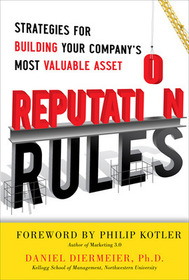
Reputation Rules: Strategies for Building Your Company?s Most valuable Asset
Sorozatcím: BUSINESS BOOKS;
-
10% KEDVEZMÉNY?
- A kedvezmény csak az 'Értesítés a kedvenc témákról' hírlevelünk címzettjeinek rendeléseire érvényes.
- Kiadói listaár GBP 31.99
-
14 443 Ft (13 755 Ft + 5% áfa)
Az ár azért becsült, mert a rendelés pillanatában nem lehet pontosan tudni, hogy a beérkezéskor milyen lesz a forint árfolyama az adott termék eredeti devizájához képest. Ha a forint romlana, kissé többet, ha javulna, kissé kevesebbet kell majd fizetnie.
- Kedvezmény(ek) 10% (cc. 1 444 Ft off)
- Kedvezményes ár 12 998 Ft (12 380 Ft + 5% áfa)
Iratkozzon fel most és részesüljön kedvezőbb árainkból!
Feliratkozom
14 443 Ft

Beszerezhetőség
A kiadónál véglegesen elfogyott, nem rendelhető. Érdemes újra keresni a címmel, hátha van újabb kiadás.
Why don't you give exact delivery time?
A beszerzés időigényét az eddigi tapasztalatokra alapozva adjuk meg. Azért becsült, mert a terméket külföldről hozzuk be, így a kiadó kiszolgálásának pillanatnyi gyorsaságától is függ. A megadottnál gyorsabb és lassabb szállítás is elképzelhető, de mindent megteszünk, hogy Ön a lehető leghamarabb jusson hozzá a termékhez.
A termék adatai:
- Kiadó McGraw Hill
- Megjelenés dátuma 2011. június 16.
- ISBN 9780071763745
- Kötéstípus Keménykötés
- Terjedelem320 oldal
- Méret 236x162x24 mm
- Súly 601 g
- Nyelv angol 0
Kategóriák
Rövid leírás:
A Kellogg School of Management professor sets the benchmark for using reputation as a vital part of corporate strategy
TöbbHosszú leírás:
Leverage your company?s most important asset!
In our lightning-fast digital age, a company can face humiliation and possibly even ruin within seconds of a negative tweet or blog post. Over the last year companies such as BP, Goldman Sachs, and Toyota have experienced serious blows to their images that could have had reduced impact if their leaders had implemented reputation management into their business strategy and culture.
There is no one in either the corporate or academic sphere with greater expertise in the area of corporate reputation than Dr. Daniel Diermeier. An award-winning professor at the Kellogg School of Management, Northwestern University, Dr. Diermeier has blazed a path in understanding the significance of reputation management and demonstrating how a company can create a program so powerful that it can help turn a potential public disgrace into a public image success story.
Reputation Rules is a landmark work bringing to light Dr. Diermeier?s groundbreaking insights in this critical area. He offers the frameworks, strategies, and processes for changing your company?s focus as quickly as the world is changing around you. He touches on all of the reputational issues that need to be managed from a strategic level, describing how to:
- Overcome direct challenges from influential activist and political forces
- Manage corporate scandals, including executive compensation
- Use external, seemingly unrelated events to boost reputation
- Build a reputation management process into everyday operations
In addition, Dr. Diermeier provides case studies of Shell?s confrontation with Greenpeace, Mercedes?s recovery from the Moose crisis, AIG?s executive bonus fallout, Wal-Mart?s reputation-building response to Hurricane Katrina, and numerous other scenarios illustrating what works and what doesn?t when it comes to reputation management.
Brimming with keen insights and lucid examples, Reputation Rules is a guidepost for your organization?s future?and a salve for crisis management.
Leverage your company?s most important asset!
In our lightning-fast digital age, a company can face humiliation and possibly even ruin within seconds of a negative tweet or blog post. Over the last year companies such as BP, Goldman Sachs, and Toyota have experienced serious blows to their images that could have had reduced impact if their leaders had implemented reputation management into their business strategy and culture.
There is no one in either the corporate or academic sphere with greater expertise in the area of corporate reputation than Dr. Daniel Diermeier. An award-winning professor at the Kellogg School of Management, Northwestern University, Dr. Diermeier has blazed a path in understanding the significance of reputation management and demonstrating how a company can create a program so powerful that it can help turn a potential public disgrace into a public image success story.
Reputation Rules is a landmark work bringing to light Dr. Diermeier?s groundbreaking insights in this critical area. He offers the frameworks, strategies, and processes for changing your company?s focus as quickly as the world is changing around you. He touches on all of the reputational issues that need to be managed from a strategic level, describing how to:
- Overcome direct challenges from influential activist and political forces
- Manage corporate scandals, including executive compensation
- Use external, seemingly unrelated events to boost reputation
- Build a reputation management process into everyday operations
In addition, Dr. Diermeier provides case studies of Shell?s confrontation with Greenpeace, Mercedes?s recovery from the Moose crisis, AIG?s executive bonus fallout, Wal-Mart?s reputation-building response to Hurricane Katrina, and numerous other scenarios illustrating what works and what doesn?t when it comes to reputation management.
Brimming with keen insights and lucid examples, Reputation Rules is a guidepost for your organization?s future?and a salve for crisis management.
TöbbTartalomjegyzék:
Contents
Introduction: The Second Most Important Item on the CEO?s Agenda
Chapter 1: Thomas Off the Rails?The Decisive Moment and How to Miss It
Chapter 2: Mercedes and the Moose?Brand Management Beyond Customers
Chapter 3: Shell Turns on the Water Cannons?The Growing Impact of the Second Circle
Chapter 4: Of Shower Curtains and Waste Baskets?Perks, Scandals, and Moral Outrage
Chapter 5:The Katrina Chronicles?Doing the Right Thing and Getting Credit for It
Chapter 6: The Terminator Gene?From Outrage to Fear
Chapter 7: Beat the Grim Reaper?Strategic Anticipation and the Anticipation and the Management of Reputational Risk
Chapter 8: The Aim Team?How to Build a Sixth Sense
Chapter 9: Andersen Before the Fall?Values, Culture, and the Teachable Moment

