

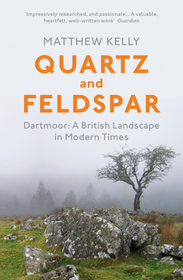
Quartz and Feldspar
Dartmoor - A British Landscape in Modern Times
-
20% KEDVEZMÉNY?
- Kiadói listaár GBP 14.99
-
6 767 Ft (6 445 Ft + 5% áfa)
Az ár azért becsült, mert a rendelés pillanatában nem lehet pontosan tudni, hogy a beérkezéskor milyen lesz a forint árfolyama az adott termék eredeti devizájához képest. Ha a forint romlana, kissé többet, ha javulna, kissé kevesebbet kell majd fizetnie.
- Kedvezmény(ek) 20% (kb. 1 353 Ft)
- Kedvezményes ár 5 414 Ft (5 156 Ft + 5% áfa)
- A kedvezmény érvényes eddig: 2026. október 31.
5 414 Ft

Beszerezhetőség
Becsült beszerzési idő: A Prosperónál jelenleg nincsen raktáron, de a kiadónál igen. Beszerzés kb. 3-5 hét..
A Prosperónál jelenleg nincsen raktáron.
Why don't you give exact delivery time?
A beszerzés időigényét az eddigi tapasztalatokra alapozva adjuk meg. Azért becsült, mert a terméket külföldről hozzuk be, így a kiadó kiszolgálásának pillanatnyi gyorsaságától is függ. A megadottnál gyorsabb és lassabb szállítás is elképzelhető, de mindent megteszünk, hogy Ön a lehető leghamarabb jusson hozzá a termékhez.
A termék adatai:
- Kiadó Random House
- Megjelenés dátuma 2016. június 2.
- Kötetek száma B-format paperback
- ISBN 9780099552550
- Kötéstípus Puhakötés
- Terjedelem512 oldal
- Méret 197x129x32 mm
- Súly 356 g
- Nyelv angol 0
Kategóriák
Hosszú leírás:
Granite, a tough composite of quartz, feldspar and mica, is the stuff of Dartmoor, the most formidable of the five granite bosses punctuating Britain’s southwest peninsula. A miserable place of rain and bog or a sunny upland of exquisite natural beauty, here the elements are raw, the sky huge and nature seems ascendant.
But it is no less a place made by human beings. Stone circles, crosses, dwellings and boundaries speak of the ancient, medieval and modern people that extracted a living from the moorscape and created what it is today. Where convicts are incarcerated, backpackers roam freely; where commoners graze livestock, the army is trained; where the National Park Authority exercises control, the Duchy of Cornwall claims ownership. And Dartmoor remains a place that provides. Reservoirs hold the water drunk by local people. China clay is extracted from its mineral reserves. Not long ago granite was quarried from its hillsides.
What is modern Dartmoor and what should it be? Did druids officiate here? Can the bog be drained and crops grown? Is it the place for a prison? And what of its people’s future, and the fate of its ponies, cows and sheep? For three hundred years such questions have been asked of the moor. Quartz and Feldspar does not so much provide answers as unearth those who did and the arguments they provoked.

